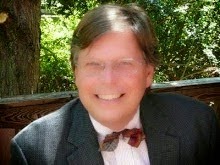
Picture: Wilhelm Weil, Weingut Robert Weil, at the 2nd International Riesling Symposium in the Rheingau, Germany
“In the midst of today’s Riesling renaissance, it is important that the leading Riesling regions of all continents work together and exchange thoughts,” said Hessen’s former Prime Minister Roland Koch in his opening remarks at the 1st International Riesling Symposium in 2010. Three and a half years later, on May 26 and 27, 2014, Riesling experts from around the world - top winemakers, representatives from the trade and restaurant sector, and journalists – gathered again at Schloss Rheinhartshausen in the Rheingau to celebrate, discuss and taste the arguably most noble white grape in the world - Riesling.
The International Riesling Symposium - the official name is: Internationales Riesling Symposium (in German with an "es" at the end) - in the Rheingau is part of the so-called Riesling Coalition, encompassing 3 major Rieslings events in Germany (International Riesling Symposium), in the US (Riesling Rendezvous) and in Australia (Riesling Downunder). Following this year’s International Riesling Symposium in the Rheingau, the Riesling Coalition caravan will travel to Australia next year for the 2015 Riesling Downunder, followed by the Riesling Rendezvous in Seattle, Washington State, in 2016 and the next International Riesling Symposium in the Rheingau in 2017.
Six very interesting lectures and discussions, four outstanding wine tastings - one in the morning and one in the afternoon of each day - and a walking wine dinner provided for two fascinating and highly entertaining days around Riesling. The symposium was attended by about 200 people, including such luminaries as Stuart Pigott from Germany, Willi Bruendlmayer from Austria, Helmut Doennhoff from the Nahe, Ernst Loosen from the Mosel and Stephen Henschke from Australia. Top winemaker Wilhelm Weil and his right hand and Export Director Jochen Becker-Köhn orchestrated the two days event. Finally, participants had a chance to visit Weingut Robert Weil, Kloster Eberbach and Schloss Johannisberg on a pre-conference tour on Sunday, before the conference started.
The conference was organized by the VDP Rheingau and Weingut Weil. The VDP is Germany’s elite winemakers association; it has about 200 members.
This is the first posting providing an overview about the 2nd International Riesling Symposium in the Rheingau, Germany. More, specific, postings will follow, about the following subjects:
The 2nd International Riesling Symposium in the Rheingau, Germany
A Tour through the Rheingau - Visits of 3 Prestigious, Historic Rheingau Wineries: Weingut Robert Weil, Hessische Staatsweingüter Kloster Eberbach and Schloss Johannisberg, Germany
Rieslings from the New World – More Traditional than Rieslings from the Old World? A Tasting at the 2nd International Riesling Symposium, led by Stuart Pigott, Germany
The Grand Cru Couple from VDP.Grosse Lage – Riesling Grosses Gewächs and Riesling Spätlese. A Tasting at the 2nd International Riesling Symposium, led by Giuseppe Lauria, Germany
Riesling from Danube, Rhine, Nahe, and Moselle: the European Riesling Route - A Tasting at the 2014 International Riesling Symposium, Germany, Moderated by Cornelius and Fabian Lange
Riesling and Aging Potential. A Tasting at the 2nd International Riesling Symposium, led by Caro Maurer, MW, Germany
German Riesling Producers at the 2. International Riesling Symposium in the Rheingau, Germany
American Riesling Producers at the 2. International Riesling Symposium in the Rheingau, Germany
Austrian Riesling Producers at the 2. International Riesling Symposium in the Rheingau, Germany
New Zealandian Riesling Producers at the 2. International Riesling Symposium in the Rheingau, Germany
Australian Riesling Producers at the 2. International Riesling Symposium in the Rheingau, Germany
Canadian Riesling Producers at the 2. International Riesling Symposium in the Rheingau, Germany
For last year's Riesling Rendezvous in Seattle, see:
The 4th Riesling Rendezvous in Seattle: Impressions from the Grand Tasting at Chateau Ste. Michelle in Woodinville, Washington State, USA
The World of Riesling in Seattle - Fourth Riesling Rendezvous in Washington State, USA
For the 1st International Riesling Symposium in the Rheingau, see:
1.International Riesling Symposium
Aging Potential of Riesling – A Wine Tasting at the 1st International Riesling Symposium in Germany Led by Jancis Robinson
Riesling in the World
There are about 47000 hectares planted with Riesling worldwide. Germany – with 22500 hectares – accounts for about half of the total. The second and third largest Riesling producer are the US (mainly Washington State and Finger Lakes Region) with 4800 hectares and Australia with 4100 hectares. But this is only about 1/10 of the total. Alsace follows with 3500 hectares. Alsace, Ukraine and Austria follow with 3500 hectares, 2700 hectares and 1900 hectares, respectively.
Overall, Riesling is really a niche wine, accounting for less than 1 percent of total wine production in the world - but a very special niche wine.
Picture: Riesling in the World (Source: Willi Klinger Presentation at the 2. International Riesling Symposium)
Pre-Conference Visits of Weingut Wilhelm Weil, Kloster Eberbach and Schloss Johannisberg on Sunday, May 25, 2014
Many of us accepted Wilhelm Weil’s invitation and joined him on a pre-conference tour. We started out at Weingut Robert Weil with lunch, wine tasting and tour. At Kloster Eberbach we were received by General Manager Dieter Greiner, who showed us around in the historic cellars and the new, modern winery, as well as in the famous Steinberg vineyard and who opened extraordinary wines, including a 1959 Steinberger Cabinet. We concluded the tour at Schloss Johannisberg with a cellar tour, tasting and dinner; the charming and energetic Domain Director Christian Witte was our host.
Pictures: At Weingut Robert Weil, Kiedrich
For Weingut Robert Weil, see:
Visiting Wilhelm Weil at his Weingut Robert Weil in Kiedrich, Germany
Tasting with Wilhelm Weil the 2010 Weingut Weil Wines in Kiedrich, Germany
Picture: In the Bus, on the Way to Kloster Eberbach, with Kloster Eberbach Managing Director Dieter Greiner
Pictures: In the Steinberg Vineyard
Pictures: At the new Kloster Eberbach Winery
Pictures: At Kloster Eberbach, Tasting a 1953 Steinberger Cabinet
For Steinberg and Kloster Eberbach, see:
In the Steinberg, Eberbach Abbey, Rheingau, Germany
Picture: On the Way to Schloss Johannisberg, with Hunter Smith, Frankland Estate
Pictures: Touring Schloss Johannisberg with Domain Director Christian Witte
Pictures: Dinner at Schloss Johannisberg
Pictures: Christian G.E. Schiller and Guiseppe Lauria, Gault Millau WeinGuide Deutschland, at the End of the Evening
International Riesling Symposium: Monday May 26, 2014
Pictures: Mingeling before the Opening of the 2nd International Riesling Symposium in the Rheingau, Germany
10:00 Opening
Wilhelm Weil opened the conference.
Pictures: Wilhelm Weil Opening the Conference
10:30 Willi Klinger – Lecture: The 10 Commandments of Riesling Marketing
Austrian Wine Marketing Managing Director Willi Klinger shared with us his thoughts - from an Austrian perspective - on the opportunities and challenges in marketing Riesling wines around the globe.
Picture: Willi Klinger Lecturing
Pictures: Coffee Break before the first Tasting
11:45 Stuart Pigott – First Tasting: Rieslings from the New World – More Traditional than Rieslings from the Old World?
We tasted 20 most interesting New World Rieslings from Australia, North America, East Europe and New Zealand, presented by Stuart Pigott from New York/Berlin. As Stuart Pigott said, Riesling has become a global grape and fine Riesling wines are being produced not only in Germany, Alsace and Austria any more, but in many regions of the global.
Pictures: Stuart Pigott – First Tasting: Rieslings from the New World – More Traditional than Rieslings from the Old World
Pictures: Coffee Break
14:00 Hans R. Schultz – Lecture: Do we know the Climatic and Viticultural Basis for the Production of Great Riesling Wines?
Professor Hans R. Schultz from the Geisenheim University shared with us his research results.
Pictures: Hans R. Schultz – Lecture: Do we know the Climatic and Viticultural Basis for the Production of Great Riesling Wines?
Pictures: Coffee Break
15:15 Giuseppe Lauria – Second Tasting: The Grand Cru Couple from VDP.Grosse Lage – Riesling Grosses Gewaechs and Riesling Spaetlese
Gault Millau WeinGuide Deutschland taster Giuseppe Lauria from Wiesbaden led a tasting of 12 wine pairings - ultra-premium German wines in two versions: the same wine fermented dry (with a normal alcohol level) (Grosses Gewaechs) and fermented sweet (with a low alcohol level) (Spaetlese). Basically, in the second wine the fermentation was stopped to leave residual sugar in the wine. This was a fascinating blind tasting.
Pictures: Giuseppe Lauria – Second Tasting: The Grand Cru Couple from VDP.Grosse Lage – Riesling Grosses Gewaechs and Riesling Spaetlese
17:00 Jochen Becker-Köhn – Discussion: The Sommelier’s Experience with Riesling
Picture: Discussion: The Sommelier’s Experience with Riesling
Picture: A Beer before the Dinner
20:00 Walking Wine Dinner with 4 Chefs, including Chef Hans Stefan Steinheuer (Steinheuers Restaurant, Bad Neuenahr-Ahrweiler, 2 stars Michelin)
Pictures: Walking Dinner
International Riesling Symposium: Tuesday May 27, 2014
9:30 Manfred Stoll – Lecture: Viticultural Strategies to Manipulate Berry Maturation in Riesling
Professor Stoll from the Geisenheim University shared with us his research results.
Picture: Manfred Stoll – Lecture: Viticultural Strategies to Manipulate Berry Maturation in Riesling
Pictures: Coffee Break
10:45 Cornelius and Fabian Lange – Third Tasting: Rieslings from Danube, Rhine, Nahe and Moselle: The European Riesling Route
Wine Journalists Cornelius and Fabian Lange led an entertaining tasting of 25 dry ultra-premium Rieslings, all from Europe - from the Rheingau, the Wachau, Alsace, Mosel, Pfalz, Kamptal, Nahe, Rheinhessen and Franken. This was again a blind tasting.
Pictures: Cornelius and Fabian Lange – Third Tasting: Rieslings from Danube, Rhine, Nahe and Moselle: The European Riesling Route
13:00 Monika Christmann – Lecture: How to Optimize the Alcohol Content of Riesling Wines?
Professor Christmann from the Geisenheim University shared with us her research results.
Picture: Monika Christmann – Lecture: How to Optimize the Alcohol Content of Riesling Wines?
Pictures: Coffee Break
14:15 Caro Maurer - Fourth Tasting: Riesling and its Aging Potential
Wine Journalist Caro Maurer (Master of Wine) led a tasting of 23 dry and sweet-style, aged Rieslings from Australia, New Zealand, Germany, Canada and Austria, going back to 1945, 1959 and 1971. The youngest wines were 10 years old. All the 23 wines were brilliant, showing the aging potential of Riesling, both in a dry and sweet style.
Pictures: Caro Maurer - Fourth Tasting: Riesling and its Aging Potential
16:00 Dirk Wuertz – Lecture: Riesling and the Digital World of Wine
Wine Blogger and Weingut Balthasar Ress Dirk Wuertz led a presentation and discussion about the role of Social Media for wine makers and consumers. In my comment, I praised the facebook page of Weingut Dr. Loosen as being a good example for how to manage a facebook fan page.
Pictures: Dirk Wuertz Lecturing
The End
Picture: Wilhelm Weil, Weingut Robert Weil, Closing the 2nd International Riesling Symposium
schiller-wine: Related Postings
The 4th Riesling Rendezvous in Seattle: Impressions from the Grand Tasting at Chateau Ste. Michelle in Woodinville, Washington State, USA
The World of Riesling in Seattle - Fourth Riesling Rendezvous in Washington State, USA
1.International Riesling SymposiumAging Potential of Riesling – A Wine Tasting at the 1st International Riesling Symposium in Germany Led by Jancis Robinson
Visiting Wilhelm Weil at his Weingut Robert Weil in Kiedrich, Germany
Tasting with Wilhelm Weil the 2010 Weingut Weil Wines in Kiedrich, Germany
Stepping up: From 3 … to 4 Quality Levels - The New Classification of the VDP, Germany
When Americans Drink German Wine - What They Choose
German Wine Basics: Sugar in the Grape - Alcohol and Sweetness in the Wine
1st International Riesling Symposium, Rheingau, Germany
Approaches to Classifying German Wine: The Standard Approach (the Law of 1971), the VDP Approach and the Zero Classification Approach
Riesling, Pinot Noir and Indian Cuisine: A tête-à-tête Dinner with Winemaker Ernst Loosen, Weingut Dr. Loosen, at Rasika in Washington DC, USA
In the Steinberg, Eberbach Abbey, Rheingau, Germany
Top 10 Riesling Producers in the World – Snooth 2012
The German Winemakers at the 4th Riesling Rendezvous in Seattle, USA
Austria at the 4th Riesling Rendezvous in Seattle, USA
Steffen Christmann (Weingut A. Christmann) and Wilhelm Weil (Weingut Robert Weil) Presented the New Wine Classification of the VDP, Germany
The World of Riesling in Seattle - Fourth Riesling Rendezvous in Washington State, USA
3 Wine Tours by ombiasy Coming up in 2014: Germany-North, Germany-South and Bordeaux
Monday, June 2, 2014
Monday, May 26, 2014
Robert Parker’s Wine Advocate – David Schildknecht Leaves and Stephan Reinhardt Joins the Team
Picture: Stephan Reinhard (Black Shirt) at the 2012 Grosses Gewaechs (the Ultra-premium Dry German Wines) Pre-release Tasting in Wiesbaden, Germany
Robert Parker recently announced a change in his team, with potentially a major impact on how the Wine Advocate will assess German wine. US-based David Schildknecht leaves the team and Germany-based Stephan Reinhardt joins the team.
I have the highest professional respect for David. His talent is exceptional, and he will be greatly missed, said Robert Parker. It's never easy replacing any of our writers, but we believe Stephan is a great addition to the team as a native and recognized authority on German wine.
David Schildknecht
David is one of the authorities for German (but not only German) wine in the English-speaking wine world. He is a legend in German wine circles in the US. I go back with David for many years. When I moved to the US in the early 1980s, David was a retailer in Washington DC. I remember long discussions (in German) with him at Pearson’s on Wisconsin Street, when he worked there. He was also a frequent guest at the German Wine Society (Washington DC Chapter). He now lives in Cincinetti.
Picture: David Schildknecht at the 1. International Riesling Symposium in Hattenheim, Germany
Stephan Reinhardt
Born, raised and based in Germany, Stephan Reinhardt has established himself as a leading wine journalist in Germany. But he has also gained recognition beyond the borders of the German-speaking part of Europe. Most recently, his book The Finest Wines of Germany was shortlisted as Best International Wine Book of Year by the Louis Roederer International Wine Writers' Award.
Stephan Reinhardt was editor-in-chief of Vinum, a 10-issue magazine distributed in Switzerland, Germany and Austria, and of Weinwisser, a Swiss/German wine newsletter. He has written stories for a number of publications, including The World of Fine Wine; a handful of German daily newspapers; and lifestyle magazines including Der Feinschmecker, Falstaff and Fine -- das Weinmagazin.
Stephan Reinhardt is passionate about Riesling, Port and Pinot Noir, loves music (especially jazz), travel and soccer (especially the Cologne soccer club). He studied drama (Theaterwissenschaft), communication (Kommunikationswissenschaft) and psychologie (Psychologie) at Munich University and worked as a junior professor (Assistant) at the Institut für Theaterwissenschaft in Munich from 1997 to 2000. He lives with his family near Hamburg, Germany.
I am excited to be writing for one of the greatest wine journals in the world, said Stephan Reinhardt. I have the deepest respect for Robert Parker and the Wine Advocate and am thrilled to be joining his esteemed team of world-renowned reviewers.
German Wine: Reinhardt versus Schildknecht
Looking at David’s and Stephan’s background, I would not be surprised if the coverage of German wine by the Wine Advocate will change with David leaving and Stephan coming on board.
David is very much grounded in the traditional American perspective of German wine. The American taste is leaning towards the fruity-sweet style wines of German white wine. For the American taste, the Mosel Region, with its fruity-sweet Kabinett and Spaetlese wines, is at the heart of German wine. German dry wines are only now gaining interest in the American market. Similarly, although red wine accounts for 1/3 of the German wine production, they are hard to find in the American market.
Pictures: Stephan Reinhard (Black Shirt) at the 2012 Grosses Gewaechs (the Ultra-premium Dry German Wines) Pre-release Tasting in Wiesbaden, Germany
Stephan comes from different angle. He has lived all his live in Germany. He is very well integrated with the wine scene in Germany - producers, retailers, sommeliers and cunsumers. He is also a bit younger than David and pretty active on facebook. There, in the German discussion groups, or more generally: among wine lovers in Germany, the talk is about premium and ultra-premium German dry wines and the new generation of German premium and ultra-premium red wines. People do talk about fruity sweet Kabinett and Spaetlese wines, but interest for these wines is clearly limited in Germany. Stephan is part of the new wave of German premium dry white and premium red wines. A few days ago, with the new job, Stephan Reinhardt supplemented his friend facebook page with a fan facebook page and called the new page: Stephan Reinhardt trocken.
Robert Parker's Wine Advocate Team
Here is the current team.
Stephan Reinhard: Germany, Austria and Switzerland, as well as Alsace, Champagne and the Loire Valley.
Robert Parker: Northern California, Bordeaux, California Retrospectives, Bordeaux Retrospectives, Value Wines
Neal Martin: Burgundy's Cote d'Or, Macon, Beaujolais, Chablis, sweet white wines of Bordeaux, South Africa, Port, Madeira & Banyuls
Mark Squires: Dry table wines of Portugal, Israel, Greece, Romania, Lebanon and Bulgaria
Lisa Perrotti-Brown: Australia, New Zealand
Jeb Dunnuck: Rhone Valley (North & South), Central & Southern California, Washington State, Languedoc-Roussillon, Southern France
Monica Larner: Italy
Luis Gutierrez: Spain, Chile, Argentina
schiller-wine: Related Postings
Weingut Pawis in the Saale Unstrut Region - A Profile, Germany
Christian G.E. Schiller's Review of the Book: Ralf Frenzel (ed.) - Riesling, Robert Weil. Tre Torri, Wiesbaden, Germany, 2013, in: Journal of Wine Economics, Volume 9, 2014, No. 1, Cambridge University Press
German Riesling and International Grape Varieties – Top Wine Makers Wilhelm Weil and Markus Schneider at Kai Buhrfeindt’s Grand Cru in Frankfurt am Main, Germany
Visiting Wilhelm Weil at his Weingut Robert Weil in Kiedrich, Germany
In the Steinberg, Eberbach Abbey, Rheingau, Germany
Surprising the World with their Pinot Noir: Johannes and Christoph Thoerle, Winzerhof Thoerle, Rheinhessen, Germany
Doepfner’s im Maingau Meets Frankfurt/Wein, with Weingut Battenfeld-Spanier and Weingut Chat Sauvage, Frankfurt am Main, Germany
Five Hochheim (Rheingau) Winemakers Presented their Vintage 2011 Wines in Hochheim, Germany
A Tasting at Weingut Peter Jakob Kühn, Rheingau, with Angela and Peter Jakob Kühn, Germany
German Star Winemaker Clemens Busch, Weingut Clemens Busch in the Mosel Valley, in Washington DC, USA
Riesling, Pinot Noir and Indian Cuisine: A tête-à-tête Dinner with Winemaker Ernst Loosen, Weingut Dr. Loosen, at Rasika in Washington DC, USA
The German Winemakers at the 4th Riesling Rendezvous in Seattle, USA
"Wurzelwerk" Goes America: 3 Vineyards, 3 Winemakers and 9 Wines
Weingut von Hoevel – The New Generation: Max von Kunow in Washington DC, US
An Afternoon with Riesling Star Winemaker Helmut Doennhoff at Weingut Doennhoff in Oberhausen in the Nahe Valley, Germany
Cellar Tour, Vineyard Tour, Tasting and Lunch with Georg Rumpf, Weingut Kruger-Rumpf, Nahe Valley, Germany
Caroline and Armin Diel, Schlossgut Diel (Nahe Valley), Presented their New Wines (Vintage 2012), Germany
Weingut Schloss Neuweier – Robert Schaetzle, Baden, Germany
Lunch at an Iconic Restaurant in Baden, Germany: Restaurant Schwarzer Adler
One of the Fathers of the German Red Wine Revolution: Weingut Huber in Baden
Joachim Heger, Weingut Dr. Heger: Winemaker of the Year, Gault Millau WeinGuide Deutschland 2013, Germany
Steffen Christmann (Weingut A. Christmann) and Wilhelm Weil (Weingut Robert Weil) Presented the New Wine Classification of the VDP, Germany
The World Meets at Weingut Weegmueller, Pfalz, Germany
The Wines Chancelor Merkel Served President Obama and Michelle Obama in Berlin (and the Wines she did not Serve), Germany
Subscribe to:
Posts (Atom)