Wednesday, June 12, 2013

Bordeaux Meets Virginia: Visiting Rutger de Vink and his RdV Vineyards with Anne Cuvelier from Chateau Leoville Poyferre in St. Julien, Bordeaux

Picture: Anne Cuvelier of Chateau Leoville Poyferre and Rutger de Vink at RdV in Virginia, USA

Anne Cuvelier from the Cuvelier family that owns, inter alia, Chateau Leoville-Poyferre in St. Julien, Bordeaux, was in town (Washington DC) for the Heart’s Delight Event. On the side, Annette Schiller from wine tours by ombiasy organized a winemaker dinner with her at Eola on P Street in Dupont Circle in Washington DC. Anne also wanted to visit Virginia wineries. We visited 3 of the leading wineries in Virginia, all three of them intertwined with Bordeaux: Boxwood, Linden, RdV. This posting focusses on the visit of RdV.

Picture: Entering RdV

See here for the Leoville Poyferre Dinner at Eola:
Château Léoville-Poyferré Winemaker Dinner with Anne Cuvelier at Eola in Washington DC, USA

For upcoming ombiasy wine tours, see:
Germany Wine and Culture Tour August 2013
Bordeaux Wine Tour September 2013

RDV is a new, small winery about an hour west of Washington DC, founded, owned and run by Rutger de Vink. RDV produces some 1,800 cases of ultra-premium wines: the Cabernet Sauvignon driven Lost Mountain (US$ 88) and the Merlot driven Rendezvous (US$ 75). Jim Law of Linden Vineyards, who many consider as the father of the Virginia wine boom, has described his close friend Rutger de Vink as “the next generation of Virginia wine.”

RdV – Next Generation of Virginia Wine

Wine grapes have been grown in Virginia for 400 years. Thomas Jefferson tried out vines he had imported from Europe, but he did not succeed. It has been only in the past few decades that a serious Virginia wine business has developed. Today, a handful of ambitious winemakers, including Luca Paschina at Barboursville (founded in the late 1970s by Gianni Zonin of the prominent Italian wine-producing family) and Jim Law at Linden, successfully craft premium wines, selling in the US$ 40 to 50 range.

Now, Rutger de Vink with his RdV wines has appeared on the scene, with considerably higher price points, which were unthinkable for Virginia just few years ago. And, in blind tastings, Rutger de Vink likes to taste his wines side by side with ultra-premium wines from Napa Valley and Bordeaux.

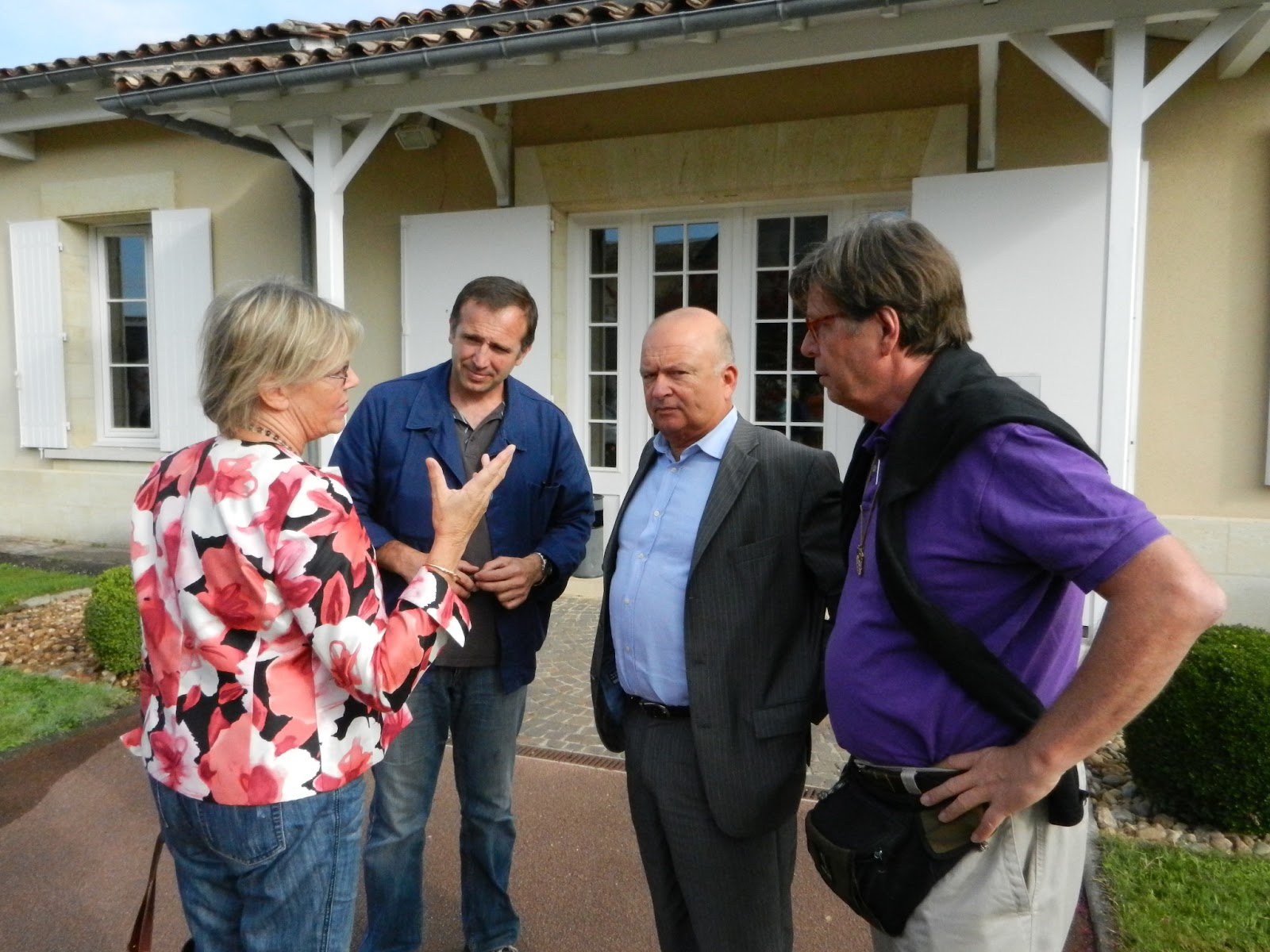
Picture: Christian G.E. Schiller, Annette Schiller from ombiasy wine tours, Anne Cuvelier from Chateau Leoville Poyferre in Bordeaux and Rutger de Vink from RdV in Virginia

“When I got into the business over 30 years ago, Napa was still growing and making Gamay and Riesling. Oregon was focusing on Muller-Thurgau, and nobody had heard of New Zealand wine. They all re-shuffled and refocused once a few leaders showed the way. It takes an epiphany wine, like the Stag’s Leap 1973 cabernet for Napa, the Cloudy Bay sauvignon blanc for New Zealand or Sassicaia for Tuscany -- all these are iconic wines for their regions. I believe RdV will do the same for Virginia” Jim Law says.

The Early Years

Rutger De Vink always had a strong interest in wine, but he became a winemaker only in his mid-thirties. Initially, he went for an MBA, spent 3 years in high-tec and also did 4 years in the marine corps, including a stint in Somalia. In 2000, Rutger de Vink decided to make vine-growing his life. He prevailed upon Jim Law of Linden Vineyards to take him on as an apprentice and worked for him in 2001 and 2002. Rutger learned winemaking from Jim Law.

Pictures:Annette Schiller, Christian G.E. Schiller and Didier Cuvelier at Château Léoville-Poyferréin St. Julien. For more see: Lunch with Didier Cuvelier at Château Léoville-Poyferré in Saint-Julien, Bordeaux

At the same time, Rutger de Vink started searching for the right land for his winery. Typically, Virginia vineyards are afterthoughts: Someone has land and decides to grow grapes on it. Not so in the case of Rutger de Vink: He spent three years searching for an ideal spot to make wine.

Rutger de Vink could take advantage of what Virginia winemakers had learned over three decades of experimentation: The best results come from vineyards planted on steep slopes (so cold air and water dissipate quickly, thereby reducing the threat of frost or rot from humidity) and with poor, dry soils (to reduce vegetative vigor and those nasty green flavors from unripe fruit).

And he had excellent advisors. In 2002, on one of his visits to Bordeaux, Rutger De Vink struck up a friendship with fellow Dutchman Kees Van Leeuwen, viticultural consultant at Château Cheval Blanc in St-Emilion.

In 2004, Rutger de Vink bought a hilly sheep farm off Route 17 in Delaplane, with the financial backing of his well-heeled family.

Vineyard

Rutger de Vink: “RdV enjoys two essential elements of great terroir: Thin, gravelly, granite soils force the vines to stop vegetative growth during the latter part of the growing season and channel energy into the reproductive system, thus ensuring the small, concentrated berries and ripe seeds that yield wine with ample supple tannins.

Secondly, the fruit slowly reaches full ripeness in the cool autumn days of early October - conditions ideal for wines with complexity and finesse.”

Rutger explained that it was his deep exposure to some of the top properties of Bordeaux that gave him the determination to find a site that was well drained. Virginia was lots of rain and good drainage is essential.

Picture: Rutger de Vink Explaining the Different Soil Types of RdV

With 6.5 hectares under vine, the vineyard is divided into eleven parcels and planted to Cabernet Sauvignon (40%), Merlot (40%), Petit Verdot (12%) and Cabernet Franc (8%).

The vines were planted in 2006.  Rutger de Vink’s travels in Bordeaux also put him in touch with Jean-Philippe Roby, Professor at the University of Bordeaux, who advised him on planting.

Winecellar

The tank cellar comprises 12 stainless steel fermentation tanks with six arrayed on each side. Rutger explained that as there are 11 parcels in the vineyard, the tanks allow each of the parcels of fruit to be fermented separately, with the largest (Cabernet Sauvignon) parcel split across two tanks. In general there is enough yeast on the fruit and in the winery for fermentation to start within 2-3 days. The wine is fermented for approximately 9 days followed by 2 to 4 week maceration. RdV employs both punch-downs and pump-overs two to three times per day.

Picture: In the Cellar

The barrel vaulted cave is spaced by stone and cement ribs. The initial vintages were aged in 100% new French oak barrels. The goal is to have 60-70% new oak for each vintage.  The barrels are racked once every six months. The wines are typically aged 18-22 months depending upon the vintage. When bottling occurs there is no filtration.  RdV may fine the wine using egg whites.

Picture: In the Barrel Cave

RdV

RdV is located on one of the foothills of the Blue Ridge Mountains. The property consists of 100 acres of land that was originally home to cattle. With its distinctive silo, RdV’s exterior fits well into the rustic Virginia landscape, but its interiors incorporate a contemporary edge with materials like concrete and metal.

On the winery's first floor, guests can gather for wine tastings in the hearth room, which boasts a fireplace, modern couches, and floor-to-ceiling windows overlooking the grounds. A circular staircase leads to the fermentation room downstairs, which is filled with 12 stainless-steel tanks. Also downstairs is the wine storage cave room.

Wine Portfolio

RdV Vineyards makes two wines: Lost Mountain, a Cabernet Sauvignon dominant Bordeaux blend and a blend of mostly Merlot called Rendezvous.

Rutger de Vink made 1800 cases in 2010, with a goal to get to 2500 cases total, perhaps 800 of them Lost Mountain.

Rutger de Vink also hired Eric Boissenot, a consultant to four of Bordeaux’s five first-growth chateaux, to blend his wines. Still today, Rutger explained, samples of RdV are overnighted from Dulles International Airport to Paris, and from there to Bordeaux, so Boissenot can taste and analyze them and electronically transmit recommendations back to RdV.

A Quick Tour of the Winery

Guided by Rutger, Anne Cuvelier, Annette Schiller and I took a quick tour of the winery, after a glass of Champagne.

Picture: A Glass of Champagne

Rutger took as to a place where he could show us the soil of the vineyards, granite soil with sandy loam, and 30% rock content. There are 18 inches of clay and gravel then almost 40 feet of decomposed granite which is at a consistent depth throughout the knoll.

We then went to the tank room which is the tallest space ranging from the floor at the basement level all of the way to the roof.

We continued to the barrel vaulted cave and the part of the winery, were the bottles are filled and stored. The Spartan design of the bottle aging cave frames the back wall of exposed rock. Here we are some 40 feet beneath the surface of the vineyards.

Picture: Exposed Rock

The bottling line is located within a small glass enclosed room. Just outside of the bottling room, is the laboratory. It too is glass enclosed.

Picture: Bottling Line

Dinner with Rutger de Vink and Anne Cuvelier

Rutger de Vink had just returned from the en primeurs 2012 tastings in Bordeaux and naturally, the conversation went back and forth between the wines of Bordeaux and the wines of Virginia. The focus was on the 2009 wines, but we also drank earlier vintages.

Picture: Getting Ready for Dinner

Lost Mountain 2009 

Eric Boissenot: “With a vibrant ruby color, Lost Mountain reveals a complex nose of dense black fruit notes and subtle oak. Its young and lively nature, coupled with velvety tannins, creates a wine with remarkable flexibility and refinement. Balanced elegance and structure provides a stunning and delicate finish.”


Jancis Robinson: “Lustrous crimson – very healthy looking. Lovely delicacy and lift. Charmer. Sort of a Margaux! Really juicy and articulate and just a hint of spice on the end. Great build. 18/20 points.”

Grape Varieties: 77%  Cabernet Sauvignon, 14% Merlot, 9% Petit Verdot.
$88/bottle

Rendezvous 2009

Eric Boissenot: “Rendezvous has a brilliant core of deep ruby color with a delicate nose hinting at sweet notes of pastry.  On the palate, the wine reveals a ripe tannin structure that is both harmonious and flattering, leading to a supple approachability.  It finishes with an energized backbone that sings of minerality from the hillsides’ granitic soils.”

Picture: Leaving RdV at 9 pm with Rutger; he had to go to a late night presentation of his wines in Washington DC

Jancis Robinson: “Putty nose and very polished and complete. Nice dry finish. Great balance. 17/20 points.

Grape Varieties: 35% Merlot, 32% Cabernet Sauvignon, 21% Cabernet Franc, 12% Petit Verdot.
$75/bottle

schiller-wine: Related Postings

Bordeaux Trip September 2012, France

Bordeaux Wines and their Classifications: The Basics

An Afternoon with Owner Michel Tesseron at Château Lafon-Rochet, 4ème Cru Classé en 1855, in Saint-Estèphe, Bordeaux

The Wine Empire of the von Neipperg Family in France, Bulgaria and Germany 

Château Léoville-Poyferré, Chateau Le Crock, Didier Cuvelier in Bordeaux and the Cuvelier Los Andes Wines in Argentina

Tasting with Alfred Tesseron the last 10 Vintages of Château Pontet-Canet in Washington DC, USA/France

Tasting the Wines of Chateau Lafon-Rochet, Saint-Estèphe, 4ème Cru Classé en 1855, with Owner Basil Tesseron at the French Embassy in Washington DC, USA/France

Union des Grands Crus de Bordeaux (UGCB) on North America Tour in Washington DC - Schiller’s Favorites

Owner Jean-Bernard Grenié and Wine Journalist Panos Kakaviatos Presented the Wines of Chateau Angélus and Chateau Daugay at Black Salt Restaurant in Washington DC, USA

Dining on the Cutting-edge - Daniel Singhofen’s Eola in Washington DC, USA

Northern Virginia Magazine October 2012: Wine Recs from Local Winos

Visiting Jennifer Breaux Blosser and Breaux Vineyards in Virginia, USA

Virginia Wines Shine in San Francisco - 2012 San Francisco International Wine Competition, USA

Judging Virginia Wines in Suffolk, Virginia - Virginia Wine Lover Magazine Wine Classic 2012

A New Winery in Virginia - The Barns at Hamilton Station Vineyards, USA

As Close as You Can Get to (French) Champagne at the US East Coast – Claude Thibaut and His Virginia Thibaut Janisson Sparklers at screwtop Wine Bar

Jim Law and Linden Vineyards in Virginia – A Profile, USA

Boxwood Winery in Virginia: Lunch with Wine Makers Rachel Martin and Adam McTaggert in the Chai between the Tanks – TasteCamp 2012 East Kick-Off, USA

Book Review: "Beyond Jefferson's Vines - The Evolution of Quality Wine in Virginia" by Richard Leahy, USA

TasteCamp 2012 in Virginia, USA – A Tour d’Horizont

Virginia versus the World – A Blind Taste-Off, USA

Château Léoville-Poyferré Winemaker Dinner with Anne Cuvelier at Eola in Washington DC, USA

Germany Wine and Culture Tour August 2013

Bordeaux Wine Tour September 2013


Tuesday, June 11, 2013

Back in the Washington DC Area: Jean Trimbach Presented Maison Trimbach Wines at a Winemaker Dinner at Open Kitchen, USA

Picture: Christian G.E. Schiller and Jean Trimbach at Open Kitchen in Virginia, USA

Jean Trimbach from Maison Trimbach in Alsace, France, was in town (Washington DC area) and I had the chance to meet up with him at a winemaker dinner at Open Kitchen in Falls Church. The dinner was booked-out, helped by Annette Schiller from Ombiasy Tours, who had sent out the invitation to her list of Washington DC area winelovers, which has grown considerably over time.

As expected, it turned out to be a fun evening. Jean Trimbach is a wonderful entertainer. The wines of Maison Trimbach are outstanding and paired very well with the delicious food prepared by Open Kitchen Executive Chef/General Manager Christopher Carey and his team of Open Kitchen.

For more on Maison Trimbach, see:
Visiting Jean Trimbach at Maison Trimbach in Ribeauville in Alsace 
With Jean Trimbach from Domaine Trimbach, Alsace, at Bart M. Vandaele’s Belga Café in Washington DC
Jean Trimbach and the Wines of Maison Trimbach in Washington DC

For more on Open Kitchen, see:
A German Riesling Dinner at Open Kitchen in Washington DC, USA
Back to the Roots in the Bourgogne: WillaKenzie Estate Wines in Oregon - Winemaker Thibaud Mandet Presented WillaKenzie Wines at Open Kitchen, USA
The Ultra-premium Querciabella Wines and a Taste of Tuscany at Open Kitchen in Virginia, with Querciabella’s Giorgio Fragiacomo
“Wine Ambassador” Klaus Wittauer Presented Austrian Wines at the Embassy of Austria in Washington DC, USA

Trimbach in Alsace

Alsace is one of the several world class French wine regions, which produces many excellent still and sparkling, red and white wines, but above all it is highly appreciated for its unoaked, dry and crisp white wines. They tend to be different from those in the other parts of France: Higher in acidity, sometimes really sour, but always a pleasant experience to have them in the glass. And they go very well with the Alsatian food, which is also unique in France. The famous choucroute you find only there in France. But of course, you find it also in neighboring Germany, for example in Frankfurt am Main. Compared with Germany, which also is famous for its world class dry wines, Alsace wines tend to be drier, more full-bodied and higher in alcohol. Finally, sweeter white wines and red wines play only a minor role in Alsace, but they have a very good sparkling wine, the Cremant d’Alsace.

Alsace sits in the northeast corner of France, sheltered by the Vosges mountains to the west and hard against the German border to the east. The vineyards reach from around Wissembourg in the north to Mulhouse, 70 miles south. Some 12 million cases are produced annually from 32,000 acres of vineyards.

Pictures: Annette Schiller from Ombiasy Wine Tours and Jean Trimbach at Open Kitchen, Virginia, USA

For upcoming ombiasy wine tours, see:
Germany Wine and Culture Tour August 2013
Bordeaux Wine Tour September 2013

Alsace is a fascinating amalgam of the German and French. The end of the 30 Years’ War in 1648 gave Alsace to France. In 1871, at the end of the Franco-Prussian War, Alsace was taken by Germany. After World War I, it was once more part of France — until 1940, when Germany reclaimed it. With the defeat of the Nazis in 1945, Alsace became French yet again — and so it has remained. Wine production in Alsace traces its beginnings to the early centuries of the Roman Empire, when the Romans conquered Alsace and introduced wine.


Pictures: Christian G.E. Schiller with Jean Trimbach at Maison Trimbach in Ribeauville in Alsace

One of the most intriguing characteristics of Alsace wines is that they are bottled under their varietal names, unlike virtually all other French wines. Four grape varieties are considered to be the best:(i) Riesling – like in Germany, the most celebrated grape; (ii) Muscat – often used to produce sweet wines in France, the Alsace version is bone-dry; (iii) Pinot Gris and (iv) Gewurztraminer – Alsace's signature grape. Three other white grape varieties are also grown: (i) Sylvaner – A high-yielding grape, producing a refreshing wine, often used for blends, (ii) Pinot Blanc and (iii) Chardonnay – used only for sparkling wine. In addition, Alsace does have a little red wine made from the Burgundy grape, Pinot Noir. The Alsatian red wines tend to be quite lightweight, but can be delicious and interesting.

Pictures: At the Jean Trimbach Winemaker Dinner at Open Kitchen in Virginia, USA

Alsace produces wines under three different appellations: (i) Appellation d'Origine Contrôlées (AOCs) for ¾ of the white, rosé and red wines, (ii) Alsace Grand Cru AOC for white wines from certain classified vineyards and (iii) Crémant d'Alsace AOC for sparkling wines. Alsace makes noble-sweet wines, but does not have the same reputation as Germany or Austria for its noble-sweet wines. I like the Edelzwicker from Alsace, which is blend and an easy to drink day to day wine.

Since the creation of the Grand Cru AOC in Alsace, a number of winemakers have however shunned the system. Maison Trimbach is one of the most notable names to do so. The issue Maison Trimbach has with the Grand Cru AOC is that in their view the Grand Cru vineyards in a number of cases have too extensive boundaries.

Domaine Trimbach

“All French 3 star Michelin Restaurants offer Trimbach wines” says Jean Trimbach. This is really impressive and clearly shows what the name Trimbach stands for today: Wines of the highest quality.

Maison Trimbach’s wine-making history goes back to 1626, when Jean Trimbach was recognized as a citizen of Riquewihr in Alsace. From then on, the Maison Trimbach became renowned for its wines. However, it was not until the turn to the 20th century, when, under the leadership of Frédéric-Emile Trimbach, business really took off. Since then, Maison Trimbach has remained a family run business, based in Ribeauville, just a few miles north of Riquewihr, were it all began almost 400 years ago.

Pictures: Jean Trimbach, Annette Schiller from Ombiasy Wine Tours and Jake McGuire from DC Style Report at Open Kitchen in Virginia, USA

Jean and Pierre Trimbach, the 12th generation, are now in charge, with Pierre looking after the wine-making side and Jean after the selling and marketing side of it. The next generation is already involved. Anne, Pierre’s daughter, is with Jean in the marketing branch; inter alia, she is in charge of the facebook and twitter activities.

Maison Trimbach is very export-oriented with more than 85 percent of the production being exported. It is both a domaine and negociant, thus it produces wine sourced from own vineyards (40 hectares) and from lease contracts (60 hectares).

Winemaking Philosophy

Maison Trimbach's vineyards are all situated around Ribeauvillé, where the soils are mainly limestone. The best sites include the Grands Crus Rosacker, Osterberg and Geisberg, but as indicated above, Maison Trimbach is one of the winemakers in Alsace that are staying away from the Grand Cru AOC system, while Maison Trimbach’s Clos Ste Hune, a Grand Cru, is arguably the finest wine of Alsace. In terms of grape varieties, the emphasis is on Riesling, but Maison Trimbach also grows all other classic Alsatian grape varieties, such as Gewuerztraminer.

Pictures: Jean Trimbach and Open Kitchen Executive Chef/General Manager Christopher Carey

Jean explains Trimbach’s wine making philosophy: “In the vineyard, the vines are cared for with a restricted approach to the use of chemicals, including insecticides and fertilizers. We ferment at 20 to 21 degrees Celsius in stainless steel tanks and large, wooden barrels. It does not really matter, if a wine is fermented in a tank or a barrel. It is more a question of fitting our needs with what is available. The barrels are smaller than the tanks and therefore the wines we produce in smaller quantities tend to end up in the wooden barrels. We never use new oak. We never do malolactic fermentation. As a rule, we bottle very early to preserve the freshness and the fruitiness. This is what Alsace is all about. The wine then matures in the bottle. The same principle as vintage port. We release wine often only 5 years later. Sometimes we wait up to 10 years.”

Pictures: Jean Trimbach and Open Kitchen Owner Hue-Chan Karels

The Trimbachs let their wines age in the bottles in the cellar during several years before they release them on the market, especially the grand cru wines, such as the Riesling Cuvée Frédéric Emile. Wines are tasted frequently and released when deemed appropriate. In fact, the Riesling Cuvée Frédéric Emile 2002 was released after the 2003 because the younger wine was felt to be ready sooner. "When it comes to great wines, there is no rush, our father said and we keep it that way" says Jean Trimbach.

The Maison Trimbach Wine Portfolio

When I visited Domaine Trimbach, Jean took us through the whole Maison Trimbach wine portfolio. The Trimbach wines come in 4 quality groups: (i) the Classic range, (ii) the Reserve range, (iii) the Reserve Personelle range and (iv) the Prestige and Collection wines.

Trimbach Classic: This is the Trimbach entry level range. These wines represent the traditional, dry, crisp Alsace white wine style and come as Trimbach Pinot Blanc, Silvaner, Gewuerztraminer and Riesling.

Pictures: Open Kitchen Team Members

Trimbach Reserve: The Reserve wines are made from sections with mostly old vines. These are more complex wines than the Classic wines and can age longer. The Reserve wines come as Muscat, Riesling, Gewuerztraminer, and Pinot Gris. Maison Trimbach is not particularly known for red wines, but they do produce a Pinot Noir Reserve as well as a Pinot Noir Reserve Personelle.

Pictures: "Professor" Jean Trimbach Explaining and Celebrating his wines. At the end of the Evening he sang a song with us.

Trimbach Reserve Personelle: The wines of the Reserve Personelle range are from the best terroirs of the estate and not produced every year. These wines will keep for years. There are 3 Reserve Personelle wines: (1) the Riesling Cuvee Frederic Emile, (2) the Gewurztraminer Cuvee des Seigneurs de Ribeaupierre and (3) the Pinot Gris Reserve Personnelle. They are clearly recognizable because of their golden labels. The Cuvée Frédéric Emile is probably the best known Trimbach wine. It is one of the finest wines of Alsace, if not one of the world's greatest white wines.

Trimbach Prestige and Collection Wines: This group comprises (1) the Riesling "Clos Sainte Hune", (2) the Vendanges Tardives wines and (3) the Sélection de Grains Nobles wines, made from Riesling, Muscat, Pinot Gris and Gewuerztraminer. The Clos Sainte Hune is an exceptional terroir, exclusively planted with Riesling, located in the heart of the Grand Cru Rosacker, in Hunawihr. This Clos totals 1.67 hectares and has been in the propriety of the Trimbach family for more than 200 years.

Open Kitchen

Open Kitchen is a farm to table, contemporary American cooking restaurant in Falls Church, Northern Virginia. Since opening it's doors about three years ago the quality of cooking has been consistently on a very high level. The menu boasts fresh, seasonal, and local ingredients and is a reflection of what you see when visiting a Virginia farm. Execution in the kitchen is very creative and done to perfection.

The Dinner

Reception

Alsatian Onion Tart


Pinot Blanc 2009

Delicate straw color with green hues. Rich and concentrated with notes of white flowers and apricot. Great balance of fruit and acidity.

“A perfect combination” said Jean Trimbach.

86 Points, Wine Advocate


First Course

Smoked Sturgeon Terrine with Petite Herb and Radish Salad, Yellow Bell Pepper Vinaigrette


Riesling 2010

Beautiful straw color with green hues. Delicate mineral fragrance with aromas of ginger, caraway seed, pineapple and flowers leading to a clean and dry finish.

87 Points, Wine Advocate

Second Course

Braised Pork Belly with Apricot Mostarda, Wilted Greens and Pork Reduction


Pinot Gris Reserve 2007

Bright, pale gold with aromas of peaches and pears. Full-bodied with ripe, smoky tropical fruit flavors and a long, nutty finish.

88 Points, Wine Spectator


Sweet Finish

Candied Heirloom Baby Beets with Mache, Blue Cheese and Brioche “Soldiers”


Pinot Gris, Hommage a Jeanne 2000

Bright lemon - gold color with aromas of ripe peaches and honey. Rich, creamy and opulent with a remarkable finish.

Jean explained that this is a very unique wine. The Trimbachs chose to pay homage to Jeanne Trimbach, the grand mother of Jean and Pierre, who turned 100 in May 2000. She passed away in 2003.

93 Points, Wine Advocate


schiller-Wine: Related Postings

The World Class Wines of Alsace

In the world class white wine region Alsace

German Wine Basics: Sugar in the Grape - Alcohol and Sweetness in the Wine

1st International Riesling Symposium, Rheingau, Germany

Visiting Jean Trimbach at Maison Trimbach in Ribeauville in Alsace

With Jean Trimbach from Domaine Trimbach, Alsace, at Bart M. Vandaele’s Belga Café in Washington DC

Jean Trimbach and the Wines of Maison Trimbach in Washington DC

A German Riesling Dinner at Open Kitchen in Washington DC, USA

Back to the Roots in the Bourgogne: WillaKenzie Estate Wines in Oregon - Winemaker Thibaud Mandet Presented WillaKenzie Wines at Open Kitchen, USA

The Ultra-premium Querciabella Wines and a Taste of Tuscany at Open Kitchen in Virginia, with Querciabella’s Giorgio Fragiacomo

“Wine Ambassador” Klaus Wittauer Presented Austrian Wines at the Embassy of Austria in Washington DC, USA

Germany Wine and Culture Tour August 2013

Bordeaux Wine Tour September 2013