Sunday, April 17, 2011

World Malbec Day - Malbec from its Birthplace: Cahors in France

Picture: Malbec World Day

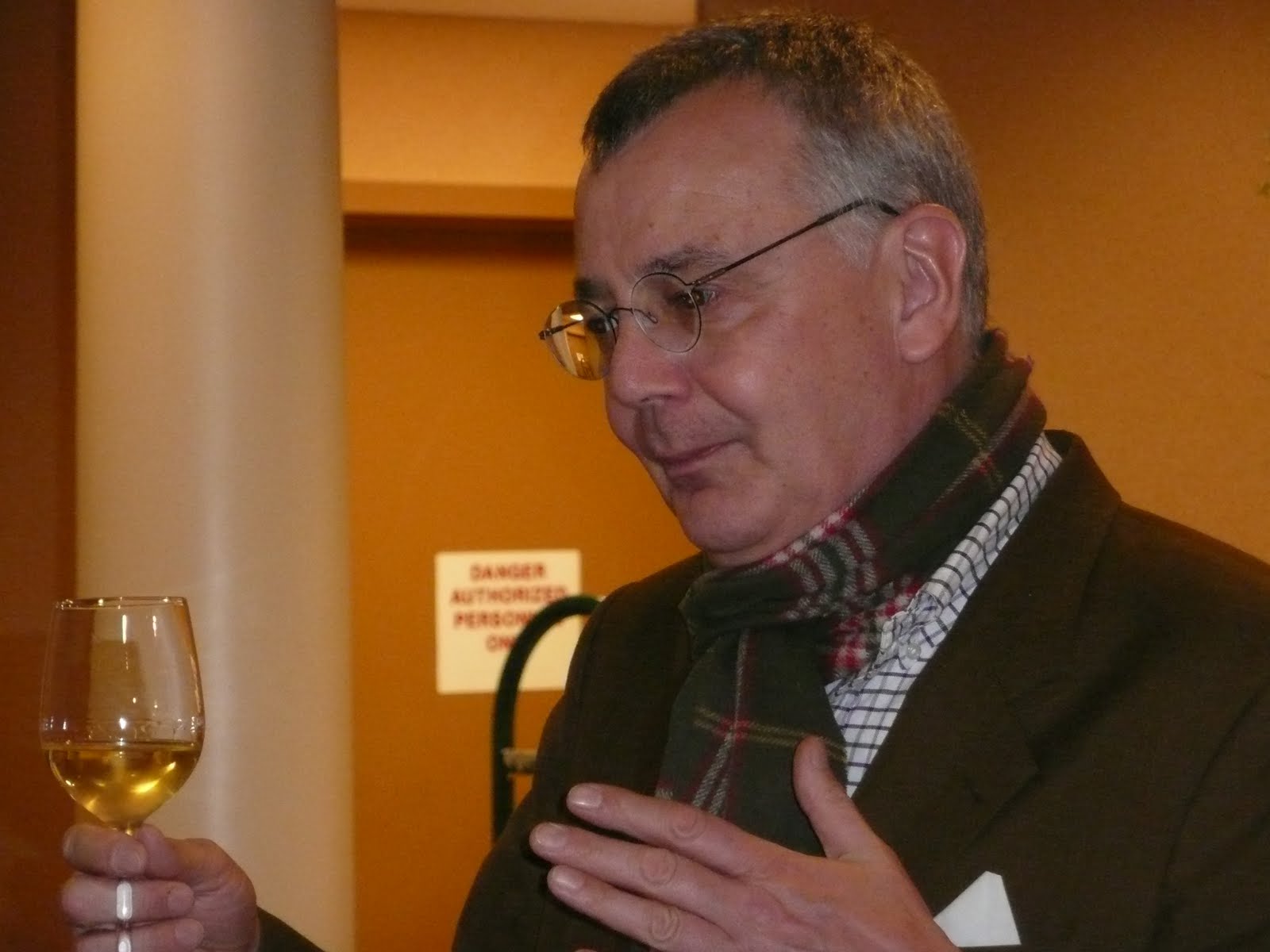
Today, April 17, is World Malbec Day. When people talk about Malbec, at least in the US, they talk about Malbec from Argentina. Indeed, over the course of last 20 years, Malbec has become Argentina's signature grape. But Cahors in the South West of France is were it all started and were Malbec originates from. I met one of the Malbec producers from Cahors - Dominique Resses - about a year ago and wrote about his Malbec here. I am republishing the posting - slightly modified - on World Malbec Day.

Picture: Dominique Resses, Malbec Producer from Cahors, France and Christian G.E.Schiller

The South West of France


The South West is a wine region in France covering several wine-producing areas situated respectively inland from, and south of, the wine region of Bordeaux. These areas, which have a total of 16,000 hectares of vineyards, consist of several discontinuous wine islands. The brandy-producing region Armagnac is situated within the Gascony, one of the wine islands.

Even though Cabernet Sauvignon and Sauvignon Blanc are grown in certain parts, the South West remains first and foremost a veritable mosaic of ancient grape varieties, unique to the region, including the red grape varieties Négrette, Duras, Tannat (now also the signature grape of Uruguy), Malbec (now also the signature grape of Argentina) and the white grape varities Colombard (at some point very popular in the US), Mauzac, Manseng, Courbu and Baroque.

Picture: The Wine Regions of the South West of France

The South West of France is also known for a its delicious regional cuisine: Foie gras, Jambon de Bayonne and Cassoulet, to name a few.

There are 18 AOCs, 20 Vins de Pays, with the following the best known appellations, from the south-west up to the north-east:

• The Pyrenean Piedmont: Irouléguy, Jurançon
• The Gascogne Basin: Côtes de Gascogne, Madiran, Saint Mont
• The Garonne Basin: Gaillac, Fronton, Côtes du Brulhois
• The Lot Valley: Cahors
• The Aveyron: Marcillac

Cahors

Cahors wines have a long history. The wine industry was developed by the Romans, who planted vines in Cahors even before they got to Bordeaux. The “ black wine” of Cahors reached its heyday in the Middle Ages, when they were on the table at the marriage of Eleanor of Aquitaine with Henry II of England in 1152. But Bordelais winemakers saw the Cahors wines as a competitor to their own wines and introduced taxes and levies that hindered Cahors’ export out of Bordeaux, and, in turn, its reputation. In addition, in the late-19th century, phylloxera nearly destroyed the wine business in Cahors. The vines recovered eventually. Things looked pretty bleak until 1971, when Cahors achieved AOC status.

The dominant grape variety in AOC Cahors wines is Malbec, which must make up a minimum of 70% of the wine, with Merlot and Tannat making up the rest. Cahors wines are notoriously tannic when young, benefiting greatly from aging.

Malbec, Cahors and Argentina

Cahors is the birthplace of Malbec. Yet, in America, if you know Malbec, it is probably because of its transfer to Argentina in the late 19th century. Argentinian Malbec is very popular in the US now and Cahors tries to piggyback on the popularity of Argentine Malbec in the U.S. The Cahors region is waving its flag and reminding people that Malbec came from somewhere else before it hit Argentina, and that Cahors would like some attention. Some producers, including Dominique Resses, are even starting to put the word "Malbec" on their labels.

La Caminade

This estate has been around since well before the French Revolution, resting in the hands first of the clergy and then, since 1895, in the hands of the Resses family. The Resses family, with others, has been instrumental since the 1950s in the rebirth of Cahors as a major wine-producing region.

What we tasted

2007 Mission La Caminade Cahors $9.99


Tasting notes: Medium garnet in the glass, smoked meats coupled with cassis and black cherry on the nose, a medium-bodied wine, in the mouth the wine has a supple leathery quality, with some stony minerality that gives way to more cassis and black cherry notes with a dusty finish.

2006 Château La Caminade "La Commandery" $19.99

97% Malbec and 3% Tannat; leafs are thinned and yield is limited to a maximum of 40 hectolitres per hectare; and grapes are 100% destalked and sorted fallowed by a long maceration and maturation in oak barrels of which 50% are new each year.

Tasting notes: dark red in the glass, hints of stones and smoke with black cherries and cassis on the nose, a full-bodied wine, with nuances of damp earth, black currant, smoke and licorice on the palate,”La Commandery” is a textbook Cahors.

Chateau La Caminade, Cahors, France
http://www.chateau-caminade.com/

Rick’s Wine and Gourmet, Alexandria, US
http://www.rickswine.com/

Wine Traditions
3604 Ridgeway Ter
Falls Church, VA 22044-1308
Phone: (703) 333-2853

Schiller Wine - Related Postings

The Wines of Domaine de la Solitude, Chateauneuf du Pape, France

In the glass: Hugel et Fils wines at the cuisine des emotions de Jean Luc Brendel at Riquewihr in Alsace

In the Glass: Iroulegy - A Wine from the South West of France

In the Glass: Pinot Noir from France, Germany and California

In the Glass: 1970 Chateau de La Riviere, Fronsac, France

Wine Bar: Paris - Le Petite Monceau, Willi's Wine Bar and Lavinia

Visiting Jean Trimbach at Maison Trimbach in Ribeauville in Alsace

The World Class Wines of Alsace

In the glass: Hugel et Fils wines at the cuisine des emotions de Jean Luc Brendel at Riquewihr in Alsace

In the world class white wine region Alsace

Visiting Yann-Leon Beyer at Maison Leon Beyer in Eguisheim in Alsace

A Cult Paris Wine Bar - Juveniles

The Wines of Domaine de la Solitude, Chateauneuf du Pape, France

In the Glass: Iroulegy - A Wine from the South West of France

Sylvain Bzikot's Puligny Montrachet, Bourgogne, France

Henri Lurton and his Chateau Brane Cantenac Wines

A Glass of Bordeaux – What Else? – With Wine Journalist Panos Kakaviatos

Martini, Noilly Prat and Picpoul de Pinet

Thursday, April 14, 2011

Morton’s Steakhouse Presented Peter Mondavi Jr. at a Charles Krug Winemaker Dinner

Picture: Christian G.E.Schiller with Peter Mondavi Jr.

I joined third generation proprietor of Charles Krug Winery, Peter Mondavi Jr., for a winemaker dinner at Morton’s Steakhouse in Reston, Virginia.

Charles Krug (1825 – 1892)

The Charles Krug Winery has been owned for many decades by Mondavis, but it was founded by Charles Krug, a German. He was born as Karl Krug in Tendelburg, near Kassel, which at that time was part of Prussia. When he arrived in San Francisco in 1852, he came with no grape-growing or winemaking experience. He was a university-trained journalist (with controversial political beliefs – a supporter of the March revolution - for which he was briefly jailed in Prussia). Until 1854, he worked for the German San Francisco Staats-Zeitung.

In the following years, he would become the major local winery figure of his era, greatly influencing Napa Valley's development as a world-renown wine producing region. Charles Krug made the first commercial wine in the Napa Valley, and the winery he built in 1861 is where Napa wine began. His leadership was said to be inspirational. Innovations such as using a cider press to efficiently crush the grapes, planting insect-resistant rootstock, and establishing the first public tasting room, truly made him a founding father of the pioneer Napa Valley wine industry.

The Peter Mondavi Sen. Family

When Charles Krug died in 1892, the winery was purchased by his close friend, James Moffitt, a San Francisco banker, who owned the winery through prohibition and sold the winery to Cesare and Rosa Mondavi, Italian immigrants, in 1943. Cesare was 60 when he purchased the winery for $75,000. His two sons, Peter and Robert, both went to Stanford, then came back to run the winery. Cesare died in 1959. The Mondavi brothers Peter and Robert could not agree on the general direction of the Charles Krug Winery and in 1966 there was the famous breakup between the two brothers. Robert left, was paid off and founded the Robert Mondavi Winery. Peter stayed and has been at the helm of the Charles Krug Winery since then.


Pictures: Peter Mondavi Jr.

There were tremendous enological, viticultural and marketing innovations that Peter Mondavi undertook during the last four decades. Among them were vintage dated varietals, pioneering cold fermentation and sterilization for white wines, use of small French oak barrels and glass lined steel tanks.

Meanwhile, Peter's two sons -- Marc and Peter Jr. - were educated at UC Davis and Stanford, respectively, and have been playing a major role in winemaking and winery management since the early 1980's. Marc oversees the vineyards and winemaking, while Peter Jr. manages marketing, sales and general winery functions.

Peter Jr. told us that Peter Sen. - 97 years old - continues to come to the winery every day. “He has been named one of the 12 living legends in Napa Valley's history by the Napa Valley Vintners Association, reflecting is pioneering efforts to plant vineyards in the Carneros region with Chardonnay and Pinot Noir and to introduce cold sterile filtration techniques and aging wine in small French oak barrels to the region” said Peter.

Charles Krug Winery

Located one-and-a-half miles north of St. Helena, “the Charles Krug Winery focuses production on lush red Bordeaux style blends, New Zealand style Sauvignon Blanc and classically crafted Chardonnay, Pinot Noir and Zinfandel” said Peter. Over the years, the Charles Krug Winery has grown to 850 acres of estate land. The wine portfolio comprises three groups of wines.

Napa Valley and Carneros Appellation Wines

The entry-level wines.

• Charles Krug Napa Valley Sauvignon Blanc
• Charles Krug Carneros Chardonnay
• Charles Krug Carneros Pinot Noir
• Charles Krug St. Helena Zinfandel
• Charles Krug Napa Valley Merlot
• Charles Krug Napa Valley Cabernet Sauvignon

Family Reserve

Wines produced from grapes harvested from specific vineyard blocks located in the prime vineyards. The Generations is a tribute to three generations of winemaking by the Mondavi Family while the Vintage Selection Cabernet Sauvignon is the Flagship Cabernet Sauvignon.

• Charles Krug Family Reserve Generations
• Charles Krug Vintage Selection Cabernet Sauvignon

Limited Release

The Limited Release selection is produced in small lots from 100 to 500 cases and harvested from the finest clonal selections of cabernet sauvignon, pinot noir grapes from the Dr. Maurice Galante Vineyard in the Russian River, and additional blending varietals. 2005 launched the first year of release of these wines from the 2002 vintage.

• Charles Krug Limited Release Pinot Noir
• Charles Krug Limited Release St. Helena Zinfandel
• Charles Krug Limited Release Red Wine Voltz Vineyard
• Charles Krug Limited Release X Clones
• Charles Krug Limited Release Lot XIV Zinfandel Port

Menu for the Evening

Reception
Jumbo Lump Crab Cakes
Belgian Endive with Blue Cheese
Tuna Tartare, Diced Tomato and Avocado

Charles Krug, St. Helena - Napa Valley, Sauvignon Blanc, 2010

Salad
Mixed Field Greens
Topped with Grilled Colossal Shrimp

Charles Krug, Carneros Chardonnay, 2009

Entree
Filet Mignon
Chive Mashed Potatoes
Roasted Tomato Stuffed with Sauteed Spinach
Shiitake Mushrooms

Charles Krug, Vintage Selection - 125th Anniversary, Cabernet Sauvignon, 1980
Charles Krug, Vintage Selection, Cabernet Sauvignon, 2006
Charles Krug, Vintage Selection - 150th Anniversary, Cabernet Sauvignon, 2008

Cheese Course
Green Hill (Jersey Cow Milk Cheese)
Roasted Wild Rice (Gouda)
GoreDawnZola (Gorgonzola)
Snow Drop (Goat Cheese)

Charles Krug, Zinfandel Port, Lot XIV

Dessert
Chocolate Covered Strawberries

Picture: Tylor Field, III, Vice President, Wine and Spirits, Morton's

The Wines

Charles Krug, St. Helena - Napa Valley, Sauvignon Blanc, 2010

Varietal Content: 100% Sauvignon Blanc
Stainless Steel Fermentation: no malolactic
Alcohol: 14.2%
RS: 0.35 g/100ml
Cases Produced: 14,362
Suggested Retail: $18.00

Charles Krug, Carneros Chardonnay, 2009

Varietal Content: 100% Chardonnay
Time in Barrel: 10 months in French oak
Alcohol: 14.2%
RS: 0.09 g/100ml
Malolactic Fermentation: 23%
Production: 8,424 cases
Suggested Retail: $20.00


Charles Krug, Vintage Selection - 125th Anniversary, Cabernet Sauvignon, 1980

Varietal content: 100% Cabernet Sauvignon
Time in barrel: 14 months
Bottled: February 2009
Alcohol: 13%
Production: 8,600 cases


Charles Krug, Vintage Selection, Cabernet Sauvignon, 2006

Varietal content: 100% Cabernet Sauvignon
Time in Barrel: 23 months in 100% new French oak
Bottled: September 2009
Alcohol: 14.7%
RS: 0.18g/100ml
Production: 1,655 cases


Charles Krug, Vintage Selection - 150th Anniversary, Cabernet Sauvignon, 2008

Varietal content: 91% Cabernet Sauvignon, 8% Merlot, 1% Petit Verdot
Time in Barrel: 22 months in 100% new French oak
Bottled: September 2010
Alcohol: 15.0%
RS: 0.02g/100ml
Production: 664 cases

Charles Krug, Zinfandel Port, Lot XIV

Bottled: September 2010
Alcohol: 18.0%
pH: 3.91
TA: 0.59 g/100ml
RS: 7.50 g/100ml
Production: 455 cases
Suggested Retail: $35.00 (375ml)


schiller-wine: Related Postings

Zinfandel and other "Italian" Wines of Seghesio Vineyards in California

The Wines of Abeja, Washington State

Wine Tasting: Soter Wines from Oregon at Out-of-Site Wines, Virginia

In the Glass: Pinot Noir from France, Germany and California

The Wines of Duckhorn Vineyards, Napa Valley

The Natural Wines of Donkey and Goat Winery in Berkeley, California

The California Pinot Noir Pioneer Walter Schug: From the Rheingau in Germany to Sonoma County in California

The California Central Coast Wines of Talley Vineyards

The Excellent Wines of Alexander Valley Vineyards in California

Drinking Zinfandel on Global Zinfandel Day

Wine ratings: Two American/German wines - Eroica and Poet's Leap - on Top 100 Wines from Washington State list for 2009

One of Oregon's Pioneering Winemakers - Myron Redford - with his Amity Vineyard Wines in Washington DC

German American Wines: (1) NV Two Worlds Pinot Noir, (2) Poet's Leap Riesling and (3) Herrmann Wiemer's Finger Lakes Rieslings

Wine Tasting: The Pinot Noirs of Patricia Green, Oregon, US

The Excellent Wines of Ken Wright Cellars, Oregon

The Jay Somers Wines of Bill Holloran, Oregon

Wednesday, April 13, 2011

Meeting Valckenberg Owner Wilhelm Steifensand and Tasting his Wines

Picture: Christian G.E.Schiller and Wilhelm Steifensand

I met Wilhelm Steifensand recently in Washington DC. He is the owner of Valckenberg International, one of the 3 big importers of fine German wine into the US, together with Rudi Wiest and Therry Theise. Therry Theise’s portfolio is more focused on young, innovative winemakers that Therry discovered for the US market, while both Rudi Wiest and P.J.Valckenberg focus on well established German wine estates with a big name and a long history, Rudi Wiest more on the West Coast and Valckenberg International more on the East Coast.

But the name Valckenberg stands for much more than for the importation of German wines into the US, as I learnt during the evening from Wilhelm Steifensand. In fact, he told me a fascinating story about Liebfrauenmilch and the rise of the P.J.Valckenberg Wine Merchant House in Germany.

P.J. Valckenberg is: an importer of German wines into the US, an importer of old and new world wines into Germany, a producer of sparkling and still wine in Germany, a distributer of imported and own wines in Germany, and an exporter of German wine to many countries.

Let me first go into what the name Valckenberg stands for. Then, find some tasting notes - I recently published some tasting notes on wines imported by P.J. Valckenberg into the US, which are reprinted thereafter.

Valckenberg Produces Wine in Germany

Weingut Liebfrauenstift, Madonna and Liebfraumilch


It all started in 1786, when the Dutch merchant Peter Joseph Valckenberg founded a wine trading company in Worms in neighboring Germany. About 2 decades later, in 1808, P. J. Valckenberg moved on to producing wine and established Weingut Liebfrauenstift, by buying the remaining part of the Capuchin Monastery Liebfrauenstift in Worms and most of the vineyards surrounding the Liebfrauenkirche in Worms, in the wake of secularization.

The Capuchin Monastery Liebfrauenstift and the gothic Liebfrauenkirche, which Capucin monks had build in the 1400s, had always been an important stopping point along the pilgrim route to Santiago di Compostela in north-west Spain. Pilgrims are said to have very much liked the wine produced by the monks and compared it to the “milk of Our Dear Lady” - thus Liebfraumilch was born!

Thanks to his excellent business connections, the House of Valckenberg was soon exporting its Liebfrauenmilch to all continents, including China - in those days part of the British Empire. In 1840, when Britain’s Queen Victoria married Prince Albert of Saxe-Coburg-Gotha, they had Liebfrauenmilch for lunch. Other early customers included the Swedish royal family, the Duke of Norfolk and the writer Charles Dickens. By 1900, the British trading company Berry Brothers & Rudd sold Liebfrauenmilch in the same price range as Château Margaux and Château d'Yquem in Bordeaux.

But in the 1800s, there were no production regulations in Germany, so that production of wine under the name Liebfraumilch could spread along the Rhine, losing any link with the original vineyard in Worms. As a result, by the time of Germany’s wine law of 1908, Liebfraumilch was designated a regional wine, rather than a vineyard-specific wine, while the original Liebfrauenmilch vineyard in Worms was renamed Liebfrauenstift-Kirchenstück.

As a consequence, from 1908 onwards, Valckenberg sold the wines from the original Liebfraumilch site around the Liebfrauenkirche as single-vineyard wines Liebfrauenstift-Kirchenstueck and Liebfrauenmilch wines from vineyards in the vicinity of Worms (in Rheinhessen) with the byname Madonna - to distinguish them from other Liebfrauenmilch wines. Madonna is Germany’s oldest brand name for wine. In the 1920s, Valckenberg extend the Madonna brand to wines with higher sugar content at harvest, i.e. Kabinett, Spaetlese and Auslese.

The 1971 wine law made Liebfraumilch an even larger regional wine, able to be produced not only in Rheinhessen, but also in the Pfalz, Rheingau and the Nahe. At the same time, the 1971 wine law stipulated that a Liebfraumilch had to be a QbA wine.

Today, Liebfraumilch bears no relationship to the original vineyard in Worms and has become over the years a fruity-sweet style, uncomplicated and easy to drink, from Rheinhessen, Pfalz, Rheingau or Nahe, always at the QbA level. It is a wine that is mainly produced for export, with the UK and Russia being strong markets.

P.J. Valckenberg continues to produce and export their Madonna line, starting from Madonna Liebfraumilch QbA to Madonna Kabinett, Madonna Spätlese, Madonna Auslese up to Madonna Eiswein, with the grapes coming from Rheinhessen. The original vineyards around the Liebfrauenkirche in Worms are today shared by several winemakers: Gutzler, Schembs, Spohr and Valckenberg (Weingut Liebfrauenstift), but Valkenberg owns the majority of the historic vineyards.

Weingut Liebfrauenstift in Worms

The vineyards total some 15 hectares of vines which are planted mainly with Riesling and Pinot Blanc. Winemaker Tilman Queins took over the estate in 2001. He supports a nature-oriented, environmentally sound management of vineyards with low yields. In the wine cellar, gentle handling, slow fermentation of the must and a long maturity period are main guiding principles.

Picture: The Liebfrauenkirche in Worms with Valckenberg's Liebfrauenstift Kirchenstueck. I drove by the vinyard in 2010.

Like many other winemakers, the Weingut Liebfraustift has introduced its own wine classification, with different approaches for dry and sweet wines. It follows the new VDP system. Basically, all dry wines are labeled as QbA (Qualitaetswein besonderer Anbaugebiete) wines. The level of quality is then expressed by the terroir principle; the narrower the specification, the higher the quality of the wine is. There are 3 quality levels for dry wines: Lagenweine, Ortsweine - the quality level below Gutsweine, with the winemaker, village and the grape variety indicated on the label; there is no vineyard indicated and Gutsweine – the quality level below Ortsweine, with only the winemaker and the grape variety indicated on the label. For sweet-style wines, the traditional wine classification of Kabinet, Spaetlese and Auslese is followed, and of course, also for the noble sweet wines.

Other Estates and Brands

Sektkellerei am Turm, Speyer: The P.J. Valckenberg Group also comprises a the Sektkellerei am Turm in Speyer, which makes sparkling wine for other producers of Sekt as well as for P.J Valkenberg.

Weingut Carl Graff: The Graff estate was founded in 1860 and acquired by P. J. Valckenberg in 1969. Graff estate wines are made exclusively from 100% Riesling grapes grown in the steep vineyards of the middle Mosel, Saar and Ruwer valleys.

Valckenberg Varietals: Valckenberg bottles different typical varietals from Rheinhessen under the Valckenberg label. These wines are produced by a single producer and bottled as Valckenberg Varietals.

Undone: Undone is a new Valckenberg brand. It comes as dry Riesling and as dry Pinot Noir. Germany ranks third in production of Pinot Noir and it is currently the fastest growing Pinot area in the World.

Valckenberg Imports Wine into and Exports Wine from Germany

Initially, German wine was exported in casks rather than bottles. By the mid 1800s wine making techniques had improved to a point where it was possible to export the wine in bottles. And it was not until the early 1900s that the wine estates started to bottle the wines themselves. Thus in the early days of wine exports, Valckenberg initially exported the wine in bulk form, before buying the wine in bulk but bottling it at the Valckenberg premises and finally buying the bottled wine from the producer.

The wine export portfolio includes well established German wine estates with a big name and a long history, including some of the names you find below in the tasting notes. As for the wine import portfolio in Germany, the Valckenberg portfolio comprises about 50 wineries from the old world (Austria, France, Spain and Italy) and the new world (Argentina, Chile, South Africa). Interestingly, Valckenberg does not import US wines into Germany.

Valckenberg Distributes Wine in Germany

Valckenberg is a big player in the distribution chain in Germany, with its own wines, wines of other German Estates and the imported wines.

Valckenberg Imports German Wine into the US

This was started about 20 years ago by Wilhelm Steifensand. The focus of Valckenberg’s wine portfolio is on wine makers with a long tradition. It does not include any of the new generation of innovative, young winemakers, for example from Rheinhessen, but relies on well respected, top-level wine makers with a long tradition, sometimes going back several centuries. The US Administrative office is centrally located in Tulsa. Valckenberg maintains two US warehouse inventories, Groskopf in California and Western in New Jersey.

Valckenberg Wines I Recently Tasted and Wrote About

The editor of the i-winereview, Don Winkler, and I tasted in December 2009 a selection of German wines which are imported into the US by Valckenberg. Here are our tasting notes, which were initially issued here.

2007, Pinot Noir, Baden, QbA, trocken, Bernhard Huber US$ 37 89 Points

Der Feinschmecker, the leading German food and wine journal, carries in the November 2009 issue an article about German red wine. Its message is that Germany has established itself as a serious red wine country during the past 30 years. Der Feinschmecker portraits 10 winemakers behind this wine revolution. One of them is Bernhard Huber in Baden in the South of Germany. It is not for no reason that he was Gault Millau’s wine producer of the year in 2007.

Baden is the most southerly and warmest German wine-growing area in Germany's southwestern corner, across river Rhine from Alsace. It is known for its pinot wines - both red and white. The Pinot Noir is the most widely grown grape variety in Baden. Pinot Noir is a late ripening grape variety; in Germany it is thus called Spaetburgunder (spaet = late)

An entry level dry red wine with a lot of finesse from one of the giants of German red wine. Light ruby red. Light aromas of cherry, smoke and wet earth. Good purity of raspberry and cherry fruit on a lean palate. Very well made wine with a persistent finish.

Alc. by Vol.: 13.5 %, residual sugar: 0.18 % (1.8 g/l), acidity: 0.53 % (5.3 g/l), 100 % Spätburgunder (Pinot Noir)

2008, Wuerttemberg Lemberger, QbA, trocken, Graf Neipperg US$23 88 Points

The counts of Neipperg have cultivated vines for over 700 years in the wine-growing region of Württemberg. Karl Eugen, hereditary count of Neipperg, has been responsible for the wine estate since 1984.

The main production area of Wuerttemberg is along the Neckar river between Stuttgart and Heilbronn. Until now, wines from Württemberg have been hard to find in the US. The two red grapes Lemberger and Trollinger dominate. The late-ripening Lemberger probably originated on the lower stretches of the Danube River. During the past decades there has been a steady increase in the vineyard area planted with Lemberger, which thrives in a warm climate and wind-protected sites, not least because bud-burst is early and it ripens late.

A charming entry-level dry red wine from a prominent German producer with a long tradition. Light ruby red. Bright red fruit aromas of cherry and blackberries. Light palate with good concentration of red berry fruit and harmoniously balanced tannins. Long, fruity finish. Good food wine.

Alc. by Vol.: 13.0 %, residual sugar: 0.3 % (3 g/l), acidity: 0.54 % (5.4 g/l), 100 % Lemberger

2008 Silvaner, QbA, trocken, Franken, Castell-Castell US$16 87 Points

The Castell-Castell Estate is situated in the Franken region. Located in the northern part of Bavaria, Franken is geographically situated at a higher elevation east of the more temperate Rheingau. Typically, Franken wine comes in the distinctive, dumpily-rounded Franken “Bocksbeutel” wine bottle. The bottle’s unusual shape dates back to at least the 16th century. The Bocksbeutel may only be used for Franken wines. This wine is not in a Bocksbeutel but in a regular bottle.

This is the only white wine that is not a Riesling in the tasting. Silvaner is a high-yielding white-wine grape, which is extensively cultivated in Rheinhessen, Pfalz and Franken. Silvaner tends to be low in acidity. Silvaner is a variety that has a long tradition at Castell-Castell. Indeed, in 1659 Castell planted the first Silvaner vines in Germany

A dry entry-level wine from a low acidity German grape variety made by a renowned Silvaner producer. Light straw color. Fairly ripe aromas of melon and peach note. Clean attack with slight effervescence and fresh, charming fruit on a simple palate. Harmonious finish with an exotic note.

Alc. by Vol.: 11.5 %, residual sugar: 0.7% (7.0 g/l), acidity: 0.57 % (5.7 g/l), 100 % Silvaner

2008 Undone Dry Riesling, QbA, Rheinhessen, US$ 15 85 Points

Rheinhessen is the largest viticultural region in Germany. Every fourth bottle of German wine comes from Rheinhessen, including many easy drinking wines. At the same time, Rheinhessen is among Germany’s most interesting wine regions. This is not because of the terroir, but because of the people. There is an increasing group of young, ambitious and dynamic winemakers who want to produce and indeed do produce outstanding wine and not wines in large quantities. One of the two German producers in the Wine Spectator’s Top 100 wines of 2009 --- Wittmann --- comes from Rheinhessen.

The front label cleverly depicts a woman’s torso in an unlacing corset and the back label suggests that the wine is “unoaked, unadulterated, crisp, dry naked flavor” A wine that is looking to compete with other easy drinking wines like Dr. Ernst Loosen’s Dr.L which is the other of the two German wines in the Top 100 list of the Wine Spectator 2009.

This Dry Riesling is an uncomplicated, easy drinking summer-party wine. Pale straw in the glass. Light, clean fruit with good acidity on the palate. Charming, uncomplicated finish. This wine will pair well with seafood and shellfish, as well white meats.

Alcohol: 11.5% Residual Sugar: 0.8% (8 grams per liter) Acidity: 0.67%, 100% Riesling

2008 Riesling trocken, QbA, Pfalz, Bassermann-Jordan US$ 20 87 Points

The Jordan family started wine growing in the 18th century. Friedrich von Bassermann-Jordan was the author of the seminal work on The History of Wine growing. Today, it is Germany’s largest privately owned Wine Estate.

The vines for the Riesling trocken are planted on the slopes of the Rhine valley in the Pfalz region. The slopes are south-east facing and contain a lot of sandstone in the soil.

The label on the bottle is somewhat classic in style with a modern twist: An illustrated woman is nude beneath a transparent dress.

A young and fresh dry Riesling summer picnic wine of a famous German wine estate with a long tradition. Pale lemon straw in the glass. Lightly aromatic with mineral notes on the nose. Fresh, crisp attack on the palate with light effervescence and refreshing acidity. Lasting, pleasant finish

Alc. by Vol.: 12.0 %, residual sugar: 0.51% (5.1 g/l), acidity: 0.83 % (8.3 g/l), 100 % Riesling

2008, Charta Riesling, QbA, Rheingau, Weingut Johannishof US$ 22 91 Points

Weingut Johannishof is owned and operated by the Eser family, who can trace back wine growing to the year 1685. Weingut Johannishof was a Winery for Value by Wine Spectator in 2007.

The Rheingau runs from east to west parallel to the Rhine’s 20 mile deviation from it’s northern course, about half an hour away by car or train from Frankfurt am Main. The vineyards line the slopes between the protective Taunus hills and the heat-reflecting surface of the Rhine.

This is a Charta wine. The Charta Association was founded in 1983 by a group of leading producers in the Rheingau with the aim of promoting the dry style in German winemaking, in response to the sweet wave of the 1970s. The Charta Association has established strict regulations as to how these dry wines are to be made, including low yields, a minimum alcohol level of 12 percent and the use of 100 percent Riesling grapes. The grapes cannot have been affected by noble rot. These dry, high-quality Charta-approved wines are bottled in tall brown bottles embossed with a double Romanesque arch.

A dry high-quality Charta Riesling that would go well with slightly spicy Asian food. Medium Straw in the glass. Pleasant aroma of ripe yellow peach and summer melon. Very flavorful attack of summer fruit—apple with strawberry notes--with good balancing acidity. Nice long finish.

Alc. by Volume: 11.5 %, residual sugar: 1.15 % (11.5 g/l), acidity: 0.78 % (7.8 g/l), 100 % Riesling

2008, Two Princes Riesling, QbA, Nahe, Salm-Salm US$ 15 86 Points

Schloss Wallhausen is one of Germany's oldest wine estates. Prinz zu Salm, the estate owner and current president of the VdP (Association of Prädikat Wine Estates), can trace his family tree back to 932 and his vineyards to 1200. “Two Princes” P2 is the signature wine of Prince Michael and Prince Constantin zu Salm-Salm, members of the 31st and 32nd generation of winemakers at Schloss Wallhausen.

The Nahe vineyards are scattered among the fields and orchards of the Hunsrück hills and the Soonwald forest along the Nahe river, situated between the Rhine and Mosel valleys.

Affordable easy drinking wine from one of Germany’s oldest wine estates with a light sweetness. Light gold in the glass. Flavours of tropical fruit with a crisp finish.

Alc. by Vol.: 11.0 %, residual sugar: 2.81 %(28.1 g/l), acidity: 0.76 % (7.6 g/l), 100 % Riesling

2008 Baron K’, Riesling Kabinett, Rheingau, Baron Knypenhausen, Eltville US$ 17 89 Points

The Knyphausens have been wine growers since 1818. Their estate in Eberbach, however, dates from 1141, when it was founded by Cistercian monks from Eberbach monastery. Today the estate is managed by its present owner, Gerko Baron zu Knyphausen supported by his five sons. This is another wine from the Rheingau region.

An off-dry attractive party wine showing very good concentration of fruit with a spicy finish. Medium yellow Straw in the glass. Light ripe apple and pear aromas. Excellent balance with brisk acidity and concentrated, fresh apples. Crisp finish.

Alc. by Vol.: 9.5 %, residual sugar: 2.65 % (26.5 g/l), acidity: 0.72 % (7.2 g/l), 100 % Riesling

2008 Maximin Gruenhaeuser Herrenberg, Kabinett, Mosel, C. von Schubert’sche Schlosskellerei US$29 89 Points

The estate was first documented in 966. The Schubert family purchased it in 1882. Since 1982, Dr. Carl von Schubert has managed the estate's vineyards. The Schlosskellerei von Schubert estate is more commonly referred to as Maximin Grünhaus. The wines of Maximin Grünhaus are reputedly some of the greatest of all Germany, and certainly dominate the Ruwer along with those from the Kartaeuserhof estate.

A sweeter style low-alcohol Kabinett wine from a a renowned German wine maker with a good mix of sweet fruit and brisk acidity. Medium Straw in the glass. Lots of floral and mineral notes on the palate, coupled with green apple and melón. Finishes clean with light fruit notes.

Alc. by Volume: 8.5 %, residual sugar: 4.13 % (41.3 g/l), acidity: 0.84 % (8.4 g/l ), 100 % Riesling

2008 Piesporter Goldtroepfchen, Riesling Kabinett, Mosel, Reichsgraf von Kesselstatt US$28 89 Points

In 1999, Reichsgraf von Kesselstatt celebrated its 650th anniversary. In 2007 it was a Winery for Value by the Wine Spectator.

In the Mosel area, vines are planted on the magnificent slate slopes lining the valleys of the rivers Mosel, Saar and Ruwer. The steep rocky vineyard of Goldtröpfchen above the town of Piesport is one of the most famous vineyards on the Mosel.

A sweeter style low-alcohol Kabinett wine from one of the most famous vineyards on the Mosel. Medium straw in the glass. Floral aromas of morning jasmine. Full-flavored attack of lush pear and apple fruit with good acidity and an amazingly long finish.

Alc. by Vol. 8.0 %, residual sugar: 4.9 % (49 g/l), acidity: 0.79 (7.9 g/l), 100 % Riesling

2008 Serrig Schloss Saarstein, Riesling, Kabinett, Mosel, Schloss Saarstein US$ 16 89 Points

The Saarstein estate is a prestigious monopole site on the Saar river, a tributary of the Mosel. The vineyards are steep and located directly along the river, allowing for morning fog to cool the grapes and allow for slow, healthy maturation. The grapes for this Kabinett wine grew in the heart of the steep Saarstein monopole site.

A deliciously refreshing sweeter style low-alcohol Riesling Kabinett wine. Medium straw in the glass. Aromas of white flowers, minerals, ripe pear, and a note of lime zest. Very flavorful attack of beautifully balanced fruit and acidity. Finishes long with sweet apple notes.

Alc. by Vol.: 7.5 %, residual sugar: 5.13% (51.3 g/l), acidity: 0.94 % (9.4 g/l), 100 % Riesling

2008 Graacher Himmelreich, Spaetlese, Riesling, Mosel, Carl Graff Collection US$ 17 89 Points

The Carl Graff Estate was founded in 1860 and acquired by P.J. Valckenberg in 1969. The wine is from a single vineyard site, Himmelreich situated around the village of Graach ---very steep slopes with southwest exposure; elevation 110 - 260 m; soil of pure slate.

A lovely classic low-alcohol sweet style Spaetlese from the Mosel. Light in color. Still bubbling a bit in the glass. Spice and flowers on the nose. Petillant attack of stone fruit with very good acidity and good depth of fruit on the palate. Pleasing and crisp finish with noticeable sweetness.

Alc. by Vol.: 7.5 %, residual sugar: 6.3 % (63 g/l), acidity: 0.83 % (8.3 g/l), 100 %

schiller-wine - Related Postings

German and Austrian Wines in the Wine Spectator Top 100 2010

German Spaetlese Wines Can Come in Different Versions. I Have Counted Five.

Phil Bernstein’s Third Annual German Riesling Tasting with the German Wine Society, Washington DC Chapter - Rieslings With a Touch of Sweetness

Visiting Agnes and Fritz Hasselbach at their Weingut Gunderloch in Nackenheim, Rheinhessen, Germany

Visiting Weingut Josef Leitz in Ruedesheim – Johannes Leitz is Germany’s Winemaker of the Year, Gault Millau WeinGuide 2011

1.International Riesling Symposium

Impressions from the Riesling & Co World Tour 2010 in New York

When Americans Drink German Wine - What They Choose

Terry Theise's Top German Wines of the 2009 Vintage

Germany's Top 16 Winemakers - Feinschmecker WeinGuide 2011

Aging Potential of Riesling – A Wine Tasting at the 1st International Riesling Symposium in Germany Led by Jancis Robinson

German Wine Society Tastes Outstanding German Wines at National Press Club in Washington DC

Impressions from the Riesling & Co World Tour 2010 in New York

German Wine Basics: Sugar in the Grape - Alcohol and Sweetness in the Wine

JJ Pruem Goes Supermarket: Meeting Katharina Pruem and Tasting the Incredible JJ Pruem Wines at Wegmans

Tasting Notes: German Wines imported into the US by Valckenberg

Tuesday, April 12, 2011

Meeting Didier Soto and Tasting His Biodynamic Mas Estela Wines from Catalonia

Picture: Christian G.E.Schiller with Didier Soto from Mas Estela in the Spanish part of Catalonia

Not many winemakers master the art of biodynamic winemaking. But Didier Soto from Mas Estela in the Spanish part of Catalonia, close to the French boarder, does it. I met him and tasted his wines at Cecile’s Wine Cellar located in downtown McLean, Virginia.

Wine Producer Spain

Located on the Iberian Peninsula, Spain has over 1 million hectares of vineyard land planted. It is with Italy and France in the leading trio of wine producing nations. Wine making in Spain began many centuries ago, even long before the Romans came. During the Roman Empire, Spanish wine was widely exported and traded. The end of the 19th century saw the emergence of Spain's sparkling wine industry with the development of Cava in Catalonia. Spain’s reputation entering the 21st century was that of a serious wine producing country that could compete with other producers in the world wine market.

Spanish wines are classified according a five-tier system, which, starting from the bottom, comprises: (1) Vino de Mesa (VdM) - These are simple, table wines. (2) Vinos de la Tierra (VdlT) - This level is similar to France's vin de pays system. (3) Vino de Calidad Producido en Región Determinada (VCPRD) - This level is similar to France's Vin Délimité de Qualité Supérieure (VDQS) system and is considered a stepping stone towards DO status. (4) Denominación de Origen (DO) - This level is for the mainstream quality wine regions. Nearly two thirds of the total vineyard area in Spain is within the boundaries a DO region. (5) Denominación de Origen Calificada (DOCa) - This designation, which is similar to Italy's Denominazione di Origine Controllata e Garantita (DOCG) designation, is for regions with a track record of consistent quality and is meant to be a step above DO level. Rioja was the first region afforded this designation in 1991 and was followed by Priorat in 2003, and Ribera del Duero in 2008.

The three most common aging designations on Spanish wine labels are Crianza, Reserva and Gran Reserva. (1) Crianza red wines are aged for 2 years with at least 6 months in oak. Crianza whites and rosés must be aged for at least 1 year with at least 6 months in oak. (2) Reserva red wines are aged for at least 3 years with at least 1 year in oak. Reserva whites and rosés must be aged for at least 2 years with at least 6 months in oak. (3) Gran Reserva wines typically appear in above average vintages with the red wines requiring at least 5 years aging, 18 months of which in oak. Gran Reserva whites and rosés must be aged for at least 4 years with at least 6 months in oak.

Major Spanish wine regions include the Rioja and Ribera del Duero which is known for their Tempranillo production; Jerez, the home of the fortified wine Sherry; Rías Baixas in the northwest region of Galicia that is known for its white wines made from Albariño and Catalonia which includes the Cava and still wine producing regions of the Penedès as well the Priorat region.

Picture: The Wine Regions of Spain

The country has an abundance of native grape varieties, with over 600 varieties planted throughout Spain though 80 percent of the country's wine production is from only 20 grapes—including Tempranillo, Albariño, Garnacha, Palomino, Airen, Macabeo, Parellada, Xarel•lo, Cariñena and Monastrell. Tempranillo is the second most widely planted grape in Spain and is an important grape in the Rioja, Ribera del Duero and Penedès regions. The most widely planted grape is the white wine grape Airén, served as the base for Spanish brandy.

Sherry is a fortified wine produced in southern Spain. It can either be sweet or dry, unlike Port. Port wine is made sweet by adding alcohol to the fermenting must so the fermentation stops and the sugar of the grapes remains in the wine. What you get is a wine with lots of alcohol and remaining sweetness in the wine. Sherry, on the other hand, is made by letting the fermentation go its full way so that a dry wine emerges. Then, alcohol is added to boost the alcohol level. If the winemaker stops there, you get a dry Sherry. If he also adds sterilized juice, you get a sweet Sherry. Thus, Sherry can be sweet or dry.

Cava is a Spanish sparkling wine made in the traditional method of the Champagne. Mostly, white grape varieties like Macabeo, Parellada and Xarel•lo are used for Cava, though some producers are experimenting with the use of Chardonnay and Pinot Noir.

Catalonia

“First of all” Didier Soto said, when I asked him what language to speak, “ I am Catalan and I speak Catalan at home. Then, I am a Spaniard.” “And then” I added you and I are Europeans”. Catalonia is one of the Kingdom of Spain's 17 autonomous communities, with Barcelona its capital. My daughter used to live there and when I visited her I was always surprised to hear so little Spanish in the streets and the bodegas. Among themselves, Catalans speak Catalan. Catalonia is really a community set apart by its language and culture. At the end of the last century, Catalonia imported Champagne techniques for the production of sparkling wines and today Catalonia is selling tens of millions of bottles of cava all over the world. Northern Catalonia is a term that is sometimes used to refer to the territory ceded to France by Spain in the 1600s, which now corresponds approximately to the French département of the Pyrénées-Orientales.

Biodynamic Wines

Mas Estella is a certified biodynamic winery. Biodynamic wines are part of the larger group of wines that I like to call eco-wines. What are eco-wines? Generally speaking, wines made with an ecological concept in mind. However, there are many different approaches in terms of what that implies in reality. I addition, there are winemaking concepts that belong to the larger family of eco-wine wines.

Organic: Organic generally means the use of natural as opposed to chemical fertilizers, insecticides and pesticides. The key is: no chemicals. Organic wines are changing the look of vineyards, literally. Whereas vineyards of the past commanded neat rows rid of all insects, rodents and weeds, organic vineyards are now replacing costly and damaging chemical sprays with environmental partnerships. Pesticides are giving way to introducing low-growing plants between vine rows that host beneficial insects that keep the pest insects in check.

Unfortunately, there is no agreement on what organic wine making as opposed to organic wine growing means. The main issue is the use of sulfur in the fermentation process. In the US, organic winemakers are not allowed to add sulfites during winemaking; an organic wine is a wine with basically zero sulfur. In Europe, sulfites are allowed to be added during fermentation and an organic wine typically contains a modest amount of sulfur.

Biodynamic: Biodynamic is similar to organic farming in that both take place without chemicals, but biodynamic farming incorporates ideas about a vineyard as an ecosystem, and also accounting for things such as astrological influences and lunar cycles. Biodynamic is an approach following the rules and ideas of Austrian philosopher-scientist Rudolph Steiner. In his 1924 lectures, he viewed the farm as an entire living ecosystem starting with the soil which is treated as a living organism and receives special applications to enhance its health.

Sustainable: Sustainability refers to a range of practices that are not only ecologically sound, but also economically viable and socially responsible. Sustainable farmers may farm largely organically or biodynamically but have flexibility to choose what works best for their individual property; they may also focus on energy and water conservation, use of renewable resources and other issues.

Natural: The idea behind natural wine is non-intervention and a respect for nature. For example, only natural yeasts are used, the fermentation is slow, there is little or no use of new oak barrels; and there are no filtrations or cold stabilization. Natural wines are minimalist wines produced with as little intervention as possible.

Vegan: Vegan refers to the process of fining the wine - eliminating undesirable items - with fining agents made from animal products, such as fish bladders and egg whites. As an alternative, Bentonite, a specific type of clay, is used for clarification in vegan wines. It’s important to note that vegan or vegetarian wines may or may not be made from organic grapes.

Carbon Footprint
: The carbon neutral label comes from a different angle: global warming. All economic activites have a carbon footprint, including wine making. Carbon neutral wineries are trying to make a contribution to the general efforts of reducing the emission of carbon dioxide.

Water Footprint: A new thing is water footprint, reflecting the concern that the planet is moving into a period where water becomes more and more scarce.

Mas Estela

Mas Estela is a small certified biodynamic winery, making premium wines. It is operated by Didier and Nuria Soto and two of their boys, Didac and Josep. It is located in the Emporda-Costa Brava wine region, two hour’s drive north of Barcelona, where the Pyrenees mountains meet the Mediterranean sea on the Cap de Creus, only 3 kilometers away from the beach. The Empordà-Costa Brava wine region has become a very promising area for making high quality wines. Despite being a traditionally co-operative area, new smaller family like Mas Estela have been springing up, which are now up-dating wine-making methods.

The Sotos first discovered Mas Estela in 1989 while on a hiking vacation. The Mas was in ruins and the property was abandoned. The Soto’s contacted the owners and quickly settled a deal. Within a year the Sotos moved there. They immediately started reviving plants that could be salvaged and re-planted the rest. Today, the vineyard boasts 15 hectares of land divided among Carignan, Monastrell, Grenache, Syrah, Chardonnay and Muscat d’Alexandria grape varietals.

It is a mountainous vineyard with poor soil, made up mainly of brown slate which means that the young plants need to work hard and put down deep roots to look for any moisture they can. Eventually the roots could go down 5-6 metres and that is when you will really get the mineral flavors so much appreciated by wine lovers. The grapes are hand-picked and vinified with great care. When the grapes come in to the Bodega, they are destemmed and crushed into grape juice which is cooled to 8ºC from the 24ºC or so when they arrive, filtered, then stored in the stainless steel tanks where they undergo the first controlled fermentation to convert all the sugar to alcohol.

The Wines Didier and Jonas Poured

The Mas Estela wines were presented by Didier Soto and Jonas Gustafsson, wine explorer, according to his business card, and owner of Vin de Terra Imports. Vin de Terra represents Jonas Gustafsson Selections, a growing portfolio of high-quality wines from Spain. Jonas Gustafsson has over 20 years of experience in the wine retail and importation industries, and now brings us his own selections with a focus on his passion for Spanish wine.

Mas Estela Selva De Mar Blanca 2008

A blend of 85% Grenache Gris and 15% Muscat d’Alexandria aged for 6 months on the fine lees in second use acacia barrels. You’ll immediately notice tropical fruit with accents of fresh flowers, grapes and orange, but the depth of the aroma sneaks up on you. The flavors are deep and complex, too, with orange blossom, fresh fruit, and even a touch of coconut flavors.
Regular Price: $26.99 Sale Single Bottle: $21.98

Mas Estela Quindals Tinto 2007

A blend of 90% Grenache and 5% each Syrah and Carignan, the 2007 Quindals opens with generous aromas of black fig, black raspberry jam, and cheerful Christmas spice. In the mouth it is rich with loads of black raspberry, black plum, baking spice, and coffee flavors. It finishes with more coffee and red raspberry notes with fine, ripe, tannin emerging at the end to give everything support.
Regular Price : $29.99 Sale Single Bottle: $24.98

Mas Estela Selva De Mar 2004

The 2004 Vinya Selva de Mar Negre is a blend of 50% Garnacha, 30% Syrah, and 20% Carinena aged for 18 months in 33% new French oak. Inky purple in color, it offers up a complex aromatic array of balsamic, hazel nut, kirsch, cassis, mineral, and garrigue. Elegant on the palate, it has outstanding volume, intense, succulent fruit, some elegance, and a lengthy finish.

The inland parts of Catalonia are known for a cuisine that includes earthy combinations of fruit and meat (or poultry)—dishes that go amazingly well with the equally distinctive and delicious Grenache-based wines of Catalonia.
Regular Price: $41.99 Sale Single Bottle: $36.98

Mas Estela Vinya Selva De Mar Natural 1991

Grown in the most Northwesterly regions of Catalonia, Mas Estela is a true regrown work of nature. The land was taken over in 1989 by the Soto family, who have since restored the property to a 100% bio dynamic vineyard, planting Garnacha, Carignan, Monastell, and Muscat of Alexandria.

The Selva de Mar is 100% Garnacha blended in the solara style. The wine presents a deep garnet with richer notes of Mahogany. The aromas are something like nutty raisins, crushed red fruit and hints of coffee and caramel.
Regular Price: $64.99 Sale Single Bottle: $54.98

Mas Estela Vi De Lluna 2007

The 2007 Vi Luna from Mas Estela is a bold, ripe, blend of 50% Grenache and 50% Syrah. It’s a blockbuster of a red, bursting with super-ripe black raspberry fruit, Belgian chocolate, and loads of spice. Round and rich in the mouth, it explodes on the long, bold, finish with hints of kirsch, framboise, and dark chocolate lingering nicely.

Regular Price: $64.99 Sale Single Bottle : $58.98

schiller-wine: Related Posting

The Wines of Bodegas Epifanio Rivera in Spain

Welcoming Winemaker Ruben Saenz Lopez and his Bodegas San Prudencio Wines from Rioja in Spain to Washington DC

Monday, April 11, 2011

Drink Local Wine 2011 Missouri Twitter Taste-off, USA

Pictures: Christian G.E.Schiller with Jim and Jan O'Horo from the White Rose Winery; their Chardonel 2006 was my choice of best white wine

DrinkLocalWine.com held its third annual conference on April 1-3, 2011, in St. Louis, Missouri, and I was very happy to be able to participate in it. DrinkLocalWine.com is about spotlighting wine made in the 47 States of the US that are not one of the big three: California, Washington State, and Oregon.

One of the highlights of the conference was the DLW 2011 Missouri Twitter Taste-off, which is the subject of this posting. 20 Wineries participated with 2 wines each. I have provided an overview about the Drink Local Wine Conference 2011 in Missouri here.

Wine Producer Missouri

Missouri’s wine history dates to the 1830s, when German immigrants established Hermann and the Missouri River as one of the main viticulture areas in the US, growing the American grapes that they found there when they arrived. 50 years later, more wine was produced in Missouri than in any other State in the US. But then came Prohibition and brought Missouri’s wine industry to a halt. However, Missouri’s wine industry came back, starting in the 1960s, in particular after French American hybrid grapes became available. Indeed, the Augusta AVA (American Viticultural Area, the American equivalent of the French Appellation d’Origine Contrôlée - AOC) in Missouri is the first federally approved AVA (gaining the status on June 20, 1980, eight months before the Napa Valley AVA).

Today, Missouri has more than 1,400 acres planted in grapes and more than 100 wineries. Missouri is again a serious wine producer, relying heavily on French American hybrid grapes and native American grapes like Vidal Blanc, Seyval Blanc, and Norton - the latter one being the most prominent Missouri-grown variety. The State’s climate is harsh and humid and vinifera grapes – like Chardonnay and Merlot - have a hard time to thrive under these conditions, although recently there has been more interest in planting vinifera grape varieties.

However, overall, Missouri is a small player now, accounting for less than 0.5% of total wine production in the US.

Missouri Twitter Taste-off


Pictures: Russ Kane, Vintage Texas, and Eric V. Orange, LocalWineEvents.com. Russ is on the left and Eric on the right

The Twitter Taste-off of Missouri wines was one of the highlights of the DLW2011. For a whole afternoon, participants were tasting the wines and blogging and tweeting about what they tasted, with the Twitter hash tag #DLWMO, with the tweets being shown on a large screen. The screen, changing constantly, was displaying real-time tweets by people present at the tasting, but also by people at home sitting in front of their computer and following the tasting via Twitter from there. These people could also sent tweets and participate in the discussion. And they did. Last year, at the DLW2010 in Virginia, 4 million Twitter impressions were recorded; this year’s number, I am sure, will be even higher.

The Wines we Tasted

7CS Winery
NV Midlife Crisis – Blackberry Mead, Missouri, 2010
Stagecoach, Vidal Blanc, Missouri, 2010

Adam Puchta Winery
Norton 2005, Estate Hermann, 2005
Signature Port, Missouri, NV

Pictures: Christian G.E.Schiller with Tim Puchta, Owner of Adam Puchta and Sons Wine Company. Adam Puchata wines won in 2 categories.

Augusta Winery
Chambourcin, Augusta,2008
Vignoles, Missouri, 2010

Buck Mountain Winery
Marechal Foch, Ozark Mountain, 2009
Vidal Blanc, Ozark Mountain, 2010

Cave Vineyard/Strussione Wine
Norton, Ozark Mountain, 2008
Cave Rock Off Dry, Ozark Mountain, 2009

Chaumette Vineyards & Winery
Chambourcin, Missouri, 2009
Chardonel Reserve, Ozak Mountain, 2009

Pictures: Christian G.E.Schiller with Hank Johnson, Owner of Chaumette Vineyards and Winery. Chaumette's Chardonel won in 2 categories.

Hermanshof Vineyards
Vidal Blanc, Hermann, 2008
Traminette, Missouri, 2006

Indian Creek Winery
Norton, Missouri, 2009
Vignoles, Missouri, 2009

Jowler Creek Winery
Norton, Missouri, 2008
Vignoles, Missouri, 2009

Les Bourgeois Vineyards
Norton, Missouri, 2008
Labelle (Vignoles), Missouri, 2010

Montelle Winery
Cynthiana, Missouri, 2009
Seyval Blanc, Montelle Winery, 2010


Pictures: Christian G.E.Schiller with winemaker/owner Tony Kooyumjian at Montelle Winery.

Peaceful Bend Vineyard
Meramec, Missouri, NV
Whittenburg, Missouri, NV

Robller Vineyard Winery
Hillside Cuvee, Missouri, 2009
Hillside Blanc, Missouri, 2009

Seven Springs Winery
Seven’s Red Heaven, Ozak Highlands, 2008
Spring Fling, Ozak Highlands, 2007

St. James Winery
Chambourcin, Ozark Mountain, 2009
Vignoles, Ozark Mountain, 2010

Stone Hill Winery
Norton, Hermann, 2007
Vignoles, Missouri, 2010

Sugar Creek Vineyards & Winery
Cynthiana, St. Charles County, 2009
Chardonel, St. Charles County, 2009

Picture: Christian G.E.Schiller with owners Ken and Becky Miller at Sugar Creek Vineyards and Winery.

Wenwood Farm Winery
Century Farm Red, NA, NV
Country Estate White, NA, NV

Westphalia Vineyards
Norton Reserve, Osage County, 2006
Marie’s River Red, Osage County, 2009

White Rose Winery
Marechal Foch, Ozark Mountain, 2006
Chardonel, Ozark Mountain, 2006

Grape Varieties: American Grapes and French American Hybrid Grapes

When people think about American wine, they think about Merlot, Chardonnay, Zinfandel, to name a few. None of these grape varieties could be found on the list of the Missouri Twitter Taste-off. Why? Merlot, Chardonnay and Zinfandel belong to the group of vitis vinifera (European) grapes and are - until now - rarely grown in Missouri as they have a hard time to thrive under the climatic conditions of Missouri.

When the German settlers arrived in Missouri in the 1800s and started to grow wine, they did this with the American grapes varieties they found in Missouri. So, before prohibition, when Missouri was a dominant wine producer in the US, Missouri was this with American grapes, like Concord.

Then came the phylloxera crisis in Europe and biologists fought to rescue European winemaking. One route they went was crossing the European grapes with American grapes. They developed what is now called French American hybrid grapes. These try to combine the elegance of the European grapes with the robustness of the American grapes. Eventually, Europe went the way of grafting European grape vines on American rootstocks, which solved its problem, but at the same time these French American hybrid grapes came into existence. Missouri is taking advantage of them. The overwhelming majority at the Missouri Twitter Taste-off were French American hybrid grape wines:

Chambourcin - Its parentage is uncertain; it is one of the parents of the new disease resistant variety, Regent, which is increasing in popularity among German grape growers. See here. Andrew Meggitt, executive winemaker, St. James Winery said: “Chambourcin is much less fragile than Norton.”

Seyval Blanc – One of the first French American hybrid grapes; is popular in England and the Finger Lakes region. “When I started to grow Seyval Blanc, 80% of the wines were fermented in a sweet style at my winery; now it is the opposite” said winemaker/owner Tony Kooyumjian of Montelle Winery and Augusta Winery.

Chardonel - Is a late ripening white wine hybrid grape, developed in New York State as a crossing of Seyval Blanc and Chardonnay.

Traminette - Developed by Cornell University; Gewürztraminer is one of its parents; a rather new grape variety.

Vignoles – Popular in the Finger Lakes region and along the Missouri River; another very aromatic grape variety. "Lends itself well to a slightly sweet wine.” said Tony Kooyumjian.

Marechal Foch – Developed by the Alsatian Eugene Kuhlmann in France.

Vidal Blanc - Cory Bomgaars, head winemaker, Les Bourgeois Vineyards said: “This is one of my favorites. It is such a workhorse. And I do not see the volume affecting the flavor.”

In addition to the French American hybrids, there were a number of Norton wines. It is the most prominent Missouri-grown grape variety, Missouri’s signature grape, and also known under the name Cynthiana. It is believed to be a variety of vitis aestivalis. Among the two dozen or so grape species native to North America, only one has proven itself capable of good dry table wines. That grape is Norton. “American grape varities are good for sweet wine but they are not good for dry wines” said Tony Kooyumjian.

Recently there has been a renewed interest in vinifera (European) grape varieties in Missouri and I indeed tasted some. But often the Merlots and Chardonnays made by Missouri wineries are wines made with fruit brought in from California, i.e., wines made from grapes grown in California and fermented and aged in Missouri. Such wines are identified as American wines on the back label, as opposed to Missouri wines or even more restrictive appellations. But advances in vine growing have furthered the prospects of planting vinifera grapes in Missouri. But this is a slow process. And Missouri winemakers may prefer to stick with French American hybrids.


Pictures: The founder of Mount Pleasant Winery, Frederic Muensch; "American" Cabernet Sauvignon and "Missouri" Norton from Mount Pleasant Estates.

Missouri Wine Regions

None of the wines at the Missouri Wine Twitter Taste-off was labeled as American wines, i.e. made from grapes coming from out of state. A number of wines were labeled as Missouri wines, i.e. made from grapes from various wine regions in Missouri. Most wines were from more restrictively defined regions in Missouri. However, one should not forget that under the AVA regulations, only at least 85% of the wines has to originate there and up to 15% can sourced from elsewhere.

There are now 4 American Viticultural Areas (AVA) in Missouri.

Augusta AVA: The first AVA in the United States. In the mid-1800s German immigrants found the Missouri River area just west of St. Louis to be well suited for growing grapes.

Ozark Mountain AVA: A large AVA with several smaller AVAs within its borders, including Augusta, Hermann and Ozark Highlands. It is the sixth largest AVA in the US.

Hermann AVA: One of the most historic wine regions in the US.

Ozark Highlands AVA: The fourth accorded AVA in Missouri.

The Winners

Best White Wine: Chaumette Chardonel 2009
Best Red Wine: Adam Puchta Norton 2005
Media Choice Wine: Chaumette Chardonel 2009
People Choice Wine: Adam Puchta Port NV
C.G.E.Schiller Choice Red: Adam Puchta Winery Norton 2005
C.G.E. Schiller Choice White: White Rose Winery, Chardonel, Ozark Mountain, 2006

schiller-wine: Related Posting

Drink Local Wine Conference 2011 in St. Louis: The World of Missouri Wine

Maryland Crabs and Wine

The Wines of Veramar, Virginia, US

The 2010 DrinkLocalWine Conference in Virginia, US

Thomas Jefferson, 3. President of the United States, Visited Hochheim, Germany on April 10,1978

New Hampshire, US: Cheese ... Lobster and Oysters ... and Wine!

When Americans Drink German Wine - What They Choose

Norton and Other Wines of Chrysalis Vineyards in Virginia

Wine Tasting Notes: Woelffer Wines from Long Island, New York State - Nov. 23, 2009

Wine Tasting: Castello di Borghese, Long Island, New York State - November 18, 2009

In the glass: 2005 Christian's cuvee, Woelffer Estate Vineyard, Long Island, US - November 11, 2009

German Winemakers in the World: Christian Woelffer and Roman Roth - November 13, 2009

Wine Region: Upcoming Long Island, New York State

Germany's wine makers and twitter

Wine and Web 2.0 in Germany

German Wine Society Tastes Outstanding German Wines at the National Press Club in Washington DC