Showing posts with label biodynamic wine. Show all posts

Monday, May 5, 2014

What is a Slow Wine? German Slow Wine Tasting with Kai Wagner in Bad Homburg, Germany

Picture: Christian G.E. Schiller and Kai Wagner in Bad Homburg, Germany

The Collegium Vini is an association of wine lovers in the greater Frankfurt area, founded in 1951, that meets regularly to taste wine together. This time, the Collegium Vini invited wine book author Kai Wagner to lead a wine tasting and to talk about his concept of slow wine and his book „Die Avantgarde der deutschen Winzer - Slow Wine und seine Erzeuger im Porträt“ (The Avantgarde of German Winemakers – Slow Wine and its Producers) ((Oekom-Verlag, München 2013). Co-author Ulrich Steeger was also present.

Slow Wine

The Slow Wine Movement grew out of the Slow Food Movement. The latter was a reaction to the fast food wave – industrialized, standardized, inexpensive food – that swept over the world during the economic upswing and globalization of the post-war area in the second half of the 1900s.

The German Slow Wine Movement is in its early stages and still in the process of defining itself. It is quite tricky. Slow wine making has to find its place within a number of other, competing concepts that all pursue similar aims: organic winemaking, biodynamic winemaking, sustainable winemaking, zero carbon footprint winemaking, zero water footprint winemaking, natural winemaking, to name the most important ones.

Picture: Christian G.E. Schiller and Slow Wine Producer Matthias Adams, Weingut von Racknitz, at 2014 Apfelwein Weltweit, see: 2014 Apfelwein Weltweit - Apple Wine World Wide - in Frankfurt, Germany: Schiller’s Favorites

Organic and Similar Concepts of Winemaking

A couple of years ago at Weingut Meinklang in Pamhagen in Austria in the stone cave below the winery with winemaker Werner Michlits, where Werner showed us his magic cow poop and other ingredients for biodynamic farming, I felt at the forefront of wine making with an ecological mindset. There are many others on this route. But these “green” winemakers come in different colors. I just tasted the Santa Julia wines of Familia Zuccardi, who produce mass wines in Argentina with organic grapes. Argentina, in general, is very well suited for organic wine making. “We practice sustainable agriculture in the vineyard” said Yann-Leon Beyer when I visited Domaine Leon Beyer in Alsace in France. The Donkey and Goat Winery in Berkeley produces wine according to the natural wine concept in the midst of the city of Berkeley, without owning any vineyards. Researchers have found out that from a point of view of minimizing the carbon footprint, New Yorkers should drink European wine instead of domestic wine from California. The following tries to shed some light on the different concepts of “green” wine making.

Picture: Christian G.E. Schiller with Slow Wine Producer Dr. Manfred Pruem, Weingut J.J. Pruem, in Germany. See more on Weingut J.J. Pruem: JJ Pruem Goes Supermarket: Meeting Katharina Pruem and Tasting the Incredible JJ Pruem Wines at Wegmans

Organic (Bio in German) generally means the use of natural as opposed to chemical fertilizers, insecticides and pesticides. The key is: no chemicals. Organic wines are changing the look of vineyards, literally. Whereas vineyards of the past commanded neat rows rid of all insects, rodents and weeds, organic vineyards are now replacing costly and damaging chemical sprays with environmental partnerships. Pesticides are giving way to introducing low-growing plants between vine rows that host beneficial insects that keep the pest insects in check.

Biodynamic is similar to organic farming in that both take place without chemicals, but biodynamic farming incorporates ideas about a vineyard as an ecosystem, and also accounting for things such as astrological influences and lunar cycles. Biodynamic is an approach following the rules and ideas of Austrian philosopher-scientist Rudolph Steiner.

Picture: Christian G.E. Schiller and Slow Wine Producer Steffen Christmann, Weingut A. Christmann, in Seattle, USA. See: The German Winemakers at the Forthcoming 4. Riesling Rendezvous in Seattle, Washington State, USA

Sustainable farming means farming in a way that will allow for continued farming throughout the ages. In its broadest interpretation, sustainability refers to a range of practices that are not only ecologically sound, but also economically viable and socially responsible. Although nowhere defined by law, there are many certifications available for “Sustainable Wine.”

Natural: The idea behind natural wine is non-intervention and a respect for Mother Nature. Natural wines are hands-off wines produced with as little intervention as possible. Generally, the concept of natural wine relates more to what happens in the wine cellar rather than what happens in the vineyard. Again, nowhere is the term defined by law; it is left open to interpretation. Typically, only natural yeasts are used, the fermentation is slow, there is little or no use of new oak barrels; and there are no filtrations or cold stabilization.

Pictures: Christian G.E.Schiller with Slow Wine Producers Lotte Pfeffer-Müller and Hans Müller, Owners of Weingut Brueder Dr. Becker. See also: Excellency and Ecology: The Wines of Gebrueder Dr. Becker in Rheinhessen, Germany

Carbon Footprint: The carbon neutral label comes from a different angle: global warming. All economic activities have a carbon footprint, including wine making. Carbon neutral wineries are trying to make a contribution to the general efforts of reducing the emission of carbon dioxide. Belgrave Park Winery in Australia, for example, is a completely carbon neutral vineyard and winery.

Water Footprint: A new thing is water footprint, reflecting the concern that the planet is moving into a period where water becomes more and more scarce.

For a primer for "green" wines see: Organic, Sustainable, Biodynamic, Natural Wines … A Primer for “Green” Wines

The German Slow Wine Concept

The German Slow Wine Concept is still in the process of defining itself. About a year ago, Ulrich Steger released a draft memorandum which is quite helpful in terms of understanding what he and Kai Wagner have in mind. He named 3 criteria that were critical in distinguishing slow wine from other wine, in particular industrial, mass wine:

Pictures: Kai Wagner and Ulrich Steeger, and their book: "Die Avantgarde der deutschen Winzer - Slow Wine und seine Erzeuger im Porträt“ (The Avantgarde of German Winemakers – Slow Wine and its Producers) ((Oekom-Verlag, München 2013).

First, a slow wine has a regional and cultural identity. A Riesling slow wine from the Rheingau region should taste differently than a Riesling from the Pfalz region; a 2010 slow wine should taste differently than a 2011 vintage. A slow wine producer grows those grape varieties that have proven to fit the soil type and the climatic conditions in the region.

Second, slow wine producers are artisanal wine makers. This starts in the vineyard with, for example, harvesting by hand, and continues in the wine cellar, with, for example, a preference for spontaneous fermenting.

Third, a slow wine producer is a winemaker with an ecological mindset. A slow wine producer will typically follow one of the above mentioned concepts of “green” winemaking.

The German Avantgarde of Slow Wine Producers

If you know the German wine scene, the list of slow wine producers included in their book is also helpful to understand what Kai Wagner and Ulrich Steeger have in mind, when they talk about slow wine. They grouped the selected winemakers under several headings.

Die Bio-Pioniere (The Organic Pioneers)

Weingut Brüder Dr. Becker, Ludwigshöhe • Rheinhessen
Weingut Hahnmühle, Mannweiler-Cölln • Nahe
Weingut Thorsten Melsheimer , Reil • Mosel
Weingut Pix, Ihringen • Baden
Weingut Roth, Wiesenbronn • Franken
Weingut Arndt F. Werner, Ingelheim • Rheinhessen
Weingut Wittmann, Westhofen • Rheinhessen
Weingut Zähringer, Heitersheim • Baden

Die Mentoren der Bewegung (The Mentors of the Movement)

Weingut A. Christmann, Neustadt-Gimmeldingen • Pfalz
Weingut Rudolf Fürst, Bürgstadt • Franken
Weingut Dr. Randolf Kauer, Bacharach • Mittelrhein
Weingut Joh. Jos. Prüm, Bernkastel-Wehlen • Mosel
Sekthaus Raumland, Flörsheim-Dalsheim • Rheinhessen
Weingut Ökonomierat Rebholz, Siebeldingen • Pfalz

Mehr Slow als Öko (More Slow than Bio)

Weingut Bickel-Stumpf, Frickenhausen, • Franken
Weingut Dr. Corvers-Kauter, Oestrich-Winkel • Rheingau
Weingut Danner, Durbach • Baden
Weingut Hofmann, Röttingen • Franken
Weingut Kistenmacher-Hengerer, Heilbronn • Württemberg
Weingut Klosterhof Töplitz, Werder (Havel) • Saale-Unstrut
Weingut Martin Müllen, Traben-Trarbach • Mosel
Weingut Schlör, Wertheim-Reicholzheim • Baden

Auf dem Weg nach ganz oben (On the Way to the Very Top)

Weingut Theo Minges, Flemlingen • Pfalz
Weingut Rainer Schnaitmann, Fellbach • Württemberg
Weingut Seeger, Leimen • Baden
Weingut St. Antony, Nierstein • Rheinhessen
Weingut Jean Stodden, Rech • Ahr
Weingut Vols, Ayl/Saar • Mosel
Weingut Wagner-Stempel, Siefersheim, • Rheinhessen
Weingut Klaus Zimmerling, Dresden-Pillnitz • Sachsen

Die Unorthodoxen heute (The Non-orthodox Winemakers Today)

Weingut J.B. Becker, Walluf • Rheingau
Weingut Gysler, Alzey-Weinheim • Rheinhessen
Weingut Heymann-Löwenstein, Winningen • Mosel
Ökologischer Weinbau Krämer, Auernhofen • Franken
Weingut Peter Jakob Kühn, Oestrich • Rheingau
Weingut Jürgen Leiner, Ilbesheim • Pfalz
Weingut Zehnthof Luckert, Sulzfeld • Franken

Die Quereinsteiger (The Career Changers)

Weingut von Racknitz, Odernheim • Nahe
Weingut Reverchon, Konz-Filzen • Mosel
Weingut Dr. Siemens, Serrig • Mosel
Weingut Van Volxem, Wiltingen • Mosel

Über wen sprechen wir in fünf Jahren? (Who will we talk about in 5 Years?)

Weingut Knauß, Weinstadt • Württemberg
Weingut Philipps-Mühle, St. Goar • Mittelrhein
Weingut Schmidt am Bodensee, Wasserburg • Württemberg
Weingut Sohns, Geisenheim • Rheingau
Weingut Zum Eulenturm, Briedel • Mosel

The Slow Wines Poured at the Tasting

Another interesting list is the one of the wines poured at the Collegium Vini event. Overall, these were all fascinating, outstanding wines. For many wines, however, participants had questions as to what made them slow wines.

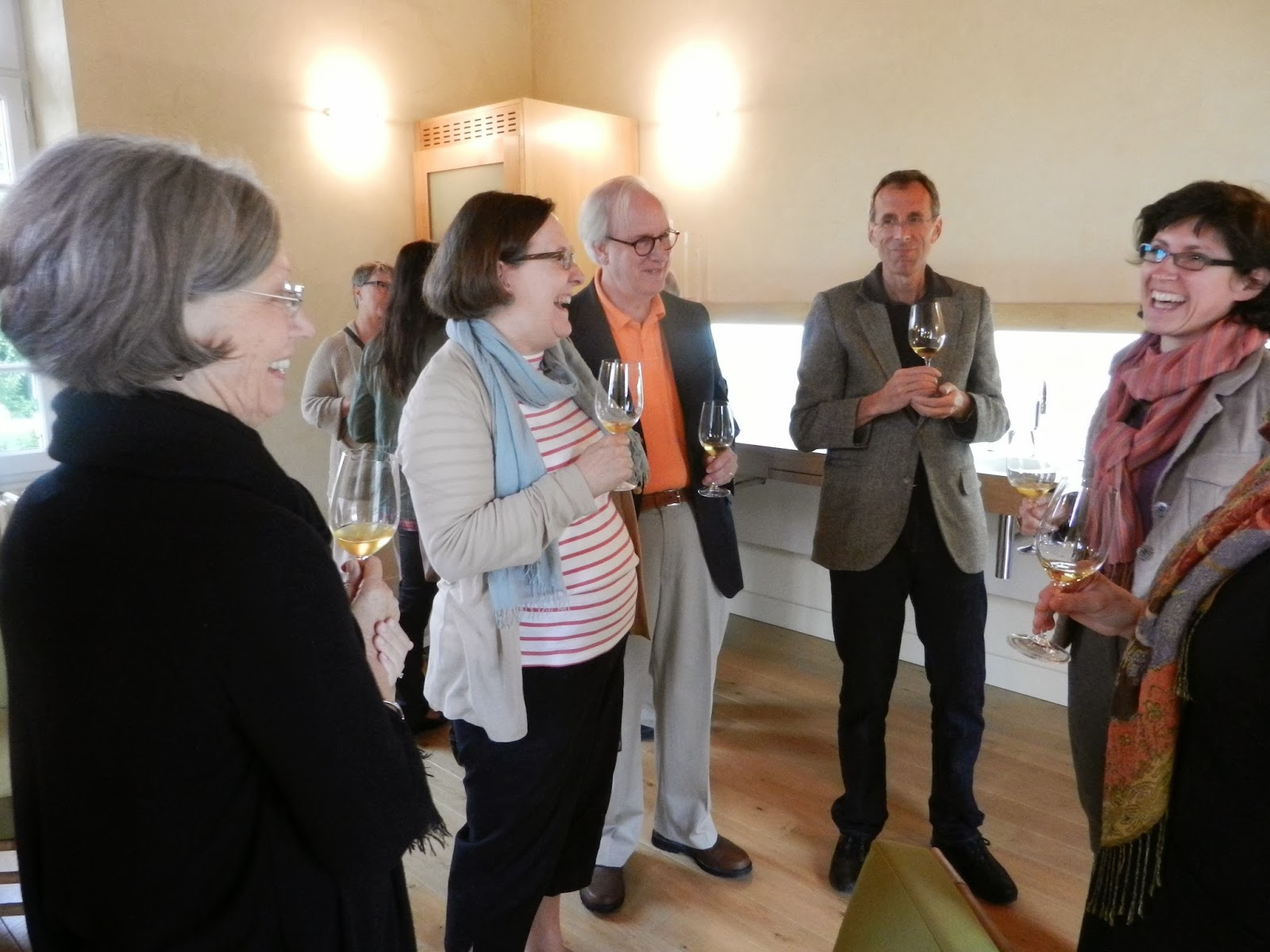
Picture: At the Collegium Vini Tasting

To Accompany the Food:

Weingut von Racknitz Riesling Rotenfels 2011 Vol. 12,5 % 22 €

One of the winemaker from the career changer list. Co-owner Matthias Adams - who takes the lead in the cellar, while his wife is taking the lead in the vineyard - used to be a business execituve, before becoming a winemaker.

Tasting:

Weingut Wagner-Stempel Silvaner Siefersheimer 2012 Vol. 12,5 % 23,90 €

Weingut Luckert-Zehnthof Silvaner Creutz 2012 Vol. 13,5 % 49,00 €

Made from 80 years old vines.

Weingut Bickel-Stumpf Silvaner Barfuß 2012 Vol. 13 % 14,50 €

Kai Wagner: These three producers belong – with Paul Weltner – to the leading Silvaner producer quartet in Germany.

Weingut Knipser Gelber Orleans 2005 Vol. 13 % 24 €

Gelber Orléans is a vitis vinifera grape variety which up until the 19th century was much grown in Germany, but has almost disappeared since then. It has large berries with thick skins and a high yield. In the 1990s, Gelber Orléans returned to Rheingau when the historically interested Bernhard Breuer of Weingut Georg Breuer planted a small vineyard with 500 vines. A few years later, Weingut Knipser followed with experimental plantings of the Gelber Orléans.

Weingut Heußler Grauburgunder Rosswingert 2009 Vol. 14 % 12 €

Weingut Ziereisen Chardonnay Hard 2008 Vol. 12 % 18 €

Weingut Leiner Chardonnay Hadorne Reserve 2008 Vol. 14,5 % 24 €

Chardonnay is not a typical German grape variety - Why was the wine included in the tasting, several participants asked.

Weingut Knipser Riesling Halbstück Reserve 2004 Vol. 12 % 26 €

Weingut Van Volxem Riesling Gottesfuß GG 2007 Vol. 12 % 32 €

Weingut Wittmann Riesling Morstein GG 2011 Vol. 13,5 % 39 €

Weingut Wittmann Riesling Brunnenhäuschen GG 2011 Vol. 13,5 % 39 €

The purpose of the 2 Wittmann wines was to highlight the critical role that the terroir should play in a slow wine – two wines were everything was the same, including what Philip Wittmann did in the cellar, according to Kai Wagner.

Weingut Ziereisen Syrah Gestad 2008 Vol. 13 % 22 €

Again hotly discussed - Why Syrah in Germany? Kai Wagner referred to the climate change.

Weingut Schnaitmann Spätburgunder Lämmler GG 2009 Vol. 13 % 42€

Weingut Schlör Schwarzriesling R 2009 Vol. 14 % 19 €

Weingut Knipser Cuvée X 2006 Vol. 14 % 37,50 €

A classic Medoc cuvée (Cabernet Sauvignon, Cabernet Franc and Merlot). 18 to 20 months in mostly new barrique barrels.

Weingut Rings Cuvée Kreuz 2008 Vol. 14,5 % 26 €

This is the flagship wine of the Rings brothers – a cuvée of Cabernet Sauvignon, Merlot, Cabernet Franc and St. Laurent, fermented and aged in barrique.

Weingut von Schubert Riesling Herrenberg Kabinett 1995 Vol. 8 % 12 €

Weingut Müllen Riesling Hühnerberg Spätlese 2004 Vol. 7,5 % 18,90 €

Weingut Weiser-Künstler Riesling Ellergrub Spätlese 2009 Vol. 7,5 % 16 €

Weingut Eulenturm Riesling Trieren Auslese 2011 Vol. 8 % 10 €

As for the last 4 wines, I would argue that a fruity-sweet wine, made by (brutally) interrupting the natural fermentation process, does not qualify as slow wine. But of course, these are wines very famous and sought after in the whole world.

German Slow Wine Producers on schiller-wine

I have written about some of the German slow wine producers on schiller-wine, see:

Excellency and Ecology: The Wines of Gebrueder Dr. Becker in Rheinhessen, Germany

The Millesime Bio 2010 in Montpellier, France: A Discovery of Organic and Biodynamic Wines at the one of a Kind Wine Trade Show

The German Winemakers at the 4th Riesling Rendezvous in Seattle, USA

JJ Pruem Goes Supermarket: Meeting Katharina Pruem and Tasting the Incredible JJ Pruem Wines at Wegmans

A Tasting at Weingut Peter Jakob Kühn, Rheingau, with Angela and Peter Jakob Kühn, Germany

The (Grape) Wines and the Apple Wine of Weingut von Racknitz, Germany

schiller-wine: Related Postings

Organic, Sustainable, Biodynamic, Natural Wines … A Primer for “Green” Wines

The Natural Wines of the Donkey and Goat Winery in Berkeley, California

Visiting Jared Brandt and his Donkey & Goat Winery – Natural Wines Made in Berkeley, California

Wine Event: President Obama and the First Lady eat at the "Green" Restaurant Nora and have a "Green" Spottswoode Wine

Benzinger Wines Served at the 2010 "Green" Annual White House Correspondents Dinner

The Natural Wines of Terroir in San Francisco

Skype and Biodynamic Winemaking - Winetasting in the US with Winemaker Werner Michlits, Weingut Meinklang, in Austria

At the Forefront of Biodynamic Winemaking: Visiting Werner and Angela Michlits and their Weingut Meinklang in Austria

Julia Zuccardi from Familia Zuccardi in Argentina Visited the US to Introduce New Santa Julia Wines

One of Oregon's Pioneering Winemakers - Myron Redford - with his Amity Vineyard Wines in Washington DC

Visiting Yann-Leon Beyer at Maison Leon Beyer in Eguisheim in Alsace

Italian Natural Wines

Thursday, February 6, 2014

Tasting with Rita Busch at Weingut Clemens Busch in the Mosel Valley, Germany

Picture: Annette Schiller, Clemens Busch and Rita Busch at Weingut Clemens Busch during the 2013 German Wine and Culture by ombiasy PR and WineTours

The 2013 German Wine and Culture Tour by ombiasy PR and WineTours, organized and headed by Annette Schiller, included a visit of Weingut Clemens Busch in the Mosel Valley.

Most pictures in this posting were taken by Katharina Schiller. I had to drop out because of a conflict with the VDP Grosses Gewaechs pre-release tasting in Wiesbaden.

I am quite familiar with the wines of Clemens Busch. I spent several days with Clemens Busch earlier in the year in Seattle (4th International Riesling Symposium) and visited his winery in Pünderich in the Mosel Valley at previous occasions.

Weingut Clemens Busch

Weingut Clemens Busch is one of the top producers in Germany. And not only that. In a region where the humidity and extremely steep vineyards make most wine makers to rely on some level of pesticide, Clemens Busch is 100% organic/biodynamic. And: In a region where noticeable residual sugar in the finished wine and low alcohol is the calling card, Clemens Busch’s focus is on dry premium Rieslings that can compete with the best dry whites in the world. But Clemens Busch also produces off-dry wines as well as powerfully complex, nobly sweet wines.

Picture: In Seattle, Washington State, during the 4th Riesling Rendezvous (see: The German Winemakers at the 4th Riesling Rendezvous in Seattle, USA) Clemens Busch from Weingut Clemens Busch in Germany, Christian G.E. Schiller and Hermann Wiemer, founder of Hermann J. Wiemer Vineyards in the Finger Lakes Region in New York State. For Hermann J. Wiemer, see: German Winemakers in the World: Hermann J. Wiemer, Finger Lakes, USA

Weingut Clemens Busch is in Pünderich in the Mosel Valley, rather far down stream. The Busch family lives near the banks of the Mosel in a restored half- timbered house built in 1663. Because flooding can occur here, the vaulted cellar, built in the 1970s, lies nearby, on higher ground, at Clemens’s parents’ home.

 Picture: Weingut Clemens Busch in Pünderich in the Mosel Valley and Tasting Room

The business has been run by Rita and Clemens Busch since 1986, with son Florian joining the team in 2008. Clemens is the fifth generation winemaker at this estate.

Vineyard area: 10 hectares
Annual production: 55,000 bottles

The winery is since 2007 member of the VDP (Association of German VDP).

Pictures: Annette Schiller and Clemens Busch

Organic/Biodynamic

Weingut Clemens Busch is considered by many to be the master interpreter of the natural winemaking approach in Germany. Clemens Busch began using organic practices in 1984 and more recently moved towards biodynamic. Winemaking is practiced in accordance with the guidelines of the ECOVIN association.

Pündericher Marienburg

Most of the area under vines is situated in the Pündericher Marienburg vineyard which covers almost the entire hillside on the opposite side of the river from the village of Pünderich.

Pictures: The Pündericher Marienburg

Until the wine law of 1971, the Pündericher Marienburg consisted of several small plots and not without good reason, because the wines grown in the different parts of today’s Marienburg vineyard are still very different. It is not only the different slate soils but also the special microclimates that play an important role here. To emphasize the specific differences that exist within the Pündericher Marienburg, the corresponding wines of Clemens Busch still bear the names of the old plots: Fahrlay and Fahrlay-Terrassen, Falkenlay and Raffes, as well as Rothenpfad and Felsterrasse.

Fahrlay and Fahrlay-Terrassen, directly across the river from the Busch’s house, consist mainly of blue slate, producing a Riesling with a particularly intensive mineral flavor and slightly salty notes in the finish.

Falkenlay, including the old-vine section called Raffes, is made up of grey slate, producing particularly creamy, fruit-driven Rieslings.

Wine Cellar

In the cellar, it is obvious that Clemens Busch does without high technology. After crushing, the grapes undergo skin contact and ferment spontaneously in both stainless steel and in oak Fuder (wooden casks of 1000 liters), sometimes into the next year’s harvest. In addition to lees contact, Clemens Busch likes to do lees stirring to increase the wines’ fruitiness and richness.

As an exception, special yeast is used for noble-sweet wines where the sugar levels are sometimes so high that wild yeasts would not even begin to work. The wine ages in the oak fuder.

Export

The Weingut Clemens Busch wines are widely available in the US. As far as I know, Louis/Dressner is the main American importer. I also found them on the website of David Bowler Wine in New York and of German Fine Wine, which targets the Asian market.

Pictures: Tasting with Rita Busch

Louis/Dressner

Louis/Dressner: We have no brands. We are not looking for them. We do have a group of often fanatical growers who are doing their best to make wines that are original because they are honestly crafted. These might seem old-fashioned, but in the present context it is almost revolutionary....

Along with Immich-Betterieberg, Koehler-Ruprecht and Knebel, Clemens Busch is one of the 4 German producers in the Louis/Dressner Portfolio.

David Bowler Wine

David Bowler Wine: Is a New York based importer and distributor focusing on naturally made, small batch wines from around the world. Working with importers and directly with wineries, it is our mission to present wines of personality and character, wines that reflect something about where they are made and who made them.

They currently have 11 different wines in their portfolio, ranging from estate wines to super noble-sweet wines, including the following:

Riesling Kabinett Marienburg 2011 :‘The Busch 2011 Pundericher Marienburg Riesling Kabinett originates, as usual, in a windy, high-altitude portion of this Einzellage that permits long hang-time without high must weight or risk of botrytis, in this instance, until the end of October, though as Busch readily points out, it had become “almost too ripe by then for a classic Kabinett.” Fresh white peach and fig offer enticing aromas and a succulent palate impression. This is expansive and caressing yet (at 9% alcohol) retains a delightful sense of levity, and lime and grapefruit lend a tingling, lip-smacking sense of refreshment while warding-off any sense of excess sweetness. While not enormously complex – for now, anyway – it’s quite irresistible, and ought to be worth following for at least the better part of a decade. 90 Points” David Schildknecht, The Wine Advocate #206, April, 2013

Pictures: Tasting with Rita Busch

Riesling Trocken 2011: “A good winemaker doesn’t make wine, he merely accompanies it during its creation. The fundamentals of this are always to be found in the vineyard. The cellar contains the art of intervening as little as possible and mainting a healthy environment for the natural processes.” -Clemens Busch. Clemens and his wife Rita are at the cutting edge of biodynamic agriculture and minimal-intervention winemaking in the Mosel. 11%, naturally dry fermented.

Riesling vom roten Schiefer 2011: Another village wine from parcels planted on red slate. It is Half-trocken, as Clemens rarely gets it to ferment dry. Fermentations stop at 11g or 14g but sometimes can go as high as 20g in residual sugars.

German Fine Wine

German Fine Wine: Was founded in the »Hometown of Riesling« in Germany to promote Fine Riesling wines from top German wineries internationally and in particular in China.

They have a dozen or so wines in the Weingut Clemens Busch wines in their portfolio, including the following:

2009 Riesling "vom roten Schiefer": Fresh and fruit-driven typical Mosel Riesling with intense minerality grown on red slate terraces

Pictures: Christian G.E. Schiller, Annette Schiller and Clemens Busch at Weingut Clemens Busch in Pünderich at a Previous Visit

See:
With Wine Maker Clemens Busch in Puenderich at his Winery in the Mosel Valley, Germany

2008 Pündericher Marienburg Riesling Spätlese: Juicy and harmonious wine with well-balanced sweetness, aromas of candied fuits and honey combined with a long-lasting finish

2007 Pündericher Marienburg Riesling "falkenlay": Fine and round Mosel Riesling of creamy softness and intense minerality grown on 'first growth' grey slate terroir

2006 Pündericher Marienburg Riesling Auslese "fahrlay": Sweet, mineral and fruity special selection wine with aromas of candied stone fruits and a good balance of acidity well integrated into its creamy texture

2009 Pündericher Marienburg Riesling Grosses Gewächs: Round, mineral and fruit driven premium 'first growth' wine with delicate aromas of stone fruit and sweet citrus combined with a long finish

2006 Pündericher Marienburg Riesling Beerenauslese: First class noble rot sweet wine with good concentration, aromas of ripe apricots and candied peach and a juicy, complex and long-lasting finish

schiller-wine: Related Postings (German Wine and Culture Tour 2013 by ombiasy PR and WineTours):

Ombiasy Wine Tours: Wine and Culture Tour to Germany Coming up in August 2013

German Wine and Culture Tour by ombiasy, 2013

Weingut Pawis in the Saale Unstrut Region - A Profile, Germany

Impromptu Winetasting with Alexander Jung, Weingut Jakob Jung, Erbach, Rheingau, Germany

A Tasting at Weingut Peter Jakob Kühn, Rheingau, with Angela and Peter Jakob Kühn, Germany

Tasting with Rita Busch at Weingut Clemens Busch in the Mosel Valley, Germany 

Ernst Loosen Presented his Wines at Weingut Dr. Loosen, Bernkastel-Kues, Mosel Valley, Germany

An Afternoon with Riesling Star Winemaker Helmut Doennhoff at Weingut Doennhoff in Oberhausen in the Nahe Valley, Germany

The World Meets at Weingut Weegmueller, Pfalz, Germany

Tasting with Johannes and Christoph Thoerle, Weingut Thoerle in Saulheim, Rheinhessen, Germany

Impressions from the Mainz Wine Market 2013, Germany 

schiller-wine: Related Postings (Weingut Clemens Busch)

The German Winemakers at the 4th Riesling Rendezvous in Seattle, USA

Germany’s Best Winemakers (5 Stars) - Eichelmann WeinGuide 2013

With Wine Maker Clemens Busch in Puenderich at his Winery in the Mosel Valley, Germany

Wednesday, January 29, 2014

Tour and Tasting at Château Pontet-Canet, with Owner Alfred Tesseron, Bordeaux

Picture: The Group with Alfred Tesseron at Château Pontet-Canet

The 2013 Bordeaux Tour by ombiasy PR and WineTours included a tour of and tasting at Château Pontet-Canet. For the tasting, we were joined by Owner Alfred Tesseron.

The 2 leading biodynamic producers in Bordeaux are Château Pontet Canet and Château Climens. We visited both of them during the 2013 Bordeaux Tour. 

See:
Bordeaux Wine Tour 2013 by ombiasy

History

Château Pontet-Canet has been owned by just three families over the last 3 centuries: originally Jean Francois de Pontet in the 18th Century, then the Cruse family for 110 years during the 19th and 20th centuries and now (since 1975) the Tesseron family.

Pictures: Starting the Tour

Château Pontet-Canet was established by Jean-François de Pontet in the early 18th century and expanded by his descendants to include adjoining vineyards in the lieu-dit Canet. 10 years following the 1855 classification, Château Pontet-Canet was purchased by an important Bordeaux négociant, Herman Cruse, in whose family the estate remained for many years. The Bordeaux wine fraud scandal in 1973 forced the sale in 1975 of Pontet-Canet to Cognac merchant Guy Tesseron, who had bought Château Lafon-Rochet earlier. Chateau Pontet-Canet is currently owned and managed by Guy’s son, Alfred (who we met in Washington DC), assisted by Jean-Michel Comme. Alfred’s daughter Melanie Tesseron also has a hand in the estate.

Pictures: Touring Château Pontet-Canet

Château Pontet-Canet

Located directly across from the Château Mouton-Rothschild in Pauillac, Château Pontet-Canet has  the largest production (20,000 cases) of any classified growth. It also produces about 20,000 cases of its second wine, Château Les Hauts de Pontet.

The wines ferment in 6 to 8 days and receive an additional 9 to 15 days of skin contact. The vats are a mixture of stainless steel, cement and oak. They are cooled during fermentation by the circulation of water. The wine is aged in oak barrels for 15 to 20 months. Half of the casks are replaced each year. A traditional egg white fining takes place before bottling.

Pictures: Annette and Christian G.E. Schiller with Alfred Tesseron at Château Pontet-Canet

Winemaking Philosophy

It is in the vineyard, where the Tesserons probably have most made their mark in Bordeaux, through the application of biodynamic principals. Alfred Tesseron has spent the best part of the last 10 years converting to organic and biodynamic viticultural practices. In 2010, Château Pontet-Canet became the first major Bordeaux wine producer to earn the official Agence Bio (AB) organic certification.

While many chateaux welcome new technology, Alfred Tesseron moves in the opposite direction.

Pictures: Owner Alfred Tesseron, Winemaker Jean Michel Comme and Christian G.E. Schiller

The château utilizes no computers to make harvesting or fermentation decisions. According to Alfred Tesseron, Château Pontet-Canet does not perform any computer analysis until the wine is finished. Also, in the vineyards, he uses horses instead of machinery for some of the blocks. For the 2010 vintage, Alfred Tesseron added numerous rows of Nomblot to his wine cellar for fermentation. These concrete eggs were created in a joint venture between concrete vat manufacturer Nomblot and Michel Chapoutier. Remarkably, in the vineyard Alfred Tesseron is now moving away from green harvesting, a method for controlling yields and quality in the vineyard. Alfred Tesseron also has put an end to leaf-thinning.

For more information, Jeff Leve has an excellent write-up about Château Pontet-Canet on his website The Wine Cellar Insider.

Pictures: In the Stables of Château Pontet-Canet


Tasting

We tasted the Pontet Canet 2012.

See also:
Tasting with Alfred Tesseron the last 10 Vintages of Château Pontet-Canet in Washington DC, USA/France

Pictures: Tasting and Chatting with Alfred Tesseron

Robert Parker: A softer, less powerful and less prodigiously endowed Pontet Canet, the 2012 exhibits notes of creme de cassis and new barrique vanillin followed by a medium-bodied, elegant wine with sweeter tannin (and less of it) than is found in the great vintages that immediately precede it. The 2012 is certainly outstanding and, in fact, many readers may prefer it to the blockbuster, out-of-this-world, over-sized 2010, 2009 and 2008. Medium-bodied, pure and expressive, this classic Pauillac should only require 5-6 years of cellaring. It should drink well for two decades thereafter. No one will confuse the 2012 Pontet Canet with the 2008, 2009 or 2010, but proprietor Alfred Tesseron has turned in another high level performance in this more challenging vintage (especially true in the Medoc). Robert Parker - Wine Advocate #206 - Apr 2013

schiller-wine: Related Posting (Bourdeaux Tour by ombiasy PR and WineTours 2013)

Ombiasy Wine Tours: Bordeaux Trip Coming up in September 2013

Bordeaux Wine Tour 2013 by ombiasy

An Afternoon at Château Pape-Clément (in 2013), Appellation Pessac-Léognan, Bordeaux

Dinner at Château Canon La Gaffeliere, Appellation Saint-Emilion, Premier Grand Cru Classé, France

Visiting a “Holy” Construction Site: Château Angélus in Saint-Emilion, France

Lunch at Château Le Bon Pasteur with Winemaker/Owner Dany Rolland, Pomerol, France

Visiting and Tasting at Château Climens, with Owner Bérénice Lurton, Bordeaux, France 

Lunch, Tour and Tasting with Owner Catherine Thibault d'Halluin (nee Boyer) and Winemaker Julien Noel - Château du Cros, Château Mayne du Cros, Château Courbon and Clos Bourbon, Bordeaux, France

Visiting an Oyster Farm at Arcachon Bay, Bordeaux: Raphael Doerfler at Earl Ostrea Chanca , France

Tour and Tasting at Château Pontet-Canet, with Owner Alfred Tesseron, Bordeaux 

A Tour and Tasting at Château Lafon-Rochet in Saint-Estèphe, Bordeaux, with Winemaker and Owner Basile Tesseron (2013), France

A Tour and Tasting at Château Coufran, Haut-Médoc, with Co-owner Frédéric Vicaire, France

Wine Dinner at Château Haut-Bailly, Cru Classé de Graves, France

schiller-wine: Related Posting

Bordeaux Trip September 2012, France

The Saint Emilion 2012–2022 Classification, Bordeaux

Bordeaux - En Primeur, Negociants, Courtiers, the Quai de Chartons and the Place de Bordeaux – A Short Introduction

Schiller's Favorite Wine Bars in Bordeaux (City), France

Plateau des Fruits de Mer and a Pessac-Leognan Wine in Bordeaux City, France

Union des Grands Crus de Bordeaux (UGCB) on North America Tour in Washington DC - Schiller’s Favorites  

What is a Bordeaux Cru Bourgeois? France

The Saint Emilion 2012–2022 Classification, Bordeaux

Bordeaux - En Primeur, Negociants, Courtiers, the Quai de Chartons and the Place de Bordeaux – A Short Introduction

Fête du Bordeaux of Calvert and Woodley in Washington DC, 2012, USA

Château Pape Clément in Pessac-Léognan and the World Wide Wine Empire of Bernard Magrez, France

An Afternoon at Château Pape-Clément, Graves, Appellation Pessac-Léognan, Bordeaux

Owner Jean-Bernard Grenié and Wine Journalist Panos Kakaviatos Presented the Wines of Chateau Angélus and Chateau Daugay at Black Salt Restaurant in Washington DC, USA

A Morning at Château Canon La Gaffeliere in Saint Emilion with Owner Count Stefan von Neipperg, Bordeaux

The Wine Empire of the von Neipperg Family in France, Bulgaria and Germany

An Afternoon with François Mitjavile at his Tertre Rôtebeouf - A Saint Emilion Cult Wine Producer

Tasting Château du Cros and other Petites Bordeaux Wines with Winemaker Julien Noel at Calvert and Woodley in Washington DC, USA 

Château Léoville-Poyferré, Chateau Le Crock, Didier Cuvelier in Bordeaux and the Cuvelier Los Andes Wines in Argentina

Lunch with Didier Cuvelier at Château Léoville-Poyferré in Saint-Julien, Bordeaux

Bordeaux Meets Virginia: Touring Virginia with Anne Cuvelier, Chateau Leoville-Poyferre in St. Julien, Bordeaux

Château Léoville-Poyferré Winemaker Dinner with Anne Cuvelier at Eola in Washington DC, USA

Tasting with Alfred Tesseron the last 10 Vintages of Château Pontet-Canet in Washington DC, USA/France

An Afternoon with Owner Michel Tesseron at Château Lafon-Rochet, 4ème Cru Classé en 1855, in Saint-Estèphe, Bordeaux

Tasting the Wines of Chateau Lafon-Rochet, Saint-Estèphe, 4ème Cru Classé en 1855, with Owner Basil Tesseron at the French Embassy in Washington DC, USA/France

Château Brane-Cantenac, Deuxieme Grand Cru Classe en 1855, Margaux – A Profile, France

Henri Lurton and his Chateau Brane Cantenac Wines

An Afternoon with Owner Henri Lurton at Château Brane-Cantenac, a Deuxieme Grand Cru Classe en 1855, in Margaux, France

Tête-à-tête Dinner with Henri Lurton, Owner of Château Brane-Cantenac, a Deuxieme Grand Cru Classe en 1855 in Margaux, at CityZen in Washington DC, USA

Monday, January 27, 2014

Visiting and Tasting at Château Climens, with Owner Bérénice Lurton, Bordeaux, France

Picture: The Group with Bérénice Lurton at Château Climens

The 2 leading biodynamic producers in Bordeaux are Château Pontet Canet and Château Climens. We visited both of them during the 2013 Bordeaux Tour by ombiasy PR and WineTours, organized and led by Annette Schiller. This posting is about our visit at Château Climens, where Bérénice Lurton joined us for the tasting after the tour.

See:
Bordeaux Wine Tour 2013 by ombiasy

Château Climens

The estate was founded in 1547 by Guirault Roborel. In 1855, in the year Château Climens was classified a Premier Cru, Henri Gounouilhou, owner of an influential Bordeaux daily newspaper, bought the property. He used his influence in the media to boost the public’s recognition of Château Climens. Additionallly, Henri Gounouilhou improved the quality of the Climens wines to such a degree that Château Climens for some years challenged Château d'Yquem as the top estate in Sauternes. The vintages 1929, 1947 and 1949 were described by Alexis Lichine to surpass Château d'Yquem as "lighter, with less vinosity and body, yet miraculously subtle."

Pictures: Arriving at Château Climens

In 1971, Lucien Lurton bought the estate, along with Château Doisy-Dubroca. It has been run by his daughter, Bérénice Lurton, since 1992. The Lurton family has done a wonderful job, continuing to improve on the already excellent quality reached under Gouonouilhou’s ownership. One specific step taken by the Lurton family was to remove all Muscadelle vines. Thus, today the 30 hectare estate is composed of 100% Semillon, unlike most Sauternes estates that incorporate a small portion of Sauvignon Blanc. There is one only vineyard and it is unchanged since growing of grapes started in the 16th century.

Château Climens also produces a second wine named Cypres de Climens. Château Climens is located in the south of the Barsac appellation, just outside the small village of La Pinesse.

Pictures: In the Vineyard of Château Climens

Winemaking

The poor limestone soil and damp morning weather is exactly how the estate got its name. When Climens is translated from the local dialect, it means unfertile, poor land.

The average age of the vines is 35 years. Yields are low, averaging 12 hectoliters per hectare. In some years the yield can drop as low as 8 hectoliters per hectare. This makes for an intensely aromatic and concentrated wine.

Pictures: In the Cellar of Château Climens

During the entire harvest period each day’s harvest is sent to the winery where it will be vinified separately. The fermentation is controlled at 27 degrees Celsius and will last between 15 and 21 days. Once the ideal level of alcohol is reached (13.5%), the wine receives a thermal shock, quickly dropping the temperature down to 3 degrees Celsius, which halts the fermentation. The wine is then sent to barrel where it will be aged in 30% new oak. After 22 months of aging, the tasting team will taste all the individual wines and decide on two separate blends. The first and superior blend will be destined for the first label, Château Climens. The second tier blend, although still high in quality, will be bottled as the second label, Cyprès de Climens. About 30,000 bottles of the first label are produced and between 10,000 and 15,000 bottles of the second label.

Noble Rot

At Château Climens the mornings are humid with fog and the afternoons are sunny. This provides the perfect conditions for the development of the botrytis cinerea. In order for all of the botrytised grapes to be harvested, the estate will conduct between 5 and 6 runs through the vineyard, each lasting 3 to 8 days, to ensure that only the botrytis infected grapes are picked.

Picture: Noble Rot

Biodynamic

Château Climens is the first classified noble-sweet wine estate in Bordeaux to go biodynamic, with the assistance of Jean-Michel and Corinne Comme, who also consult for Château Pontet-Canet. Château Climens is aiming to be certified iodynamic in 2014.

Pictures: Annette Schiller, Christian G.E. Schiller with Bérénice Lurton at Château Climens

Bérénice Lurton: “I believe passionately that biodynamics is the right way for us to go. We want to go back to our roots at Climens and help our wines find their own balance. Biodynamics brings life and vibrancy to the wines.”

Biodynamics can be difficult in the Bordeaux region. It is not the warmest area and there is a large amount of humidity from the Atlantic Ocean as well as the large rivers. So various vineyard problems have to be treated such as mildew and millederange.

Tasting

During the tasting Bérénice Lurton, with a combination of charm and knowledge, conveyed the philosophy of Château Climens, seeking to create wines which reflect the terroir from which they are produced, and the desire of Château Climens to produce, above all, wines of elegance and finesse rather than sweet wines of power and weight.

Pictures: Tasting with Bérénice Lurton at Château Climens

Cyprès de Climens 2009

Le Figaro: Ce second vin, qui peut égaler le premier certains millésimes, décline les mêmes qualités que chez son grand frère : fraîcheur, minéralité, finesse et complexité aromatique. Vous y trouverez, au gré des millésimes, des arômes de fruits et de fleurs blanches, d’agrumes, de tilleul, d’abricot, d’ananas, voire de menthe ou d’eucalyptus. Une bouteille taillée pour la garde.

Wine Searcher Average Price in US§: 56

Climens 2006

Tasting notes: Golden yellow in the glass, notes of honey, elderflower and orange fruits on the nose, rich and creamy palate with an excellent acid backbone, botrytis is apparent with mango, beeswax and pineapple.

Wine Searcher Average Price in US§: 105

Bye-bye

Thank your Bérénice Lurton for a wonderful event.

Pictures: Bye-bye

schiller-wine: Related Posting (Bourdeaux Tour by ombiasy PR and WineTours 2013)

Ombiasy Wine Tours: Bordeaux Trip Coming up in September 2013

Bordeaux Wine Tour 2013 by ombiasy

An Afternoon at Château Pape-Clément (in 2013), Appellation Pessac-Léognan, Bordeaux

Dinner at Château Canon La Gaffeliere, Appellation Saint-Emilion, Premier Grand Cru Classé, France

Visiting a “Holy” Construction Site: Château Angélus in Saint-Emilion, France

Lunch at Château Le Bon Pasteur with Winemaker/Owner Dany Rolland, Pomerol, France

Visiting and Tasting at Château Climens, with Owner Bérénice Lurton, Bordeaux, France 

Lunch, Tour and Tasting with Owner Catherine Thibault d'Halluin (nee Boyer) and Winemaker Julien Noel - Château du Cros, Château Mayne du Cros, Château Courbon and Clos Bourbon, Bordeaux, France

Visiting an Oyster Farm at Arcachon Bay, Bordeaux: Raphael Doerfler at Earl Ostrea Chanca , France 

A Tour and Tasting at Château Lafon-Rochet in Saint-Estèphe, Bordeaux, with Winemaker and Owner Basile Tesseron (2013), France

A Tour and Tasting at Château Coufran, Haut-Médoc, with Co-owner Frédéric Vicaire, France

Wine Dinner at Château Haut-Bailly, Cru Classé de Graves, France

schiller-wine: Related Posting

Bordeaux Trip September 2012, France

The Saint Emilion 2012–2022 Classification, Bordeaux

Bordeaux - En Primeur, Negociants, Courtiers, the Quai de Chartons and the Place de Bordeaux – A Short Introduction

Schiller's Favorite Wine Bars in Bordeaux (City), France

Plateau des Fruits de Mer and a Pessac-Leognan Wine in Bordeaux City, France

Union des Grands Crus de Bordeaux (UGCB) on North America Tour in Washington DC - Schiller’s Favorites  

What is a Bordeaux Cru Bourgeois? France

The Saint Emilion 2012–2022 Classification, Bordeaux

Bordeaux - En Primeur, Negociants, Courtiers, the Quai de Chartons and the Place de Bordeaux – A Short Introduction

Fête du Bordeaux of Calvert and Woodley in Washington DC, 2012, USA

Château Pape Clément in Pessac-Léognan and the World Wide Wine Empire of Bernard Magrez, France

An Afternoon at Château Pape-Clément, Graves, Appellation Pessac-Léognan, Bordeaux

Owner Jean-Bernard Grenié and Wine Journalist Panos Kakaviatos Presented the Wines of Chateau Angélus and Chateau Daugay at Black Salt Restaurant in Washington DC, USA

A Morning at Château Canon La Gaffeliere in Saint Emilion with Owner Count Stefan von Neipperg, Bordeaux

The Wine Empire of the von Neipperg Family in France, Bulgaria and Germany

An Afternoon with François Mitjavile at his Tertre Rôtebeouf - A Saint Emilion Cult Wine Producer

Tasting Château du Cros and other Petites Bordeaux Wines with Winemaker Julien Noel at Calvert and Woodley in Washington DC, USA 

Château Léoville-Poyferré, Chateau Le Crock, Didier Cuvelier in Bordeaux and the Cuvelier Los Andes Wines in Argentina

Lunch with Didier Cuvelier at Château Léoville-Poyferré in Saint-Julien, Bordeaux

Bordeaux Meets Virginia: Touring Virginia with Anne Cuvelier, Chateau Leoville-Poyferre in St. Julien, Bordeaux

Château Léoville-Poyferré Winemaker Dinner with Anne Cuvelier at Eola in Washington DC, USA

Tasting with Alfred Tesseron the last 10 Vintages of Château Pontet-Canet in Washington DC, USA/France

An Afternoon with Owner Michel Tesseron at Château Lafon-Rochet, 4ème Cru Classé en 1855, in Saint-Estèphe, Bordeaux

Tasting the Wines of Chateau Lafon-Rochet, Saint-Estèphe, 4ème Cru Classé en 1855, with Owner Basil Tesseron at the French Embassy in Washington DC, USA/France

Château Brane-Cantenac, Deuxieme Grand Cru Classe en 1855, Margaux – A Profile, France

Henri Lurton and his Chateau Brane Cantenac Wines

An Afternoon with Owner Henri Lurton at Château Brane-Cantenac, a Deuxieme Grand Cru Classe en 1855, in Margaux, France

Tête-à-tête Dinner with Henri Lurton, Owner of Château Brane-Cantenac, a Deuxieme Grand Cru Classe en 1855 in Margaux, at CityZen in Washington DC, USA