Thursday, May 17, 2012

Schiller's Favorite Wine Bars in Bordeaux (City) (2012), France

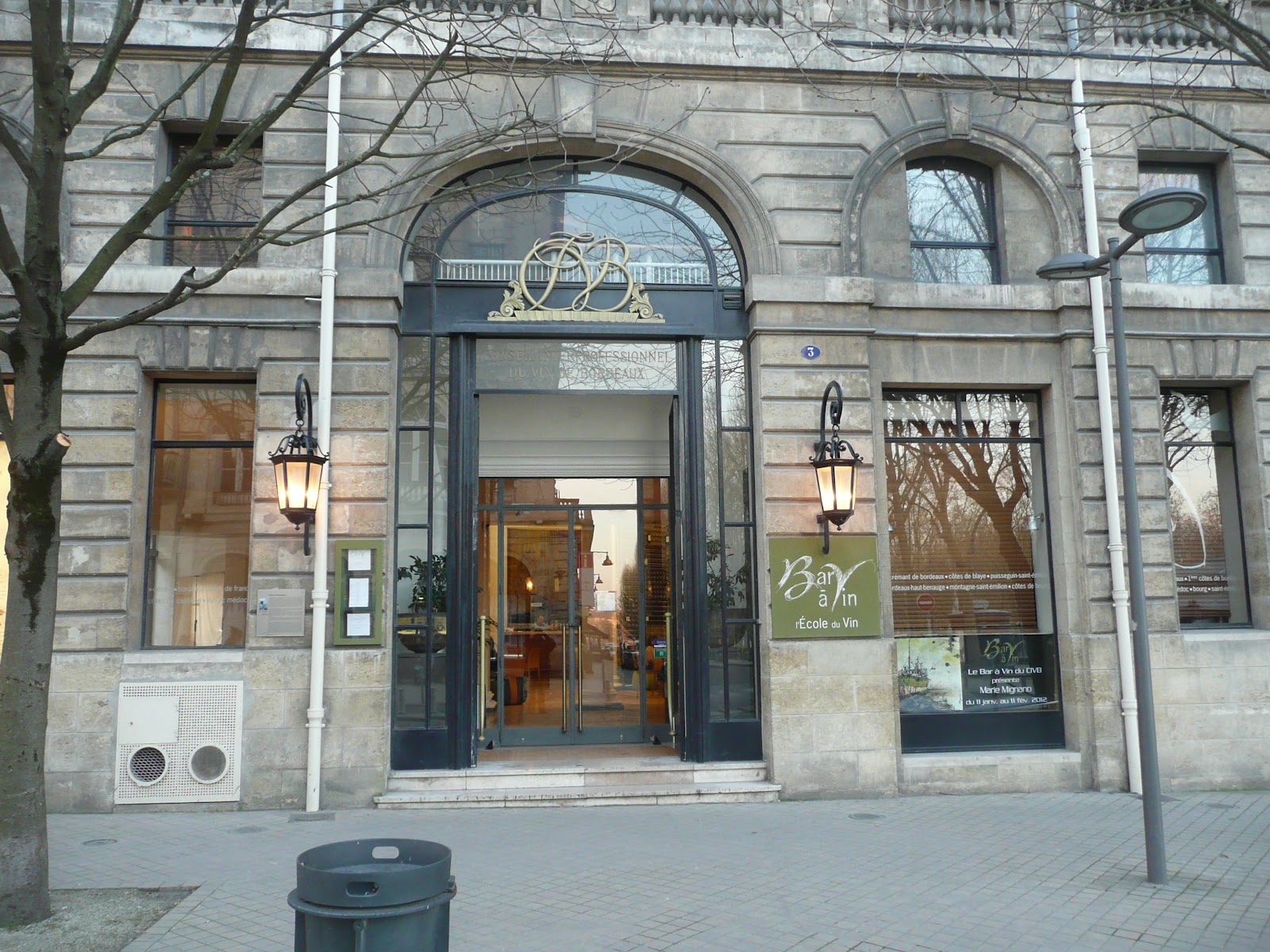
Picture: Christian G.E. Schiller at Bar a Vin in l' Ecole du Vin

When I visited Bordeaux earlier this year, I had 3 wine bars on my list, but was able to check out only one - Le Bar a Vin. The other two – Max Bordeaux Wine Gallery and Aux Quatres Coins Du Vin – remained on my to-do list for my next visit in September (as well as L’Intendant wine shop). Furthermore, my friend and Bordeaux Guru Allan Liska just posted soemthing on a wine bar he discovered last week, when he was in Bordeaux, Wine and Soul.

See: Tour de France de Vin: 6 Days, 7 Regions, 3500 km - In 6 Days through 7 Wine Regions of France

The City of Bordeaux

The city of Bordeaux is a jewel, with vestiges from the Roman era and medieval town gates.  However, the 18th century was its golden age. Victor Hugo once said: “Take Versailles, add Antwerp, and you have Bordeaux.”

Pictures: Bordeaux

Bordeaux is often referred to as "Little Paris". Baron Haussmann, a long-time prefect of Bordeaux, used Bordeaux’s 18th century, big-scale rebuilding as a model when he was asked by Emperor Napoleon III to transform a then still quasimedieval Paris into a “modern” capital that would make France proud.

The city was ruled by the English for a long time, which is why Bordeaux seems to have an "English flair". After the marriage of Henry II to Eleanor of Aquitaine, Bordeaux came under English rule between 1152 and 1453. It was then that the British first developed their taste for Claret, as the red Bordeaux wine is called in the UK.

The city has recently been classified by UNESCO as an “outstanding urban and architectural ensemble”.Bordeaux  has a million inhabitants, including a lively university community of over 60,000.

Pictures: Bordeaux

Bordeaux is a flat city, built on the left banks of the Garonne. The Garonne merges a dozen kilometers below the city with the Dordogne to form the Gironde, which is biggest estuary in France.The two main entertainment spots are: (1) Formerly inhabited by wine merchant warehouses, the docks (les quais) are now home to gardens, bike and skate paths, boutiques, museums, cafés, bars and restaurants. (2) La Victoire is the other area for entertainment: Historical monuments meet student life and bars. Most of the pubs and bars of the town are here. Virtually, all the shops in the surroundings of this area are bars.

See: In the Wine Capital of the World: the City of Bordeaux, France

Le Bar a Vin

Le Bar a Vin is located on the ground floor of the Maison du Vin de Bordeaux, diagonally opposite the Grand Théatre. The Maison du Vin is  the headquarters of the CIVB (Conseil Interprofessionnel du Vin de Bordeaux), home of all the Bordeaux wine professionals, wine producers, brokers and négociants of the Gironde, the Wine School and the Bar a Vin. The Maison du Vin is shaped like the prow of a ship. This is fitting because it's the boats who started their voyage on the river just down the street from the Maison du V in that headed out to the Atlantic and up to England that brought the fame, and its accompanying wealth, to the Gironde a few centuries ago.

The Place

Le Bar a Vin, designed by architect Françoise Bousquet, has several comfortable seating areas, including a small outdoor patio in the summer. High ceilings, a wall-sized stained glass picture of Bacchus and a grape-themed Aubusson tapestry set the tone of grandeur, while the modern furnishings and chic décor adds casual charm.

Pictures: Le Bar a Vin

Le Bar a Vin is a great break destination in a hectic day. It is one of the few wine bars open all day. The hip crowd starts streaming in around six in the evening for an aperitif before heading out for dinner.

The Wines

If you are interested in ultra-premium Bordeaux wines, this is not the place to go. The menu – updated every several weeks- includes about 20 Bordeaux wines, from the Left Bank and the Right Bank as well as from Entre Deux Mers, all served by the glass only.  Le Bar a Vin does not showcase the wines of the perhaps 400 producers people talk about in the world, but the wines of the 18.000 or so other producers that also make excellent wines. Most wines are around  Euro 3 per glass including tax and service. But Le Bar a Vin also serves one or two ultra-premium wines; we had the 4. Cru Classé en 1855 Château Lafon Rochet 2007 at €8.

The Food

The food menu is plates of charcuterie, and cheeses for Euro 6.

Max Bordeaux Wine Gallery

I have not yet been to Max Bordeaux Wine Gallery, but my friend and Bordeaux Guru Allan Liska recommends it highly. See: "Meeting Virginia and Bordeaux Wine Expert and Wine Blogger Allan Liska, USA" It is a sleek tasting bar with an enomatic system containing wines of the 400 producers or so that are known all over the world. “If you want to say you had a glass of Château Lafite or Château Mouton while in Bordeaux, this is the place to go – but it ain't cheap.”

All these wines can be sampled by the glass in portions ranging from 25 to 75 milliliters. If you have questions, a wall-mounted iPad offers fact sheets and wine critics’ tasting notes about every single wine, in English.

Aux Quatres Coins Du Vin

The other wine bar that comes highly recommended and where I have not yet been. Like Max Bordeaux Wine Gallery, wines are also dispensed with the enomatic system and, more like Le Bar a Vin, this cute wine bar offers more affordable wines. Unlike both Le Bar a Vin and Max Bordeaux Wine Gallery, its selection includes also non-Bordeaux wines - 32 different wines: 8 whites, 8 red from Bordeaux, 8 red from other parts of France and 8 red from abroad. In addition, you can always order a bottle from the 130 references wine list. Aux Quatres Coins Du Vin also serves cheese and charcuterie platters.

Address: 8 rue de la Devise

Wine and Soul

I refer to Allan Liska's posting, Wine and Soul.

L’Intendant

L’Intendant is a spectacularly designed wine shop, opposite the Grand Théâtre. The centerpiece of it is a spiral staircase that winds up the narrow profile of the shop. Wrap-around shelves with bottles of wine curl up to the top of the building along the staircase. Most of the wine stocked in this store are ultra-premium Bordeaux wines.


schiller-wine: Related Postings

Château Figeac, Saint-Émilion - A Profile, France

A Glass of Bordeaux – What Else? – With Wine Journalist Panos Kakaviatos

The Wines from Entre Deux Mers Winemaker Joel Duffau
 
Emerging Wine Country: China's Wine Boom Since 2000

Bordeaux Wines and their Classifications: The Basics

In the Wine Capital of the World: the City of Bordeaux, France

Vin Bio de Bordeaux - At Château Beauséjour in AOC Puisseguin-St.Emilion, France

Malbec World Day 2012 - Malbec in Bordeaux, France

Henri Lurton and his Chateau Brane Cantenac Wines

The Emerging Wine Giant China - Mouton Cadet Bar Opening

The Label of 2007 Chateau Mouton Rothschild designed by Bernar Venet

(German) Winemakers in the World: The German Roots of Baron Philippe de Rothschild

Tour de France de Vin: 6 Days, 7 Regions, 3500 km - In 6 Days through 7 Wine Regions of France

The 5 Premiers Grands Crus Chateaux en 1855 of Bordeaux, France

Wednesday, May 16, 2012

Best German Wines and Winemakers - Falstaff Deutschland Wine Trophies 2012

Picture: Christian G.E. Schiller with Dr. Manfred Pruem, Weingut J.J. Pruem in Germany

For the second time, the Falstaff Trophies Deutschland have been awarded. The wine/food/travel journal Falstaff has been around for a number of years, issued in Vienna, Austria, and reporting about wine, food and travel from an Austrian perspective, for Austria-based readers. About two years ago, Falstaff expanded into the German wine and food scene and started to issue a German version of Falstaff in addition to the well established Austrian version. As part of its expansion, Falstaff has created the annual Falstaff Deutschland Wine Trophies, to be awarded to 5 German wine personalities.

For last year's winners see: Falstaff Deutschland Wine Trophies 2011

The second year’s winners are the following.

Roman Niewodniczanski is Winemaker of the Year

Roman Niewodniczanski is the owner of and winemaker at Weingut Van Volxem, which is located in Wiltingen in the Saar valley in what used to be called the Mosel Saar Ruwer region, now just Mosel region. Weingut Van Volxem is a winery with a long history.

Roman Niewodniczanski is from the Bitburger Beer Dynasty. He bought Weingut Van Volxem in 1999. Weingut Van Volxem was owned and managed for 4 generations by the Van Volxem family. Roman studied economics before turning to winemaking.

Picture: Roman Niewodniczanskiin Berlin

After taking over, he invested heavily in the vineyards and the winery. 2000 was the first vintage bottled by Roman Niewodniczanski.

The Weingut Van Volxem vineyards total 45 hectares. Gottesfuß is very particular vineyard, planted with 100 years old, ungrafted Riesling vines (and a bit of Pinot Blanc).  Not many producers have ungrafted hundred-year-old vines.

The Falstaff Jury characterized Roman Niewodniczanski’s wines as concentrated and mineral. “These are natural wines with the potential of the famous Saar wines of 100 years ago. The winemaker and owner has succeeded in awakening the sleeping beauty Weingut Van Volxem which belonged 100 years ago to the best wine producers in the world.”

Since Roman Niewodiczanski took over, he has been on a mission to have the estate once again produce the top wines in Germany and regain for his estate the reputation it had 100 years ago, not just in Germany, but around the world. He is a staunch believer in terroir and dry wine production. His aim is to produce essentially dry wines from specific terroirs, which match any of the finest white wines in the world.

Roman Roman Niewodiczanski practices biodynamic viticulture and looks for extreme ripeness and low yields by late harvesting each vineyard several times to pick only fully ripe grapes.  In the cellar, Roman Niewodiczanski follows the natural wine approach, by gentle and prolonged fermentations using wild yeasts and judicious skin contact.

The Runners-up

The runners-up were Bettina Bürklin-von Guradze of Weingut Bürklin-Wolf in der Pfalz and Peter Schnaitmann of Weingut Schnaitmann in Württemberg.

Christian Stahl is Newcomer of the Year 

Christian Stahl of Weingut Stahl, Franken, is Newcomer of the Year 2012.

Picture: Christian G.E. Schiller and Christian Stahl in Frankfurt am Main, Germany

The Runners-up

The Runners-up were Philipp Kiefer und Dominic Stern with PinoTimes from the Pfalz and Andi Knauß with Parfum der Erde from Württemberg.

Sebastian Bordthäuser is Sommelier of the Year

Sebastian Bordthäuser, Steinheuers Restaurant Zur Alten Post is Sommelier of the Year.

The Runners-up

The Runners-up were Jürgen Fendt, Restaurant Bareiss in Baiersbronn and Marcel Helbig, Restaurant Vintage in Köln.

Manfred Pruem Received the Trophy for his Live Achievements

Weingut Joh. Jos. Pruem is – without doubt – one of the most exceptional producers of wine in Germany. Although the Prüm family were well established as viticulturists and winemakers, having been tending vines along the banks of the Mosel since the 17th Century, the Joh. Jos. Prüm estate only came into being in 1911, when the property was divided up among seven heirs. One of them, Johann Josef Prüm (died 1944) laid the foundation for the estate as it is today, his son Sebastian (died 1969) continued his work. Today it is run by the third fourth generation, Dr. Manfred Pruem and Wolfgang Prüm, with Manfred’s daughter Dr. Katharina Pruem.

Picture: Christian G.E. Schiller with Dr. Manfred Pruem, Weingut J.J. Pruem in Germany

The estate has 33.5 acres of vineyards planted with Riesling. The Joh. Jos. Prüm portfolio includes a number of great vineyards, but it is undoubtedly the vines in the Wehlener Sonnenuhr on the opposite bank to the town of Wehlen and the Graacher Himmelreich that are most readily associated with the estate.

The Riesling vines of Weingut JJ Pruem are grown on the region's decomposed blue slate soils, at incredibly steep inclines. The vines are own-rooted (non-grafted). Grapes are meticulously hand harvested and destemmed before being gently crushed into steel tanks where they ferment almost always with native yeasts before being moved into 50-plus-year-old, 1000-liter oak casks where they age until bottling. There is minimal CO2 pumping. As Joel Payne notes in the Gault Millau WeinGuide Germany, the JJ Pruem cellars are, as they always have been, barred to visitors and Dr. Manfred Pruem is usually silent when asked for details of his vinification process, although I am sure there is nothing to hide. These are wines of great aristocracy, renowned for their precision, focus and finesse. The JJ Prüm wines have a reputation for being very long-lived.

All JJ Pruem wines are sweet-style Rieslings. Weingut JJ Pruem does not produce any dry wines. A few miles up the river Mosel, the climatic conditions are about the same as in the German part, but Mosel wines from Luxembourg tend to be bone dry. How does this work?

Many wine drinkers, in particular outside of Europe, when they see a Riesling in the shelves, have the association of a sweet-style wine. This is however misguided. Rieslings as a rule are dry wines. Of course, there are the famous sugar sweet Beerenauslese, Trockenbeerenauslese, Eiswein and Schilfwein wines from Austria and Germany, the Sélection de Grains Nobles from France, the icewines from Canada and other Rieslings, made from botrytized, dried or frozen grapes. The grapes that go into these wines have such a high sugar content that there is nothing you can do to make dry wines out of these grapes. They inevitably produce nobly sweet wines. Weingut JJ Pruem produces these kinds of wines. But apart from these exceptions, which account for only a tiny share of total production, Riesling grapes in Germany have normal sugar content at the time of fermentation and tend to produce dry wines, when fully fermented – like in Luxembourg.

However, modern cellar methods allow winemakers in Germany to produce wines with a touch of sweetness. There are principally two methods applied for making Rieslings with a touch of sweetness. First, you do not let the fermentation run its course and stop it; as a result, you get a sweet and low alcohol wine. Second, you let the wine fully ferment to a normal alcohol level and then add Suessreserve (sterilized juice) to achieve the desired degree of sweetness. These sweet-style wines are a kind of niche wines in Germany, although there is a renewed interest in them. In any case, they remain very popular outside of Germany, notably in the US market.

A word on chaptalization, i.e. adding sugar before the fermentation: While the wine regions with a warmer climate battle against too much sugar in the grapes and allow – for example in California – to add water to the must, a cool climate wine country like Germany has the opposite problem – not enough sugar. Accordingly, for wines that are labeled as QbA Qualitaetswein or below QbA wines – which is more than half of Germany’s production - chaptalization is legal and normal. But Kabinett, Spaetlese, Auslese and the other predicate wines upwards the quality ladder are not allowed to be chaptalized under German law. Or, if you chaptalise them, you cannot sell them as Kabinett, Spaetlese, or Auslese. You need to sell them as QbA wines.

I have not seen any JJ Pruem QbA wines recently, although there have been some in bad years. So, the sweetness you taste in all the JJ Pruem wines you find on the shelves today is natural, in the sense that it is sweetness that was in the grapes, when they were harvested, produced by Mother Nature.

I have met the daughter of Dr. Manfred Pruem, the charming Dr. Katharina Pruem:  JJ Pruem Goes Supermarket: Meeting Katharina Pruem and Tasting the Incredible JJ Pruem Wines at Wegmans

schiller-wine - Related Postings

German Spaetlese Wines Can Come in Different Versions. I Have Counted Five.

Phil Bernstein’s Third Annual German Riesling Tasting with the German Wine Society, Washington DC Chapter - Rieslings With a Touch of Sweetness

When Americans Drink German Wine - What They Choose

Impressions from the Riesling and Co World Tour 2010 in New York

German Wine Basics: Sugar in the Grape - Alcohol and Sweetness in the Wine

JJ Pruem Goes Supermarket: Meeting Katharina Pruem and Tasting the Incredible JJ Pruem Wines at Wegmans

1st International Riesling Symposium, Rheingau, Germany

The Wines of the Roter Hang (Red Slope) in Nierstein, Rheinhessen, Germany

Germany’s Best Dry Rieslings – Feinschmecker Riesling Cup 2011

Best German Wines – Gault Millau WeinGuide Deutschland 2012

Germany’s Top 100 Winemakers – Handelsblatt online and Vinum 2011

The Doctor Made a House Call - A Tasting with Ernst Loosen, Weingut Dr. Loosen, at MacArthur Beverages in Washington DC, USA

One of the Fathers of the German Red Wine Revolution: Weingut Huber in Baden

German Riesling and International Grape Varieties – Top Wine Makers Wilhelm Weil and Markus Schneider at Kai Buhrfeindt’s Grand Cru in Frankfurt am Main, Germany

The Wines of Franz Kuenstler from Hochheim, Rheingau, Germany

Best German Wine and Winemakers – Stuart Pigott’s Favorites (2011)

Germany's Top 16 Winemakers - Feinschmecker WeinGuide 2012

Tuesday, May 15, 2012

Judging at Wine Competitions in Virginia (USA), Pfalz (Germany) and Rheinhessen (Germany)

Pictures: Christian G.E. Schiller with Fellow Judges Dagmar Ehrlich in Hamburg, Germany (A New, Very Useful Wine Book: Dagmar Ehrlich’s “Rebsorten ABC”) and Frank Morgan in Brescia, Italy (Blogging, Wining and Dining at the European Wine Bloggers Conference (#EWBC) October 2011 in Brescia, Italy – A Tour D’ Horizont)

In the next couple of weeks, I will be a judge at 3 Wine Competitions in the USA and Germany. In the first one, Suffolk, in the south of Virginia in the USA, we will rate Virginia wines from the last vintage; in the second one, in Bad Duerkheim in the Pfalz in Germany, we will rate Rieslings from all over the world from the last couple of vintages and in the third one, in Oppenheim in Rheinhessen in Germany, we will rate German organic wines from the last vintage.

Virginia Wine Lover Magazine Wine Classic on May 21, 2012


The blind judging will take place in Suffolk, in the south of Virginia during the day of Monday, 21 May.  It is the fifth Virginia Wine Lover Magazine Wine Classic,  organized by the Virginia Wine Lover Magazine. The results will be released in the following issue of the Virginia Wine Lover Magazine.

Wines will be judged, double-blind, using the modified Davis 20-Point system by a panel evaluating each on their relative merits within their category. There will be platinum, gold, silver and bronze medal awards. There will be multiple winners in each category.

Wine Producer Virginia

Virginia is the 5th largest wine industry in the US, with nearly 200 wineries and 2,500 acres of vineyards.

For more on Virginia, see:

TasteCamp 2012 in Virginia, USA – A Tour d’Horizont

Touring Virginia Wineries - Fabbioli Cellars, 8 Chains North and Breaux Vineyards - with Virginia Wine Expert Allan Liska

In the original charter of the thirteen colonies was a royal commission to pursue three luxury items that England was unable to provide for itself: wine, silk, and olive oil. Every colony made attempts to satisfy the requirements of its charter. Despite many years of failure, the early Americans persisted in their efforts. A big step forward was made in 1740 when a natural cross pollination occurred between a native American grape and a European vitis vinifera. Other successful crossings followed.

In 1762, John Carter, who had 1,800 vines growing at Cleve Plantation, sent 12 bottles to the Royal Society of Encouragement of the Arts, Manufacture and Commerce in London for their evaluation. Minutes of their meeting on the 20th of October 1762 declared Carter’s wines to be “excellent” and a decision was taken to reward Carter’s efforts with a gold medal for his wines. These were the first internationally recognized fine wines produced in America.

Over the past 30 years or so, Virginia wines have experienced a tremendous development - to elegant and balanced, mostly European vinifera-based wines. Recently, Donald Trump as well as AOL founder Steve Case bought a Virginia winery.

Today, the vitis vinifera grapes Chardonnay and Viognier are the leading white varieties.Increasingly they are made without any or with neutral oak, to retain natural acidity and freshness. It appears Viognier is on its way to becoming Virginia’s official “signature grape”.

For French-American hybrid varieties, Seyval Blanc is still popular, but resembles now the fresh and crisp wines from France’s South West. Vidal has become the backbone of the artificially frozen (cryoextraction), ice wine which I am not a great fan of.  Cryoextraction is an approach, developed by the French, which kind of simulates the frost in the vineyard in the wine cellar.

As far as red wines are concerned, there has been a shift from straight varietal wines to blends, with the blends now being dominated by Merlot and Cabernet Franc. Mirroring the Virginia white wines, there is an increasing focus on neutral oak and clean, vibrant fruit.

Tannat, Uruguay’ signature grape from the South West of France, is showing up in more Virginia wines, usually as a blend. The only red French American hybrid which has performed consistently well in Virginia is Chambourcin, which resembles the Gamay grape of Beaujolais.

Finally, Claude Thibault, a native from France, has taken Virginia sparkling wines to a new level. His NV Thibault-Janisson Brut, made from 100 percent Chardonnay, which President Obama offered his guests at his first state dinner, is as close as you can get to Champagne outside of France. See more: "As Close as You Can Get to (French) Champagne at the US East Coast – Claude Thibaut and His Virginia Thibaut Janisson Sparklers at screwtop Wine Bar"

Best of Riesling 2012 on May 30 in Germany

Every other year, the Best of Riesling competition takes place in Germany, organized by the Ministry of Wine of the Land Rheinland Pfalz. Note that the Land Rheinland Pfalz has a Ministry of Wine! In 2012, it is being held for the seventh time.

For more on Best of Riesling, see:

Best of Riesling Awards 2010

“Hoffest” (Winery Party) at Weingut Heinrich Baison in Hochheim, Rheingau - Best of Riesling 2010 Award Winner

Best of Riesling Awards 2008

Riesling

Worldwide, there are about 34.000 hectares planted with Riesling. Germany – with 22.400 hectares – accounts for 2/3 of the total. The second largest Riesling producer is Australia, with 4500 hectares. But this is only about 1/10 of the total. Nevertheless, Australia was a bit underrepresented at the 1st International Riesling Symposium. Alsace follows with 3500 hectares. Austria, the US with Washington State and New York State as well as New Zealand make up the remainder. But overall Riesling is really a niche wine, accounting for only less than 1 percent of total wine production in the world - but a very special niche wine.

Here are the various categories.

Kategorie 1: Trockene deutsche Rieslinge – Category 1: Dry German Rieslings - Up to 4 grams per liter residual sugar.

Kategorie 2: Halbtrockene deutsche Rieslinge – Category 2: Semi-dry German Rieslings - Up to 12 grams per liter residual sugar.

Kategorie 3: Fruchtig-süße deutsche Rieslinge – Category 3: Fruity-sweet German Rieslings - From 12 to 90 grams per liter residual sugar.

Kategorie 4: Edelsüße deutsche Rieslinge - Category 4: Noble-sweet German Rieslings - With more than 90 grams residual sugar per liter.

Kategorie 5: Bester europäischer Riesling – Category 5: Best European Riesling

Kategorie 6: Bester Riesling aus der Neuen Welt – Category 6: Best New World Riesling

Ecowinner of ECOVIN on June 5 in Oppenheim, Germany

ECOVIN is an association of winegrowers in Germany whose nearly 200 members with 1.000 ha vineyards are practicing organic viticulture and organic winemaking according to ECOVIN-guidelines. To date about one percent of viticulturists in Germany produce wine according ECOVIN-guidelines. Importantly, the Econvin certification covers the whole process of wine making, comprising grape growing in the vineyard and wine making in the cellar.

Lotte Pfeiffer Mueller is the current President of Ecovin. I have visited her and her Weingut Brueder Dr. Becker and written about the wines of Weingut Brueder Dr. Becker: "Excellency and Ecology: Weingut Brueder Dr. Becker, Rheinhessen, Germany"

See also:

Blogging for Organic Wine – New Ways of Wine Experience: The Organic Wines of Oekoweingut Hubertushof at Prowein 2012 in Germany

The Categories

Kategorie 1 | Sekt - Sparkler

Kategorie 2 | Secco

Kategorie 3 | Rosé | Weißherbst

Kategorie 4 | Riesling trocken, bis inkl. 12,5 Vol. %

Kategorie 5 | Burgunderfamilie trocken, bis inkl. 12,5 Vol. % - Pinot family (white)

Kategorie 6 | alle anderen Rebsorten trocken, bis inkl. 12,5 Vol. % - all other grape varieties

Kategorie 7 | Riesling trocken größer 12,5 Vol. %

Kategorie 8 | Burgunderfamilie und alle anderen Rebsorten trocken größer 12,5 Vol. %

Kategorie 9 | Riesling Restsüße 10-24g/l

Kategorie 10 | übrige Rebsorten Restsüße 10-24g/l – all other grape varieties with remaining sugar 10 – 24 g/l

Kategorie 11 | alle Rebsorten Restsüße größer 25g/l und Dessertweine

Kategorie 12 | leichte Rotweine bis 12,5% - light red wines

Kategorie 13 | Spätburgunder, ohne Barrique größer 12,5 Vol. % - Pinot Noir without oak

Kategorie 14 | alle anderen Rotweine, ohne Barrique größer 12,5 Vol. % - all other grape varieties without oak

Kategorie 15 | Rotweine aus dem Barrique, alle Rebsorten größer 12,5 Vol. % - red wines aged in barrique

Kategorie 16 | Weiße PIWI – white fungus resistant grape varieties

Kategorie 17 | Rote PIWI – red fungus resistant grape varieties


schiller-wine: Related Postings

TasteCamp 2012 in Virginia, USA – A Tour d’Horizont

Touring Virginia Wineries - Fabbioli Cellars, 8 Chains North and Breaux Vineyards - with Virginia Wine Expert Allan Liska

A New, Very Useful Wine Book: Dagmar Ehrlich’s “Rebsorten ABC”

Best of Riesling Awards 2010

“Hoffest” (Winery Party) at Weingut Heinrich Baison in Hochheim, Rheingau - Best of Riesling 2010 Award Winner

Best of Riesling Awards 2008

"Excellency and Ecology: Weingut Brueder Dr. Becker, Rheinhessen, Germany"

Blogging for Organic Wine – New Ways of Wine Experience: The Organic Wines of Oekoweingut Hubertushof at Prowein 2012 in Germany

Blogging, Wining and Dining at the European Wine Bloggers Conference (#EWBC) October 2011 in Brescia, Italy – A Tour D’ Horizont

Monday, May 14, 2012

Steinberger Riesling 1893 from Hattenheim in the Rheingau, Germany to San Francisco in California, USA

Pictures: Christian G.E. Schiller at the Eberbach Abbey in the Rheingau in Germany and with Dee Vine Wines founder and co-owner Dade Thieriot and a Steinberger 1893 in San Francisco

Those of us in the world of wine who are interested in rare and old German Wines certainly know Dee Vine Wines in San Francisco. Dee Vine Wines is a purveyor of fine and rare German wines. It is one of the best sources in the world for older German wines. As such, the portfolio of Dee Vine Wines differs significantly from those of say Terry Theise and Rudi Wiest, two well known US importers of German wine.

One bottle that caught my special attention when I recently was in San Francisco and  dropped by Dee Vine Wines was a Steigenberger 1893 from Hattenheim in the Rheingau. I go there regularly when I am in Germany. I found the long voyage of the wine from the soils of the Eberbach Abbey in the Old World to in the New World fascinating.

Steinberg

The Steinberg is a 32.4 hectares (80 acres) wall-enclosed vineyard in walking distance of the Eberbach Abbey in the Rheingau. It is one of the most famous German vineyards.

The favorite site of the monks, they built a 4 meter (13ft) wall around the vineyard to keep out thieves. This and its Cistercian heritage give Steinberg a distinct similarity to the famed Clos De Vougeot in Bourgogne in neigbouring France. The name Steinberg is German for "stony hill" after Stein = stone and Berg = mountain or hill.

Pictures: Steinberg in 2010

The Steinberg is one of handful single vineyard sites in Germany which for reasons of historical significance have dispensation from having to include a village name together with the vineyard's name, so the wines from the Steinberg are simply labelled Steinberger. Steinberg is classified as an Erste Lage and thus can produce Erstes Gewächs wines.

Eberbach Abbey

The Eberbach Abbey is a former Cistercian monastery. Its Romanesque and Gothic buildings are impressive. It was founded in 1136 by Bernard of Clairvaux as the first Cistercian monastery on the east bank of the Rhine. The vineyards of Eberbach Abbey were, at 300 hectares, the largest in medieval Europe.

Pictures: Kloster Eberbach

Hessische Staatsweingueter

The Steinberg is owned by the State of Hessen today. The State of Hessen owns a large number of vineyards, which all come under the umbrella of the Hessische Staatsweingueter Kloster Eberbach. It is Germany’s largest Wine Estate.

Most of the vineyard holdings of the Hessische Staatsweingueter date back to the 12th centuries, when Cistercian monks founded the famous Kloster Eberbach abbey here. The Abbey, including its vineyards, was secularised under Napoleon in 1803. The new owner was the Duke of Nassau, then the Prussian Kingdom from 1866, and finally the Federal State of Hessen since 1945.

Pictures: Eberbach Abbey and Steinbergkeller

The Hessische Staatsweingueter is made up of seven Estates, including three wine producing facilities and cellars.

The Bensheim Estate is the only one located in the Hessische Bergstraße wine-growing region. Grand Duke of Hessen-Darmstadt founded this Estate in 1904, the vineyard holdings total 38 hectares. The main grape variety planted is Riesling (25 ha), as well as Pinot Noir, Pinot Blanc and Pinot Gris.

The red wine Estate Assmannshausen at the western edge of the Rheingau has a vineyard area of 27 hectares in the Höllenberg site, of which 25 hectares are planted with Pinot Noir.

These two Estates do their own bottling, and market the wines under their own names.

The five remaining Estates are

- Hattenheim (50 ha vineyard area in the Engelmannsberg, Siegelsberg and Marcobrunn sites),
- Hochheim (Domdechaney site),
- Rauenthal (48 ha in the Baiken and Wülfen sites),
- Rüdesheim (23 ha in the Berg Roseneck, Berg Rottland and Berg Schlossberg sites) and
- Steinberg (32 ha, a monopole holding).

The total vineyard area of the 7 Estates comes to more than 200 hectares, of which 85% are planted with Riesling, 10% with Pinot Noir and 5% with other varieties.

Steinbergkeller

A few years ago, the Hessische Staatsweingueter built a new winemaking facility and celler just outside the wall of Steinberg, the Steinbergkeller. The Steinbergkeller – a state of the art winery - was a very controversial project. It was constructed for several 100 million Euro.

For more see: In the Steinberg, Eberbach Abbey, Rheingau, Germany


Dee Vine Wines

When I recently was in San Francisco, I dropped by Dee Vine Wines and had a short chat with the founder and co-owner Dade Thieriot. Unfortunately, his young, charming wife, co-owner Petra Thieriot was not around when I was there. I had met Petra and Dade a year earlier at the 1. International Riesling Symposium in Germany, where Dade had led - with Jancis Robinson - a tasting on the Aging Potential of Riesling. See also: 1st International Riesling Symposium, Rheingau, Germany

At the time of my visit, they were still at Pier 19, but have been forced by the City of San Francisco to relocate to make room for the upcoming America Cup. To find Pier 19 was easy, but to find Dee Dee Vine required some detective work. When we were standing at the large gate of Pier 19, my wife wanted to turn around and move on. Because all she initially saw was a garage with parking cars. But then I detected a sign with Dee Vine Wines and I knew we were right. Unfortunately, Dee Vine Wines is moving to a new location.

Dee Dee Vines: “For those of you who have not yet heard about the America's Cup race and the fate of Pier 19, we are being asked by the Port of San Francisco to relocate by July 1, 2012.

Pictures: Pier 19 in San Francisco

Along with this move come some changes to our company profile. Namely, we will no longer have a retail warehouse/wine shop open to the public as of Tuesday, November 1st, 2011. Our team is currently working on a new retail/wholesale website open to everyone.”

Dee Vine Wines – Purveyors of Fine and Rare German Wines

I was taken by the collection of old and rare German wines that Dade stores at Dee Vine Wines. You can buy these through the internet at up to 5 digit prices, as, for example the Schloss Vollrads Riesling Trockenbeerenauslese 1911. Dee Vine Wines buys wine cellars. A spectacular purchase was the acquisition of the Ludwig Balz Trockenbeerenauslese Collection of nearly 2000 bottles in 2004/05.

Pictures: Dade Thieriot

At least twice a year, in the future probably more often, Dade flies over to Germany to taste the new vintages and also inquire about and taste older vintages from the libraries of well-known wineries. He then makes group buying decisions, imports directly and offers the wines to the Dee Vine Wines customers, mainly via internet and special programs. "Since my marriage to Petra it is really more like three and sometimes four trips. Believe it or not, last year I went six times!" Dade said.

See also: Visiting Dade and Petra Thieriot and their Dee Vine Wines - Purveyors of Fine and Rare German Wines - in San Francisco, USA

Dade and Petra Thieriot

Dade began his career in the wine business back in April, 1974 in San Francisco at a company called Connoisseur Wine Imports, which specialized in rare Bordeaux, Sauternes, vintage ports, old Burgundies, and German wines. His early interests were Bordeaux, but then one day someone tasted with him a bottle of 1971 Piesporter Goldtröpfchen Spätlese, Reichsgraf von Kesselstatt and he was totally floored! ”I could not believe how beautiful were the wine's aromas of fresh apple blossoms, mineral flavors, and refreshing acidity with hints of honey and a gentle kiss of botrytis--in a word, magical. I was immediately transformed from someone who thought he only could only be passionate about red wines to a Riesling freak!” he said. Dade was also astounded by the modest cost of such magnificent wines as compared to what he was shelling out for the average French wine.

Pictures: Dade Thieriot

Many years later in 1996, he founded Dee Vine Wines after having heard from many friends that there was no longer anywhere in the Bay Area that offered a decent selection of German wines, and even then they seemed over-priced by comparison to what they had been accustomed to when Connoisseur closed its doors in 1992. So when he decided to set this company up his primary focus and goal was to reinstate a fine selection of German wines in the local market.

The inaugural catalog, which appeared in October of 1998, featured stories about six different German estates from the Rheingau, Nahe and Mosel. One of those producers, Josef Rosch, in Leiwen is still one of our stalwarts to this day. Dade also offered some rarities from other countries as well as a handful of Burgundies.

“10 years later, on May 1, 2009, a wonderful thing happened. I met Petra Grünewald at a friend's home on the eve of my 59th birthday. She was studying international wine marketing and finance at the Lehr-und-Forschungsanstalt in Geisenheim (Rheingau), which is the equivalent of the oenology and viticulture school at the University of California (Davis). She had been invited to my importer friend's for dinner to give her the opportunity to ask about doing an internship at DVW, and although I must admit she was not only beautiful and from the Mosel, internships are an opportunity we have offered many other foreign students since we began. To make a long story short, two months later she arrived for her three month visit, and we fell in love--way in love! So much so that we got engaged in Vienna over this past New Year and ten days later we were married in a private ceremony at the Redwood City courthouse on January 10th.”

Since then, Dee Vine Wines is in a major restructuring of the entire company. Six months later, by mid June, everyone who had begun the year at DVW had either resigned or been laid off--a brand new leaf! As of the start of the year Petra and Dade had offered German, French and Spanish wines in addition to rare older wines from Europe, but they have decided to move into the direction of their greatest passion--German wines and Mosel Riesling! In the coming months, as Petra and Dade move the inventory to a new location, and the office to another place due to the Americas Cup in 2013, they will commence the process of gradually eliminating and phasing out the French and Spanish portfolios.

schiller-wine: Related Postings

A Combination of Extraordinary Wine and Art: Peter Winter's Georg Mueller Stiftung in the Rheingau

The Avantgarde Wine World of Dr. Martin Tesch

Impressions from the Riesling and Co World Tour 2010 in New York

When Americans Drink German Wine - What They Choose

German Wine Basics: Erstes Gewaechs, Grosses Gewaechs, Erste Lage

German Wine Basics: Sugar in the Grape - Alcohol and Sweetness in the Wine

In the Steinberg, Eberbach Abbey, Rheingau, Germany

1st International Riesling Symposium, Rheingau, Germany

Visiting Dade and Petra Thieriot and their Dee Vine Wines - Purveyors of Fine and Rare German Wines - in San Francisco, USA

JJ Pruem Goes Supermarket: Meeting Katharina Pruem and Tasting the Incredible JJ Pruem Wines at Wegmans

August Kesseler’s Pinot Noir and Richard Wagner’s Ring der Nibelungen in San Francisco, USA

The Natural Wines of Terroir in San Francisco

Dining and Wining at a 1 Star Michelin Restaurant in San Francisco - Range in the Mission District, USA

Christian G.E. Schiller Interviewed by James the Wine Guy

German Wine 101: An AOC Interview with Christian Schiller

Friday, May 11, 2012

The Wines of Madagascar

Pictures: Christian G.E. Schiller with Marie Nomena and Jean Allimant, Clos Nomena, and in front of Malagasy Wines in Antananarivo

Off the eastern coast of Africa, Madagascar in the Indian Ocean is the 4th largest island in the world. Long known for vanilla beans and peppers, you can dine in its capital Antananarivo like in Paris, but at much, much lower prices and you can drink imported wines, mainly from France and South Africa, as well as – and this comes as a surprise to most visitors – wine produced locally.

Before becoming a sovereign country again in 1960, Madagascar was a French colony for over 60 years. The food in Madagascar is thus French-Malagasy. French food in Madagascar ranges from basic bistro food to 1-star Michelin food. The traditional Malagasy food is rice three times a day, for breakfast, lunch, and dinner, with a bit of meat or fish and bok choy type greens. The Malagasy eat this with a spoon and a folk - no knife.

Not well known in the rest of the world, Madagascar produces wine. Typically, Malagasy wine tends to be of good table wine quality, not more. Traditionally, the main grape varieties are Petit Bouchet, Villardin, Chambourcin and Varousset for vins rouge and the Couderc Blanc for vins blanc. These are all so called French American hybrid grape varieties. Generally speaking, French-American hybrid grape varieties have the advantage of being robust, but do not match the so-called European grape varieties (vitis vinifera) in terms of elegance and refinement.

Pictures: Madagascar

However, a brand-new development, there is now one winery in Madagascar  - Clos Nomena - that is radically different as it makes wines exclusively on the basis of the European grape varieties: Vitis vinifera grapes are without any doubt the best in the world for fine wine. My wife Annette and I have known the Clos Nomena owners Pâquerette and Jean Allimant for many years through joint Betsileo friends.

I have written about Clos Nomena on schiller-wine:

Taking the Wine of Madagascar to New Heights and Fine Wine and Fine Oysters in Madagascar: Oysters from Fort Dauphin and Wine from Clos Nomena

For an earlier Posting on the wines of Madagascar on schiller-wine:

The Wines of Madagascar - Good and Interesting Table Wines

I lived in Antananarivo from 1989 to 1992 and visited Antananarivo since then on average every other year. The last time, I was in Madagascar, was for 2 months between November 2011 and January 2012.

At the time of my last visit, in 2011/2012, the exchange rates were Euro 1 = Ariary 2750 and US$ 1 = Ariary 2000.

Vitis Vinifera, Vitis Aestivalis, Vitis Labrusac and Other Grape Varieties

When I am in a wine store in Washington DC or Frankfurt am Main, I never see any Petit Bouchet, Villardin, Chambourcin, Varousset or Couderc Blanc, the grape varieties traditionally planted in Madagascar. It is always Riesling, Chardonnay, Cabernet Sauvignon, Pinot Noir, Merlot, to name a few. This should not come as a surprise because the latter are all vitis vinifera or so-called European grapes, indigenous in the Eurasian area. Vitis vinifera grapes are the best in the world for fine wine. But there are other grape varieties in the world, although the world wine market is dominated by European grapes, accounting for 90% of the market: Vitis aestivalis, native to eastern North America, Vitis rupestris, native to North America, Vitis riparia, native to northeastern North America, Vitis amurensis, the Asiatic grape variety, native to Siberia and China, Vitis rotundifolia, native to the southern half of the United States and Vitis labrusca, native to northeastern North America.

French American Hybrid Grapes and Madagascar

But Petit Bouchet, Villardin, Chambourcin, Varousset or Couderc Blanc Villard Blanc, Syval Blanc and Chardonel – the grape varieties traditionally prevalent in Madagascar - do not belong to the non-vinifera grape varities. What are they? They are French-American hybrid grapes.

Hybrid grapes are grape varieties that are the product of a crossing of two or more vitis species. This is in contrast to intra vitis species crossings, typically between vitis vinifera grapes. French American hybrid grapes are crossings with both European and American vitis species involved. Importantly, the French American hybrid grapes have stronger winter hardiness and are more resistant to fungal diseases, while also having some elements of the finesse and elegance of the vitis finifera gapes varieties.

When the phylloxera crisis (grape root louse) hit Europe in the 1860s, biologists fought to rescue European winemaking. One route they went was crossing the European grapes with American grapes. They developed what is now called French American hybrid grapes. These try to combine the elegance of the European grapes with the robustness of the American grapes. Eventually, Europe went the way of grafting European grape vines on American rootstocks, which solved its problem, but at the same time these French American hybrid grapes came into existence.

French American hybrids have also become a renewed focus in the context of the organic/biodynamic/natural wine movement in Europe, as chemical plant protection treatments can be cut back considerably. The recently developed varieties Rondo and Regent are examples of newer hybrid grape varieties for European viticulturalists. Regent now accounts for 2 percent of Germany wine production.

I have written on French American hybrid grapes:

Wine Producer Missouri – Once a Major Force in the US Wine Market, Then Non-existant and Now on a Rebound with French American Hybrid Grapes and

French American Hybrid Grapes - Vidal Blanc, Seyval Blanc and Others

Wine in Madagascar and Clos Nomena

There is now one winery in Madagascar that is radically different, as it makes wines exclusively on the basis of the European grape varieties. “We only use the noble European grapes ” owner Jean Allimant said at a recent tasting of his wines in Antananarivo. Moreover, Clos Nomena is using the modern wine technology available to the winemakers around the world, while the other winemakers in Madagascar do not do this, at least not to the extent Clos Nomena does. Finally, Clos Nomena has teamed up with a professional winemaker from the Bordeaux area, who brings his experience and expertise in fine winemaking to the job. In sum, Clos Nomena is very different from all the other Malagasy wines … and you can see it in the price of the wine.

Pictures: Christian G.E. Schiller with former Prime Minister Tantely Andrianarivo and Mamy Radavitra at a Clos Nomena Tasting in Antananarivo

Traditional Wine Making in Madagascar

Winemaking in Madagascar started with French colonization. But it really took off only in the 1970s in the framework of Swiss development aid. When the Swiss withdrew a few years ago, however, the wine industry suffered, and it is struggling now to regain its previous strength.

Madagascar’s vineyards are in the highlands, in the area where the Betsileo people live, around the city of Fianarantsoa. The vineyard area now totals 800 hectares. Typically, the vineyards are on steep-terraced slopes and interplanted with pineapples and bananas, alongside with rice paddies and sugar-cane fields.

The winemaking calendar is the one of the southern Hemisphere. Harvest thus takes place in February during the rainy season, which often sees severe tropical cyclones in Madagascar.

Everything – grape growing, pressing, fermentation and aging – is very basic and unsophisticated in Madagascar, with manual work dominating the whole process. When to harvest the grapes is not decided by using a refractometor and other tools, but just by eating and tasting the grapes. Fermentation takes place in large concrete vats. The grapes are pressed in a mechanical press; the juice is then put into the concrete vats, along with sugar and some chemical, but no yeast, for six months; red wine gets some of the skins left in; no oak-aging here, just concrete vats; hand bottling, hand labeling and hand corking; old bottles are typically reused and you see at the wineries women delabeling and cleaning old wine bottles.

Most winemakers produce one or several brands and these brands typically come as vin rouge, vin gris, vin rose and vin blanc. In addition, you find vin blanc moelleux, a white wine with noticable remaining sweetness. Finally, vins d'aperitif (parfume au coco, l'orange, l'ananas) and eau de vie de vin are produced.

The Winemakers of Madagascar – French American Hybrid Grape Varieties

There are currently 8 main wine producers in Madagascar. 7 of them use French-American hybrid grapes.

S.A. Chan Foui et Fils, Ambalavao

This is a first-wave Chinese. There is currently a large inflow of Chinese into Madagascar. But these second-wave Chinese have to be distinguished from the first-wave Chinese, who came to the country at the end of the 19th and during the 20th century, mostly as forced workers during French colonization and from Mauritius after the collapse of the sugar industry there, are now well integrated into the Malagasy society; they are Malagasy with Chinese roots. S.A. Chan Foui et Fils belongs to this group. It offers 5 lines of brands:

NV Coteaux d’Ambalavao, Cuvee Speciale, vin rouge, 11.5% alc., Ariary 7400
NV Coteaux d’Ambalavao, vins rouge and rose, 11.5% alc., Ariary 5400


NV Cote de Fianar, Vin naturel de Ambalavao, it comes as vin rouge, vin rose, vin gris, and vin blanc, Ariary 5800


NV Beauvallon, Vatoavo – Ambalavao, it comes as vin rouge, vin rose, and vin blanc, Ariary 5800
NV Blanc Doux de Maroparasy, Elabore au Vignoble a Ambalavao, a sweet white wine, 13% alc.


Chan Fao Tong, Antsirabe

Viticulteur Encaveur, B.P. 68 Antsirabe, Tel. 48 488 61. Another first-wave Chinese winemaker, who currently produces Madagascar’s best wine, when it comes to hybrid grapes, the NV Grand Cru d’Antsirabe:


NV Grand Cru d’Antsirabe, Rouge Alicante, Ariary 11800
NV Grand Cru d’Antsirabe, Rouge Seyve Villard, Ariary 11.800,
NV Grand Cru d’Antsirabe, Rose Viala, Ariary 10300,
NV Grand Cru d’Antsirabe, Gris de Gris, Ariary 10300,
NV Grand Cru d’ Antsirabe, Blanc Couderc, Ariary 10300

Lazan ‘I Betsilio S.A., Fianarantsoa

This is a large wine co-operative, created in 1971, which, with the support of Swiss development aide, used to make the best wine of the country. But, since the termination of the Swiss project, the quality has suffered, the co-operative has encountered financial problems (and had to suspend its activities from 2000 to 2006) and is now trying hard and successfully to get back on track.

The wine co-operative Lazan’I Betsileo currently has 625 members. Their vineyard area accounts for about 40% of Madagascar’s total. They produce about 500.000 liters of wine annually. Lazan means pride in Malagasy.

Lazan ‘I Bestsilio offers one line of products:

NV Lazan ‘I Betsili, Haute Matsiatra, Du raisin au vin par l’amour des paysans du Betsileo, eleve et mis en boutaille par Lazan ‘I Betsileo S.A., Fianarantsoa Madagascar.


It comes as Rouge for Ariary 6300, Rouge Primeur for Ariary 7400, Gris for 6300, Blanc for Ariary 6300 and Blanc Moelleux for Ariary 8600.

Societe Mac et Freres, Ambohimalaza

This winery in Ambohimalaza, about 30 km away from Fianarantsoa, offers one line of products:

NV Clos Malaza

It comes as Rouge, Rose, Gris, Blanc sec, and Blanc doux, for Ariary 7400.


Society Mac et Freres runs a decent web site, with useful background information about their wine portfolio (in French):

Vin blanc sec: Vin blanc tranquille, issu d'un mono cépage, le " Couderc blanc", il est élaboré à basse température. Son caractère frais et tropicale accompagne bien coquillages, crustacés et poissons exotiques. Servir frais à 6 - 7°C.

Vin gris: Robe pelure d'oignon, légère et gouleyant. Idéal en début de repas. A servir entre 8-10°C.

Vin rosé: Style: léger, simple, fruité. Avec une petite note de caractère des cépages rouge dont il est issu, sa robe vire à l'œil de perdrix.

Vin rouge: Style rouge souple, fruité, à consommation rapide. Idéal pour les plats de poulet, viande de bœuf et fromage malgache. Aérer avant de servir.

Vin blanc doux: Style: léger; l'équilibre sucre résiduel - acidité confère au vin son doux caractère "conviviale"et sa première protection. spécialement conseillé pour le foie gras et le roquefort. .

Son vignoble et ses cépages

Le vignoble se situe dans une cuvette à 1400 m d'altitude avec un sol acide, latéritique, sablonneux et argileux. Abrité par la fin des contreforts de l'Isandra, un ensoleillement et un micro-climat bénéfique exigés des grands vins, permettent une récolte stable, saine et l'élaboration d'un vin de qualité supérieure, souple et robuste. Ceci explique également la typicité de nos eaux de vies. Nos vins rouge, rosé, et gris proviennent de raisins sélectionnés et élaborés selon de méthodes de vinifications spécifiques et perfectionnées. Ils ont pour origine des cépages hybrides ayant fait leurs preuves: "Villard noir" proche de "Pinot noir", "Chambourcin", "petit Bouchet", "Villardin" et "Varousset". Tandis que le vin blanc est issu d'un seul cépage : le "Couderc blanc"

Verger – Thonon – Canone Viticulteurs, Domaine de Manamisoa

This winery in Soavita, south of Fianarantsoa, offers 2 lines of products:

NV Château Verger, Grand vins d’Ambalavao, Soavita, Rouge , Ariary 5000 ; the only Malagasy wine that carries « Château » on its label.


NV Rose, Gris, Rouge, Blanc de Manamisoa, 11,5%, Ariary 5000


Malaza Sarl

Malaza Sarl is the only winemaker in Madagascar that currently produces vintage wines. They are all called Cru de Malaza and have 12% alcohol.

2009 Cru Malaza, 12% alc.


It comes as Gris, Rouge and Blanc and sells at Ariary 7900 in the supermarket.

Monastere de Maromby, Fiananarantasoa

The Maromby monastery was founded in 1958 by the abbey of Mont des Cats (France, Order of Cistercians of the Strict Observance). One of the founders still lives in Maromby. The community is now almost entirely composed of brothers from Madagascar. Maromby (4 km north of Fianarantsoa) is a small, peaceful village in the vicinity of vineyards. The monks produce wine for their own use and sell it also.

Widely available is the NV Clos Malaza, 12%, Rouge and Blanc, Ariary 7600.

Domaine Lovasoa, Cave de Fianarantsoa Soaindrana

A wine that I have not seen in any of the restaurants in Antananarivo, but in the shelves of the Giant Score.

NV Vin de Betsileo Gris, 11.5%, Ariary 5800

Domaine Mendrika, Iharanany, Soaindrana, Fianarantasoa

Another wine that I have not seen in any of the restaurants, which sells under the label

NV Domaine Mendrika for Ariary 6650

This wine comes as Gris, Rouge and Rose.

The Winemakers of Madagascar – Vitis Vinifera Grape Varieties

There is currently only one winery in Madagascar that has ventured into producing wine on the basis of noble European grapes - Clos Nomena.

Clos Nomena 

Clos Nomena is the dream of Pâquerette and Jean Allimant. The dream started to become reality about 10 years ago. Pâquerette and Jean Allimant are a French-Malagasy couple that lives in France, but also in Madagascar, where Pâquerette comes from.

Picture: Jean Allimant

In 2001, with the help of French experts, Pâquerette and Jean set up an experimental vineyard in Ambalavao in the Betsileo region with the view of creating a wine that would combine Malagasy terroir and French grapes. They planted about 25 different vitis vinifera grape varieties on family land. After five years, four grape varieties showed the most promising results, and these were then selected to be grown on a commercial basis. Jean was a bit reluctant to share with me, which grape varieties performed best, but “Riesling did not do well” Jean said.

Pâquerette and Jean are wine aficionados, but no experts in winemaking. In order to make quality wine that could be marketed at Antananarivo’s top restaurants and elsewhere, they needed to team up with someone from the wine industry. They found this expert in a winemaker from Saint Emilion, who was in love with Madagascar, was willing to move to Ambalavao, and they joined forces to produce a premium Malagasy wine.

Initially, 1 hectare was planted. The first vintage (2011) is now bottled and available in a number of top restaurants in Antananarivo. I recently saw it at the Café de la Gare, where it sells for Ariary 56.000.

The name: Clos Nomena? Well, Marie Nomena is the name of Pâquerette and Jean’s daughter, who is also very involved in the winery. “I spent the last 2 years in Madagascar at the winery and was involved in all aspects of it, starting from growing the grapes in the vineyard, fermenting and aging the wine in the cellar and putting it on the market” said Marie Nomena.

Picture: Marie Nomena Allimant

The current output is 7000 bottles. Looking into the future, “we are now planting another 4/5 hectares and plan to do the same size planting again in a couple of years. This will eventually push our output to 60.000 to 70.000 bottles per year” said Jean.

Modern Winemaking Techniques at Clos Nomena

When I was at the residence of Jean Allimant in Antananarivo for a presentation of the Clos Nomena wines, Jean, Marie Nomena and I talked a bit about how their wines are made. We did not have enough time to go into all the questions I had, but I got a good idea of how Clos Nomena is produced and how different it was from the other, more traditional wine producers in Madagascar. Overall, the Clos Nomean approach is a very modern one, using the methods and techniques that are available today to winemakers in France and elsewhere. All the equipment was imported from France. In terms of vineyard management, I saw from the pictures Jean and Marie Nomena showed us that the vineyards are neatly maintained, reminding me of those I know from Europe and other advanced wine countries. Fermentation is temperature-controlled. Barrique-aging is not yet an issue, but may become in the future.

Jean made clear that Clos Nomena is not a static project but a process. “We are learning by doing” said Jean. The future will definitely see further advancements.

Tasting the Clos Nomena Rouge, Blanc and Rose

Jean and Marie Nomena had invited a bunch of friends to showcase their wines, accompanied by delicious charcuterie and cheese. Here are my tasting notes.

BLANC SEC: Straw yellow in the glass, a bit grassy, notes of pear and apricot on the nose, dry, fruity and crisp on the palate with noticeable acidity, reminding me a bit of Alsatian Riesling, long finish.


ROSÉ: Shiny pale in color, the nose is full with cassis and some raspberry notes, the mouth-feel is crisp and austere, vibrant finish. A rosé which I like in the summer months for lunch.

ROUGE: Bright ruby in the glass, attack of dark berries on the nose, coupled with some notes of wet wood, good structure, elegant, velvety feel in the mouth, supple tannins frame a lingering and silky finish. A wine ready for drinking now, worked very well with the charcuterie and cheese offered by Jean and Marie Nomena.

BLANC MOELLEUX: The fourth wine of Clos Nomena (which we did not taste).


Schiller Wine - Related Postings

Dining and Wining at a Malagasy Institution: Chez Madame Chabaud in Mahajanga, at the West Coast of Madagascar

Wining and Dining in Antananarivo, the Capital of Madagascar – Christian G.E. Schiller’s Private List of Restaurants in Antananarivo

The Wines of Madagascar - Good and Interesting Table Wines (2010)

Christian G.E.Schiller’s Private List of Restaurants in Antananarivo That Serve Malagasy Wine

Clos Nomena: Taking the Wine of Madagascar to New Heights

Fine Wine and Fine Oysters in Madagascar: Oysters from Fort Dauphin and Wine from Clos Nomena

Restaurant and Hotel AKOA – An Oasis of Tranquility in the Buzzing Third World City Antananarivo in Madagascar

Tsiky – Charming Restaurant in Antananarivo, Madagascar, Serving Good Food and Malagasy Wines

Sea, Sand, Soul and Sakafo, and Whales and Wine – At Princesse Bora Lodge on Ile Sainte Marie in the Indian Ocean