Picture: Christian G.E. Schiller in Front of Porto Cálem in Vila Nova da Gaia
As part of a pre-conference trip (before the 2013 Digital Wine Communications Conference in Logroño, Rioja, Spain) up the Douro Valley, from Porto to the Upper Douro Valley, close to the Spanish border, I participated in a tour and tasting at Porto Cálem in Porto / Vila Nova da Gaia.
Porto Cálem has been bought recently by the Sogevinus Fine Wines Group, which also owns other famous Port Houses. The tasting included ports from Kopke, Burmester and Barros.
Sogevinus Fine Wines Group
Sogevinus Fine Wines Group is a Portuguese holding company, owned by the Galicia Bank Nova Galicia, focusing on high quality Port wines and Douro D.O.C wines. Since 1998, Porto Cálem is part of Sogevinus, which also includes the famous brands Kopke, Burmester and Barros. The group also owns some vineyards, Quinta S.Luiz with about 125 ha in central Douro and Quinta da Arnozelo with some 200 ha in the more prestigious and difficult to access Douro Superior. Here, they also grow olives and other crop on the steep slopes of the river. The grapes for the Calem wines come from Quinta da Arnozelo.
Picture: Christian G.E. Schiller in Front of Porto Burmester in Vila Nova da Gaia
Porto Cálem
António Alves Cálem founded the Port House Cálem in Vila Nova da Gaia in 1859. Cálem is a large producer. Porto Cálem main market has always been Portugal, but exports have maintained a high significance along its history. The brand logotype - the caravel in which Port Cálem was exported to Brazil - show exactly that importance. In 1880, Brazil represented 40% of total exports. Originally, Porto Cálem was exporting 100% of its port wine to Brazil in exchange of exotic woods and by means of its own fleet.
Pictures: Porto Seen from Vila Nova da Gaia
Tour of Cálem Cellars
We took a very interesting tour of the company cellars in Vila Nova de Gaia, where, after the winemaking process in Douro, the ageing of Porto Cálem wines takes place. Located next to D. Luiz I bridge, these cellars show perfect conditions to successfully age the Port wines, as per their cool and dry air, and little light.
Pictures: Tour of Porto Cálem
This way, Porto Cálem wines age in oak casks for years and years. It is also in these cellars, that Porto Cálem welcomes every year around 120.000 visitors and from where the Port wines are exported to markets abroad.
Calem Portfolio
White Ports
Velhotes Fine White
Porto Cálem Velhotes Fine White ages in oak casks and in wine vats. With a yellow-straw colour, reveals a floral aroma and a flavour of tropical fruits. It is smooth in the mouth, fruity and elegant.
White and Dry
Porto Cálem White and Dry ages in oak casks and in wine vats. With a green-straw colour, it presents floral and young bouquet. In the mouth it is delicately dry, smooth and balanced.
Lágrima
The name Lágrima evokes the “tears” (or drops) of alcohol that slither around and inside the glass, after drinking the wine. It ages in oak casks and in wine vats. With a golden colour, it presents a bouquet of honey and dry fruits. In the mouth is sweet, intense and complex.
Ruby Ports
Velhotes Fine Ruby
Porto Cálem Fine Ruby is young and full of energy. It is blended with young port wines and kept for little time in wood casks, which enhances the original grapes characteristics and ensures a deep ruby colour and a bouquet of red berries. It ages between 3 and 4 years in oak casks. With a ruby colour, it presents young, fruity aromas. In the mouth is smooth, elegant and balanced.
Late Bottled Vintage
Porto Cálem Late Bottled Vintages are produced from a single year crop, ageing between 4 to 6 years in oak casks and in wine vats. Our LBVs present the same deep, intense ruby colour, the same balance and rich aroma of bush fruits as the Vintage Port Wines. LBVs do not require ageing or decanting and can be enjoyed single or serving with roasted or smoked meat, strong cheese and dry fruits.
Vintage
Porto Cálem Vintages results from exceptionally good crops from a single year, such as the ones of 1983, 1997, 1999, 2000, 2002 and 2003, referred as to “Classical Years” due to the high quality grapes obtained in ideal climate conditions.
After 2 years in oak barrels, Vintage Port wines are bottled in our cellars in Vila Nova de Gaia, in the Douro riverside. The Vintage improve and age in the bottle for decades, and should be kept horizontally, in a dark, dry aired place, enhancing its true character through out the times.
Vintage Port should be drunk with a minimum of 8 years old, but it can be appreciated with more than 50.
When recent, Vintage Port is intense, with an impressive deep purple colour and reveals strong aromas of berries (especially, raspberries and blackberries), with firm tannins and a balanced structure. By ageing, it becomes smoother, but more elegant and complex, acquiring softer colours, distinctive aromas and body.
As Vintage Port Wines throw deposit, before decantation the bottle should be kept upright for some hours. It is perfect served with strong cheese.
Quinta da Foz Vintage
Porto Cálem Vintage Port “Single Quinta”: Quinta da Foz Vintage and Quinta do Sagrado Vintage are produced with premium quality grapes exclusively from each one of these “Quintas” (vine estates), located deep in the Douro region.
At present, our Vintages offer include Quinta da Foz 1992, 1995, 1996, 1997 and Quinta do Sagrado 1994 and 1997, produced in years of excellent climate conditions. After 2 years in oak casks, these Vintages were bottled to continue the ageing process lying down in a dark, cooled air place. Such as “Classic” Vintages, the “Single Quinta” start by being intense, strong and full-bodied, ageing to become more elegant, complex and mature.
Before serving, and as per its deposit due to the ageing process, the bottle should be put in the upright position some hours before decantation. It goes splendidly with strong cheese after meals.
Tawny Ports
Velhotes Fine Tawny
Porto Cálem Velhotes Fine Tawny is one of the most popular Port Wines in Portugal. It ages in oak casks for 3 to 4 years. With a brow-tawny colour, it reveals dry fruits and wood aromas. In the mouth is velvety, fruity and balanced.
Reserva Tawny
Porto Cálem Reserva Tawny ages in oak casks for 7 years. With a brown-tawny colour, its aromas are of dried fruits and spice. In the mouth is velvety, balanced and with hints of dry fruits.
Colheita
Porto Cálem Colheitas or Dated Ports are tawny Ports from a single year high quality crop such as 1961, 1988, 1989 e 1990, 1992 and 1994. Each year reveal special characteristics which are developing whilst ageing in the wood casks for a period not less than 8 years. Colheita presents a tawny colour, smooth touch in the mouth and a bouquet of vanilla, honey and dried fruits. Ready to serve single as the bottle is opened without need for decantation, are also ideal to go along with cakes and deserts.
Old Tawnies
10 Years Old
Porto Cálem 10 Anos results from a thorough selection of Port Wines aged in oak casks and blended to average 10 years old. With a tawny topaz colour, we can sense wood, dry fruits and chocolate aromas. In the mouth it is velvety, intense and with a persistent flavour.
20 Years Old
Porto Cálem 20 Anos is obtained by blending selected aged Port Wines, kept in wood for different periods of time, but that average the age indicated in the label. In orange-green tonalities, it reveals spice, honey and wood aromas. In the mouth is balanced and complex, with persistent and pleasant ending.
30 Years Old
Porto Cálem 30 Anos blends different aged Port Wines that in average reach 30 years. The organoleptic characteristics enhanced in wood casks while ageing, are the ones of the specific age indicated in the label. In a green tawny colour, it presents wood, spice and dry fruit aromas. In the mouth it is velvety, intense and with a persistent ending.
40 Years Old
Porto Cálem 40 Anos results from a careful selection of aged Port Wines, which spent in average 40 years in oak casks. With a tawny-green colour, it reveals hints of dry fruits, spice and honey. In the mouth it is involving, complex and presents a powerful ending.
Tasting
We tasted 4 Ports.
Picture: Tasting 4 Port Wines
Kopke White 30 Years
The German Family named Kopke came from Hamburg to Lisbon in 1636. Two years later, in 1638, Christiano Kopke established himself in Oporto, as merchant and exporter of Portuguese products, and he started the export of Portuguese wines already produced in the region, as part of his business. When the Wine - then known as Portwine - was recognized, the House of Kopke which is today the eldest Portwine's export firm, was one of the leaders in the field. Through many generations, the company was run by several members of Kopke's family, obtaining an excellent reputation for its wines, especially its vintage tawny.
Toro Wines and Spirits: Amber color with greenish nuances. Intense nose of great complexity, standing-out the dried fruit aromas, harmoniously combined with vanilla and honey touches. In the mouth, it is wonderfully balanced, unctuous and extremely concentrated. Sublime and endless finish.
Burmester Tawny 40 Years
Burmeister: This 40-year-old Tawny is obtained from wines that have been carefully aged in small oak casks and later blended in a small upstanding oak vat dating from 1864. The final mix, in small oak casks, is a vivacious example of the art of "blending", which CASA BURMESTER has perfected over the years.
Pictures: Panos Kakaviatos and Annette Schiller
Barros Vintage 2011
Robert Parker: (88-90) The 2011 Barros has a high-toned, forward bouquet of violets and iodine that is fresh and lively, displaying both lift and a sense of animation. The palate is very smooth on the entry with a core of sweet, spicy black fruit. Granted, it is not the most complex 2011 Vintage Port, although it is nicely balanced and there is a pleasant fieriness towards the finish. Tasted May 2013.
Kopke Colheita 1940
Kopke: The oldest house of Port celebrates its 375 years, with the presentation of a very limited and exclusive edition of Kopke Colheita Port 1940. The company completes almost four centuries of existence in the world of wine, especially Port wine. 375 years of work is an accomplishment of only few companies worlwide. To celebrate, the company launched a very special wine, Kopke 375 - Special Edition Harvest Port 1940.
Picture: Kopke Colheita 1940
The '375' marks not only the anniversary, but also the number of existing bottles. Wine has been produced during World War 2, and has been resting for 73 years in hull No. 10053, inside an oak barrel of 580 litters. Each bottle comes in a wooden case of rosewood, with black on the inside and with golden printing. The package includes the certificate for "The Oldest House of Port Wine". Each 0.75 liter bottle will cost around 680 Euros.
schiller-wine: Related Posting
Meeting Up-and-coming Winemaker Rita Ferreira Marques from the Douro Area in Portugal at Screwtop Winebar in Clarendon, Virginia
Meeting Rupert Symington from the Symington Family - One of the Oldest Families of Port Producers
The 2013 Digital Wine Communications Conference (DWCC) in Logroño, Rioja, Spain
A Douro Valley Tour from Porto Upstream to the Upper Douro Region, Portugal
Food Tour of Porto with André Apolinário from Taste Porto Food Tours, Portugal
Visit and Tasting at Porto Cálem in Porto / Vila Nova da Gaia, Portugal
Wining and Dining at the Reborn Quinta de Covela, Vinho Verde Region in the Douro Valley, with Owner Tony Smith and Winemaker Rui Cunha, Portugal
Tasting 2011 Vintage Port at Quinta da Boavista, Douro Valley, Portugal
Tour and Lunch at Quinta da Léda in the Upper Douro Valley, with Winemaker Luís Sottomayor, Portugal
Showing posts with label Port. Show all posts
Friday, February 28, 2014
Tuesday, November 26, 2013
A Douro Valley Tour from Porto Upstream to the Douro Superior Region, Portugal
Picture: Annette and Christian G.E. Schiller in the Upper Douro Valley
This was an amazing tour. Starting in Porto, we travelled up the Douro Valley and into Spain. We spent 2 nights in Porto, 1 night in the Vinho Verde region and 1 night in the Upper Douro Valley, close to the Spanish border. We enjoyed 4 very special winemaker dinners and 3 outstanding tastings in Portugal.
The tour was a sponsored pre-conference trip of the 2013 Digitale Wine Communications Conference in Logroño, Rioja, Spain:
The 2013 Digital Wine Communications Conference (DWCC) in Logroño, Rioja, Spain
Wine Producer Portugal
Portugal is a wine producer with a long history that is well known for its Port wines and the Mateus label. With 250.000 hectares of vineyard area, it is the 7th largest wine producer in the world, compared with the US with 400.000 hectares. Portugal possesses a large number of native varietals, many of them little known in the rest of the world.
Vinho Verde, in the northwestern corner of the country, where we spent one night, is the only region of Portugal where white wine dominates. Douro is the region where port wine is produced, but increasingly also (non-fortified) table wine. Continuing south of the Duoro into north-central Portugal is the Dao region, known for big, full bodied reds.
Picture: Christian G.E. Schiller and Celeste Pereira from Greengrape, who organized and led the tour, jointly with Ana Primitivo
In the terms of classification, wines from the top regions are labeled D.O.C. (Denominação de Origem Controlada). Below that are the categories of Indicação de Proveniência Regulamentada (IPR, Indication of Regulated Provenance), regional wine - Vinho Regional Carries and table wines - Vinho de Mesa.
Port, Sherry and Madeira
Port, Sherry and Madeira are fortified wines produced in Portugal and Spain. Sherry, produced in southern Spain, can either be sweet or dry, unlike Port. Port wine is made sweet by adding alcohol to the fermenting must so the fermentation stops and the sugar of the grapes remains in the wine. What you get is a wine with lots of alcohol and remaining sweetness in the wine. Sherry, on the other hand, is made by letting the fermentation go its full way so that a dry wine emerges. Then, alcohol is added to boost the alcohol level. If the winemaker stops there, you get a dry Sherry. If he also adds sterilized juice, you get a sweet Sherry. Thus, Sherry can be sweet or dry, while Port is always sweet. Madeira is a fortified Portuguese wine made in the Madeira Islands, using the port wine approach. Madeira is noted for its unique winemaking process which involves heating the wine up to temperatures as high as 60 °C (140 °F) for an extended period of time. Furthermore, Madeira is deliberately exposed to air, causing it to oxidize.
Douro DOC
While the Douro region is associated primarily with Port wine production, it produces just as much table wine as it does fortified wine. While table wine has always been produced in the region, for a long time little of it was seen outside the region itself. A few Douro wines made their appearance on the international market from the 1970s, but it was not until the 1990s when a large number of wines made their appearance. Douro is classified as World Heritage Site by UNESCO since 2011.
Picture: Celeste Pereira fand Ana Primitivo from Greengrape at the Digital Wine Communication Conference in Rioja
Vinho Verde occupies a large zone of Northern Portugal, between Douro and the Atlantic coast. Its wines are known for its freshness.
October 19
Porto
Annette Schiller and arrived in Porto and walked around in the city. We then took the tram #1 to the beach (Foz Vehla, with its picturesque back streets, designer boutiques and impressive contemporary architecture) and had dinner there. Before going back to the hotel, we had a drink at the Majestic.
Porto was built along the hills overlooking the Douro river estuary, and its historical center was awarded World Heritage status by UNESCO in 1996.
Pictures: In Porto
The city is quite varied architecturally, with medieval as well as modern living side by side. Porto's geography is hard on the feet, but pleasant to the eye, despite the incredible number of dilapidated buildings. Across the river from Porto proper is the City of Vila Nova de Gaia, where you could find the Port Wine Cellars, such as Cálem, Fonseca, Sandemans, and Kopke. The luxury Yeatman Hotel is also in Vila Nova de Gaia.
October 20
11h00 Food Tour of Porto
We did a 3.5 hours food tour through Porto with 6 stops. The guide Andre was an engaging and knowledgeable ambassador for Porto. His high energy tour was great fun. Each stop featured an interesting food experience - from pastries to sandwiches to coffee to wine. Mix in a little history, architecture and great views and photo opportunities and you have a tour that will remain a top highlight of your trip to Portugal.
Pictures: On the Taste Porto Tour with Andre Apolinario
Dinner at Bacalhau, Muro dos Bacalhoeiros 153 -155
Pictures: Dinner with Ryan and Gabriella Opaz (and the Baby)
October 21
12h00 Visit of and Lunch at the Instituto dos Vinhos do Douro e Porto (IVDP)
The Port and Douro Wines Institute is an official body belonging to the Ministry of Agriculture and is a key institution in promoting, regulating and controlling the industry.
Pictures: At the Instituto dos Vinhos do Douro e Porto (IVDP) with Manuel de Novaes Cabral, President
15h00 Visit of and Tasting at Calem Port Wine Cellars in Vila Nova de Gaia
Tour of and tasting at one of the major port wine houses in Portugal.
Pictures: At Calem
Port
Port is produced exclusively in the Douro Valley. Port’s wine style was 'invented' by the British wine merchants for the British market in the 1600-1700s. They added brandy to the still wine to help preserve it on its trip by sea from Portugal to the British market. Typically, grapes are picked with about 13.5% - 14% potential alcohol and then fermented to about 7%, when brandy is added. This brings the fermentation to a halt, while retaining between 80 to 110 g/l of natural sugar in the wine.
Port is divided into different styles, according to different categories: Made from white or from red grapes; aged or not aged; if aged, aged in wood or aged in bottle.
Bottle matured Ports spend a relatively short time in the barrel and mature in the bottle for many years. These are the wines that have made Port one of the greatest wines of the world. Wines that have matured in sealed glass bottles, with no exposure to air, have experienced what is known as "reductive" aging. This process leads to the wine losing its color very slowly and produces a wine which is smoother on the palate and less tannic.
Barrel matured Ports Wines experience what is known as "oxidative" aging, as the barrels allow some exposure to oxygen. Wood matured Ports are bottled when ready for drinking and are not intended for further ageing.
Ruby Port is the basic red Port wine, a blend of several harvests that have been aged in wooden barrels for up to 3 years before being bottled, and ready to drink on release.
Tawny Port is a basic blended Port, like Ruby, which is given more ageing in the barrel before being bottled. The extra ageing, which can be anything from 3 to 40 years, causes the wine to take on a red-brown color and develops a dry nutty flavor with raisin overtones. The stated age - usually 10, 20 or 40 years - is always the average age of the different components. The 10 and 20 year wines provide the best value and deliver the mellow elegance and complex fragrant bouquet so prized by port lovers. The Portuguese consider the 20 year Tawny the ultimate expression of the port making art.
Vintage Port is the most famous of all Port categories. See below.
Late Bottled Vintage (LBV) Port is wine from a single specific harvest, the year being stated on the label, which has been aged in the barrel for between 4 and 6 years. These are high quality ports from a single year that are not quite up to 'Vintage' standards. The best are not filtered and are capable of aging.
Single Quinta Port is Port made from a specific Quinta. Single Quinta Vintage Port is Port coming from a specific Quinta and made from a single specific harvest.
Colheita is essentially a Tawny Port but made from a single specific harvest, unlike the Tawny which is a blend of several different years. The year of harvest will be stated on the label along with the year of bottling and a statement that the wine has been given extended ageing in wood. Colheitas are aged in the barrel for a minimum of seven years.
Garrafeira - These 'reserve' ports have a long tradition but are rare today. They are from a single vintage, aged a short time in cask and then aged in 5-10 liter glass demijohns for 20, 30 or 40 years from which they are decanted into 750 ml. bottles.
White Ports - Made from white grapes, mostly Malvasia. Usually served chilled as an aperitif, often with a twist of citrus fruit and/or a splash of tonic. A few see some wood aging.
17h30 Train Trip to Quinta de Covela (Baião, Vinhos Verdes Region)
Dating from the 1500s, the ruins of the Casa de Covela bear witness to the centuries-old agricultural and cultural importance of the estate. After a period of neglect, Quinta de Covela was purchased in 2011 and brought back to life by two impassioned wine lovers, one from Brazil and one from England. The latter, Tony Smith, was there and orchestrated our visit.
Mindful of the prestige the Covela wines enjoyed for years among connoisseurs, the partners decided to rebuild the estate’s old team, starting with enologist Rui Cunha, who had been involved in the original Covela project since 1992 and was head winemaker from 1998 onward.
Pixtures: Leaving Porto (at the Railway Station)
20h30 Wine tasting and dinner at Quinta de Covela
We started with a wine tasting in the cellar.
Pictures: Cellar Tasting at Quinta de Covela with Winemaker Rui Cunha and Co-owner Tony Smith
We then had a wonderful dinner with Tony Smith and Rui Cunha, with more wine tasting.
Pictures: Dinner at Quinta de Covela
Night at Quinta de Covela
In addition to the estate's main house and winery, redesigned and extended by the director in the 1950s, Covela today also has three contemporary villas whose geometric lines are the work of José Paulo dos Santos, one of Portugal's most admired contemporary architects. With their stylish interiors, the villas offer sensational views over the vineyards and the Douro valley.
Pictures: Morning View from Quinta de Covela
October 22
10h30 Visit of the Douro Museum
12h30 Vintage Port (2011) Tasting with 4 Port Producers at Quinta da Boavista
Vintage Port: The product of a single harvest, the wine is aged in barrel for between 2 and 3 years and is bottled un-filtered, and needs to be laid down for a considerable number of years so that it can age in bottle. After ageing in bottle Vintage Port develops into a very big wine. Because they are aged in barrels for only a short time, they retain their dark ruby color and fresh fruit flavors. Vintage Port is only made when the harvest is exceptional - about 3 times a decade. While it is by far the most renowned type of port, vintage port actually makes up only a small percentage of production.
We tasted 4 vintage ports (2011).
Pictures: Vintage Port (2011) Tasting
Pocas Junior (Maria Manue Maja, winemaker)
Picture: Annette Schiller and Maria Manue Maja
Dona Matilde (Filipe Barros, owner)
Picture: Annette and Christian G.E. Schiller with Filipe Barros
Alves de Sousa (Tiago Alves de Sousa, and Domingos Alves de Sousa, both owners)
Picture: Christian G.E. Schiller with Tiago Alves de Sousa, and Domingos Alves de Sousa
Quevedo (Oscar Quevedo, owner)
Picture: Annette and Christian G.E. Schiller with Oscar Quevedo
13h30 Lunch at Quinta da Boavista
We had a superb lunch with the 4 Port producers, in the cellar of Quinta da Boavista.
Pictures: Lunch at Quinta da Boavista
16h00 Boat Trip on the Douro River
Pictures: On the Douro River
18h00 Douro DOC Tasting at Casa Morgadio da Calcada (in Provezende) with Douro DOC Producers
In the early evening, we had a wonderful tasting of Douro DAC wines at Casa Morgadio da Calcada
Pictures: Douro DOC Tasting at Casa Morgadio da Calcada (in Provezende) with Douro DOC Producers
20h00 Dinner at Casa Morgadio da Calcada
Following the tasting, we moved to the dining room of Casa Morgadio da Calcada and had a wonderful dinner there.
Pictures: Dinner at Casa Morgadio da Calcada
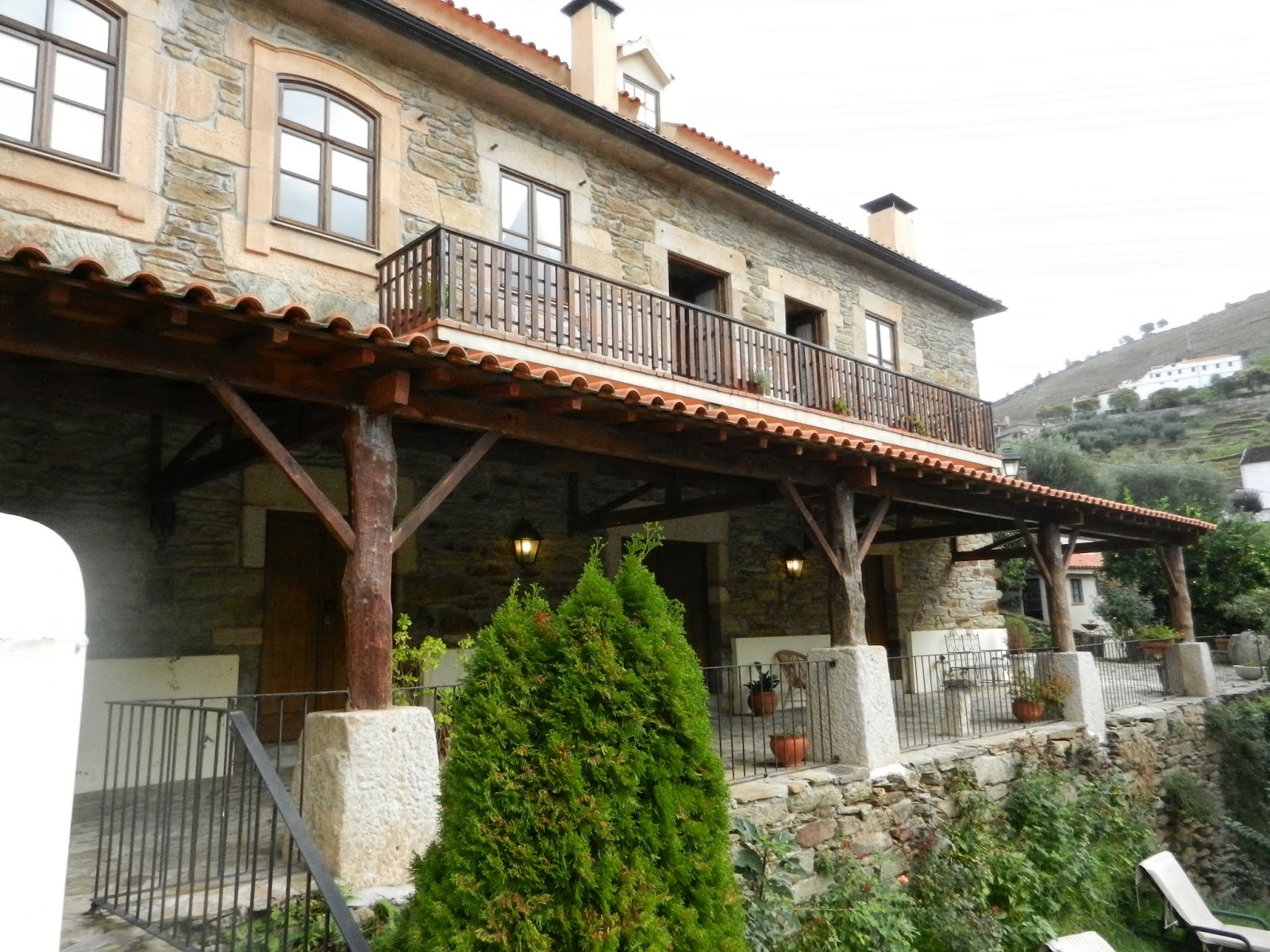
Night at a Charming Guest House, Casa de Vilarinho de S. Romao
Pictures: At Casa de Vilarinho de S. Romao
October 23
11h00 Departure towards the Upper Douro Region
11h30 Visit of Coa Rock Art Museum
13h00 Tour of Quinta da Leda
Owned by Sogrape - the biggest Portuguese producer – Quinta da Leda belongs to Casa Ferreirinha, the winery with the greatest historical weight in the Douro, as well as being one of the most dynamic.
Pictures: At Quinta da Leda
14h00 Lunch at Quinta da Leda with Star Winemaker Luis Sottomayor
We had a memorable lunch, right in the middle of the wine cellar of Quinta da Leda, with the fermentation tanks hanging over us.
Luis Sottomayor entered the Sogrape winemaker team in 1989. Today, he heads the Œnology team for Casa Ferreirinha and all Sogrape Port Wine brands, a responsibility he assumed in January 2003.
Pictures: Lunch at Quinta da Leda
16h30 Off to DWCC in Rioja (Spain)
Picture: Good-bye
Lothar Matthaeus
Picture: Christian G.E. Schiller with Lothar Matthaeus at Frankfurt am Main Airport, before flying to Porto
schiller-wine: Related Posting
Meeting Up-and-coming Winemaker Rita Ferreira Marques from the Douro Area in Portugal at Screwtop Winebar in Clarendon, Virginia
Meeting Rupert Symington from the Symington Family - One of the Oldest Families of Port Producers
The 2013 Digital Wine Communications Conference (DWCC) in Logroño, Rioja, Spain
This was an amazing tour. Starting in Porto, we travelled up the Douro Valley and into Spain. We spent 2 nights in Porto, 1 night in the Vinho Verde region and 1 night in the Upper Douro Valley, close to the Spanish border. We enjoyed 4 very special winemaker dinners and 3 outstanding tastings in Portugal.
The tour was a sponsored pre-conference trip of the 2013 Digitale Wine Communications Conference in Logroño, Rioja, Spain:
The 2013 Digital Wine Communications Conference (DWCC) in Logroño, Rioja, Spain
Wine Producer Portugal
Portugal is a wine producer with a long history that is well known for its Port wines and the Mateus label. With 250.000 hectares of vineyard area, it is the 7th largest wine producer in the world, compared with the US with 400.000 hectares. Portugal possesses a large number of native varietals, many of them little known in the rest of the world.
Vinho Verde, in the northwestern corner of the country, where we spent one night, is the only region of Portugal where white wine dominates. Douro is the region where port wine is produced, but increasingly also (non-fortified) table wine. Continuing south of the Duoro into north-central Portugal is the Dao region, known for big, full bodied reds.
Picture: Christian G.E. Schiller and Celeste Pereira from Greengrape, who organized and led the tour, jointly with Ana Primitivo
In the terms of classification, wines from the top regions are labeled D.O.C. (Denominação de Origem Controlada). Below that are the categories of Indicação de Proveniência Regulamentada (IPR, Indication of Regulated Provenance), regional wine - Vinho Regional Carries and table wines - Vinho de Mesa.
Port, Sherry and Madeira
Port, Sherry and Madeira are fortified wines produced in Portugal and Spain. Sherry, produced in southern Spain, can either be sweet or dry, unlike Port. Port wine is made sweet by adding alcohol to the fermenting must so the fermentation stops and the sugar of the grapes remains in the wine. What you get is a wine with lots of alcohol and remaining sweetness in the wine. Sherry, on the other hand, is made by letting the fermentation go its full way so that a dry wine emerges. Then, alcohol is added to boost the alcohol level. If the winemaker stops there, you get a dry Sherry. If he also adds sterilized juice, you get a sweet Sherry. Thus, Sherry can be sweet or dry, while Port is always sweet. Madeira is a fortified Portuguese wine made in the Madeira Islands, using the port wine approach. Madeira is noted for its unique winemaking process which involves heating the wine up to temperatures as high as 60 °C (140 °F) for an extended period of time. Furthermore, Madeira is deliberately exposed to air, causing it to oxidize.
Douro DOC
While the Douro region is associated primarily with Port wine production, it produces just as much table wine as it does fortified wine. While table wine has always been produced in the region, for a long time little of it was seen outside the region itself. A few Douro wines made their appearance on the international market from the 1970s, but it was not until the 1990s when a large number of wines made their appearance. Douro is classified as World Heritage Site by UNESCO since 2011.
Picture: Celeste Pereira fand Ana Primitivo from Greengrape at the Digital Wine Communication Conference in Rioja
Vinho Verde occupies a large zone of Northern Portugal, between Douro and the Atlantic coast. Its wines are known for its freshness.
October 19
Porto
Annette Schiller and arrived in Porto and walked around in the city. We then took the tram #1 to the beach (Foz Vehla, with its picturesque back streets, designer boutiques and impressive contemporary architecture) and had dinner there. Before going back to the hotel, we had a drink at the Majestic.
Porto was built along the hills overlooking the Douro river estuary, and its historical center was awarded World Heritage status by UNESCO in 1996.
Pictures: In Porto
The city is quite varied architecturally, with medieval as well as modern living side by side. Porto's geography is hard on the feet, but pleasant to the eye, despite the incredible number of dilapidated buildings. Across the river from Porto proper is the City of Vila Nova de Gaia, where you could find the Port Wine Cellars, such as Cálem, Fonseca, Sandemans, and Kopke. The luxury Yeatman Hotel is also in Vila Nova de Gaia.
October 20
11h00 Food Tour of Porto
We did a 3.5 hours food tour through Porto with 6 stops. The guide Andre was an engaging and knowledgeable ambassador for Porto. His high energy tour was great fun. Each stop featured an interesting food experience - from pastries to sandwiches to coffee to wine. Mix in a little history, architecture and great views and photo opportunities and you have a tour that will remain a top highlight of your trip to Portugal.
Pictures: On the Taste Porto Tour with Andre Apolinario
Dinner at Bacalhau, Muro dos Bacalhoeiros 153 -155
Pictures: Dinner with Ryan and Gabriella Opaz (and the Baby)
October 21
12h00 Visit of and Lunch at the Instituto dos Vinhos do Douro e Porto (IVDP)
The Port and Douro Wines Institute is an official body belonging to the Ministry of Agriculture and is a key institution in promoting, regulating and controlling the industry.
Pictures: At the Instituto dos Vinhos do Douro e Porto (IVDP) with Manuel de Novaes Cabral, President
15h00 Visit of and Tasting at Calem Port Wine Cellars in Vila Nova de Gaia
Tour of and tasting at one of the major port wine houses in Portugal.
Pictures: At Calem
Port
Port is produced exclusively in the Douro Valley. Port’s wine style was 'invented' by the British wine merchants for the British market in the 1600-1700s. They added brandy to the still wine to help preserve it on its trip by sea from Portugal to the British market. Typically, grapes are picked with about 13.5% - 14% potential alcohol and then fermented to about 7%, when brandy is added. This brings the fermentation to a halt, while retaining between 80 to 110 g/l of natural sugar in the wine.
Port is divided into different styles, according to different categories: Made from white or from red grapes; aged or not aged; if aged, aged in wood or aged in bottle.
Bottle matured Ports spend a relatively short time in the barrel and mature in the bottle for many years. These are the wines that have made Port one of the greatest wines of the world. Wines that have matured in sealed glass bottles, with no exposure to air, have experienced what is known as "reductive" aging. This process leads to the wine losing its color very slowly and produces a wine which is smoother on the palate and less tannic.
Barrel matured Ports Wines experience what is known as "oxidative" aging, as the barrels allow some exposure to oxygen. Wood matured Ports are bottled when ready for drinking and are not intended for further ageing.
Ruby Port is the basic red Port wine, a blend of several harvests that have been aged in wooden barrels for up to 3 years before being bottled, and ready to drink on release.
Tawny Port is a basic blended Port, like Ruby, which is given more ageing in the barrel before being bottled. The extra ageing, which can be anything from 3 to 40 years, causes the wine to take on a red-brown color and develops a dry nutty flavor with raisin overtones. The stated age - usually 10, 20 or 40 years - is always the average age of the different components. The 10 and 20 year wines provide the best value and deliver the mellow elegance and complex fragrant bouquet so prized by port lovers. The Portuguese consider the 20 year Tawny the ultimate expression of the port making art.
Vintage Port is the most famous of all Port categories. See below.
Late Bottled Vintage (LBV) Port is wine from a single specific harvest, the year being stated on the label, which has been aged in the barrel for between 4 and 6 years. These are high quality ports from a single year that are not quite up to 'Vintage' standards. The best are not filtered and are capable of aging.
Single Quinta Port is Port made from a specific Quinta. Single Quinta Vintage Port is Port coming from a specific Quinta and made from a single specific harvest.
Colheita is essentially a Tawny Port but made from a single specific harvest, unlike the Tawny which is a blend of several different years. The year of harvest will be stated on the label along with the year of bottling and a statement that the wine has been given extended ageing in wood. Colheitas are aged in the barrel for a minimum of seven years.
Garrafeira - These 'reserve' ports have a long tradition but are rare today. They are from a single vintage, aged a short time in cask and then aged in 5-10 liter glass demijohns for 20, 30 or 40 years from which they are decanted into 750 ml. bottles.
White Ports - Made from white grapes, mostly Malvasia. Usually served chilled as an aperitif, often with a twist of citrus fruit and/or a splash of tonic. A few see some wood aging.
17h30 Train Trip to Quinta de Covela (Baião, Vinhos Verdes Region)
Dating from the 1500s, the ruins of the Casa de Covela bear witness to the centuries-old agricultural and cultural importance of the estate. After a period of neglect, Quinta de Covela was purchased in 2011 and brought back to life by two impassioned wine lovers, one from Brazil and one from England. The latter, Tony Smith, was there and orchestrated our visit.
Mindful of the prestige the Covela wines enjoyed for years among connoisseurs, the partners decided to rebuild the estate’s old team, starting with enologist Rui Cunha, who had been involved in the original Covela project since 1992 and was head winemaker from 1998 onward.
Pixtures: Leaving Porto (at the Railway Station)
20h30 Wine tasting and dinner at Quinta de Covela
We started with a wine tasting in the cellar.
Pictures: Cellar Tasting at Quinta de Covela with Winemaker Rui Cunha and Co-owner Tony Smith
We then had a wonderful dinner with Tony Smith and Rui Cunha, with more wine tasting.
Pictures: Dinner at Quinta de Covela
Night at Quinta de Covela
In addition to the estate's main house and winery, redesigned and extended by the director in the 1950s, Covela today also has three contemporary villas whose geometric lines are the work of José Paulo dos Santos, one of Portugal's most admired contemporary architects. With their stylish interiors, the villas offer sensational views over the vineyards and the Douro valley.
Pictures: Morning View from Quinta de Covela
October 22
10h30 Visit of the Douro Museum
12h30 Vintage Port (2011) Tasting with 4 Port Producers at Quinta da Boavista
Vintage Port: The product of a single harvest, the wine is aged in barrel for between 2 and 3 years and is bottled un-filtered, and needs to be laid down for a considerable number of years so that it can age in bottle. After ageing in bottle Vintage Port develops into a very big wine. Because they are aged in barrels for only a short time, they retain their dark ruby color and fresh fruit flavors. Vintage Port is only made when the harvest is exceptional - about 3 times a decade. While it is by far the most renowned type of port, vintage port actually makes up only a small percentage of production.
We tasted 4 vintage ports (2011).
Pictures: Vintage Port (2011) Tasting
Pocas Junior (Maria Manue Maja, winemaker)
Picture: Annette Schiller and Maria Manue Maja
Dona Matilde (Filipe Barros, owner)
Picture: Annette and Christian G.E. Schiller with Filipe Barros
Alves de Sousa (Tiago Alves de Sousa, and Domingos Alves de Sousa, both owners)
Picture: Christian G.E. Schiller with Tiago Alves de Sousa, and Domingos Alves de Sousa
Quevedo (Oscar Quevedo, owner)
Picture: Annette and Christian G.E. Schiller with Oscar Quevedo
13h30 Lunch at Quinta da Boavista
We had a superb lunch with the 4 Port producers, in the cellar of Quinta da Boavista.
Pictures: Lunch at Quinta da Boavista
16h00 Boat Trip on the Douro River
Pictures: On the Douro River
18h00 Douro DOC Tasting at Casa Morgadio da Calcada (in Provezende) with Douro DOC Producers
In the early evening, we had a wonderful tasting of Douro DAC wines at Casa Morgadio da Calcada
Pictures: Douro DOC Tasting at Casa Morgadio da Calcada (in Provezende) with Douro DOC Producers
20h00 Dinner at Casa Morgadio da Calcada
Following the tasting, we moved to the dining room of Casa Morgadio da Calcada and had a wonderful dinner there.
Pictures: Dinner at Casa Morgadio da Calcada
Night at a Charming Guest House, Casa de Vilarinho de S. Romao
Pictures: At Casa de Vilarinho de S. Romao
October 23
11h00 Departure towards the Upper Douro Region
11h30 Visit of Coa Rock Art Museum
13h00 Tour of Quinta da Leda
Owned by Sogrape - the biggest Portuguese producer – Quinta da Leda belongs to Casa Ferreirinha, the winery with the greatest historical weight in the Douro, as well as being one of the most dynamic.
Pictures: At Quinta da Leda
14h00 Lunch at Quinta da Leda with Star Winemaker Luis Sottomayor
We had a memorable lunch, right in the middle of the wine cellar of Quinta da Leda, with the fermentation tanks hanging over us.
Luis Sottomayor entered the Sogrape winemaker team in 1989. Today, he heads the Œnology team for Casa Ferreirinha and all Sogrape Port Wine brands, a responsibility he assumed in January 2003.
Pictures: Lunch at Quinta da Leda
16h30 Off to DWCC in Rioja (Spain)
Picture: Good-bye
Lothar Matthaeus
Picture: Christian G.E. Schiller with Lothar Matthaeus at Frankfurt am Main Airport, before flying to Porto
schiller-wine: Related Posting
Meeting Up-and-coming Winemaker Rita Ferreira Marques from the Douro Area in Portugal at Screwtop Winebar in Clarendon, Virginia
Meeting Rupert Symington from the Symington Family - One of the Oldest Families of Port Producers
The 2013 Digital Wine Communications Conference (DWCC) in Logroño, Rioja, Spain
Subscribe to:
Posts (Atom)