Showing posts with label Eiswein. Show all posts

Monday, December 27, 2021

Vintage 2021 Eiswein in Germany

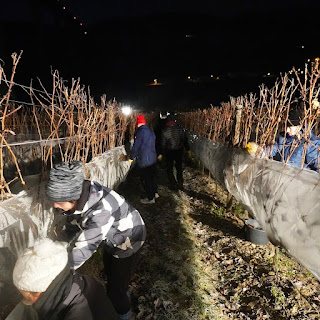
Picture: Vintage 2021 Eiswein in Germany - Weingut Dr. Loosen

Weingut Dr. Loosen: It’s always a very special event to go out with the team and harvest icewine 😊❄️. We are grateful that we were able to finally finish the great harvest of 2021 yesterday morning with this highlight.

Press Release, German Wine Institute, 12/22/2021

The Johanneshof winery in Bad Kreuznach-Bosenheim was the first to be able to harvest icewine this winter season 2021. According to the owner Martin Korrell, Riesling grapes could be harvested at temperatures of minus eight degrees in the "Bad Kreuznacher Paradise" site.

 
Picture: Vintage 2021 Eiswein in Germany - Weingut Dönnhoff
 
Weingut Dönnhoff: This morning we had the chance to #harvest #Eiswein ❄️ in our #BRÜCKE #vinyard. Perfect conditions and super healthy #grapes and of course we used the old #basketpress to get the best quality. What an outstanding finish to the wine year 2021 😊👏

Harvesting icewine in early morning hours

Korrell from the Nahe region thus fulfills the legal requirements for ice wine harvesting, which requires temperatures of below -7 degrees Celsius. In very early morning hours of december 21st around 20 harvest workers collected the frozen grapes with a must weight of 142 degrees Oechsle. This unit of measurement indicates the must weight of the sugar content and other dissolved substances in the grape juice.
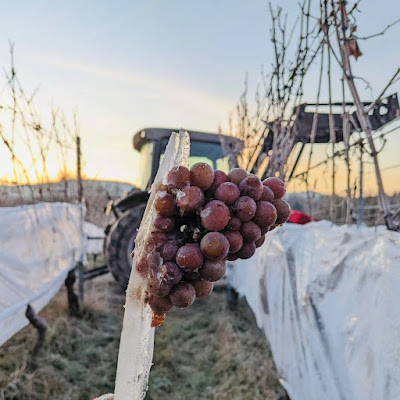
Picture: Vintage 2021 Eiswein in Germany - Weingut Maximin Grünhaus

Weingut Maximin Grünhaus: This morning we were able to harvest Ice Wine.With the first sunrise at freezing -8°C we harvested beautiful and frozen grapes with a team of helping hands. It is the first Ice Wine since 2016 what makes us even more happy.

Can‘t wait to taste it.

Mosel vintners brought in highly aromatic frozen grapes

In the Mosel region, among others in Erden (zip code 54492), employees of the Dr. Hermann estate (photo) harvested icewine (sites: Erdener Herrenberg and Lösnicher Försterlay). Frozen grapes could also be brought in in Leiwen (Alexander Loersch winery and Werner winery) and Longuich (Christopher Jung hiliday winery). In addition, vintners in the Mosel-towns Selbach-Oster and Zeltingen as well as Würtzberg/Serrig are so fortunate to process frozen, highly aromatic grapes.
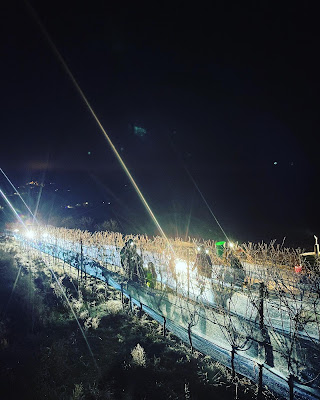

Picture:  Vintage 2021 Eiswein in Germany - Weingut Dr. Crusius

Winemaker in Franken also pleased about successful icewine harvest

Furthermore, the Meinzinger winery in Frickenhausen in the wine-growing region of Franken was also pleased about a successful harvest of the frozen ice wine grapes: At -8 degrees Celsius, ice wine grapes with a must weight of 148 degrees Oechsle - a total of approx. 200 liters - "That is a very rare thing for us," says Philipp Meintzinger. The winery was able to bring in the last ice wine in 2016.
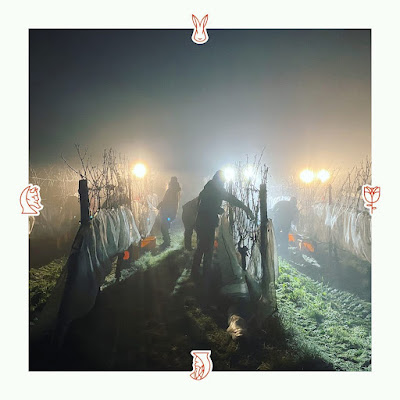
Picture: Vintage 2021 Eiswein in Germany - Weingut Allendorf 

Derek Vinnicombe: EISWEIN also in the Rheingau.... harvested 22 December, a memorable day, the day of solstice, the longest night is over, and cold enough even in these days of climate change. Climate change has also given us too much heat and too much flooding this year. A Riesling EISWEIN born in the Winkeler Gutenberg vineyard of the Allendorf families, not quite close to Bethlehem. The Three Wise Men? Ulrich Allendorf, Josef & Max Schönleber.

152 estates in Rhineland-Palatinate signed up for ice wine harvest

For this winter, some 152 estates in Rhineland-Palatinate have registered a total area of ​​around 107 hectares for a possible ice wine harvest, as the Chamber of Agriculture announced. In the previous year there were only 93 farms with a total of 72 hectares.

For vintners, icewine harvest is always associated with risk and high physical effort during freezing cold temperatures. In the 2019 vintage, vintners in Rhineland-Palatinate waited in vain for frost. If it is not cold enough, it means a total loss for the winemaker due to the law. For an icewine harvest, the grapes must be frozen through. This requires at least minus seven degrees Celsius for several hours. The overripe grapes are picked and pressed while frozen. Ice wine is particularly sweet because a large part of the water remains in the frozen fruit and the sugar content is very high.

schiller-wine - Related Postings

Christian Schiller`s SCHILLER-WINE Blog on Corking Wines` Top 101 Wine Writers of 2020 List 

Ho, Ho, Ho - German Wine Society (Washington DC Chapter) Christmas Party at the Cosmos Club in Washington DC Downtown, USA/ Germany

Christian Stahl, Winzerhof Stahl, Franken, Germany back in the USA - Winemaker Dinner at the Schiller Residence in McLean, Northern Virginia

The Wines of Germany: Presentation by Annette Schiller at the German Embassy in Washington DC/ Consular Conference December 2021

All Sorts of Sparklers: How do the Bubbles get into that Bottle - Presentation by Annette Schiller, ombiasy WineTours, at the 2021 American Wine Society National Conference in Atlantic City

The German Wine Society (Washington DC Chapter) Presented: 2019 German Vintage Tasting with Phil Bernstein of MacArthur Beverages, Washington DC, USA

Tasting at Weingut Dönnhoff, Oberhausen, Nahe. with Anne Dönnhoff - Germany-North Tour 2019 by ombiasy WineTours: Quintessential Riesling 

Tasting at Weingut Jos. Jos. Prüm in Bernkastel-Wehlen, Mosel, with Amei Prüm - Germany-North Tour 2019 by ombiasy WineTours: Quintessential Riesling 

The New Classification of German Wines: The VDP Classification - Annette Schiller Conducting a Seminar at the 2016 National Convention of the American Wine Society in Los Angeles, USA


Tuesday, January 8, 2013

2012 Eiswein in Germany, Icewine in Canada, and Cryo-Extraction Wines

Picture: Eiswein Harvest 2012 at Weingut Balthasar Ress, Rheingau, Germany

When the temperature dropped considerably in Germany during the night of December 8th to 9th 2012, dozens of German wine makers spent a sleepless night and instead harvesting Eiswein. The conditions were right - thoroughly frozen grapes - and the legal requirement - temperatures below -7 °C - were fulfilled in many of the 13 German wine growing regions in that night. Other winemakers waited a few days and harvested during the night of December 12th to 13th. All German 2012 Eiswein was harvested between December 8th and 13th.

Overall, German winemakers are very enthusiastic about the 2012 Eiswein. Here are a few reports from wine makers.

Reiner Flick, Weingut Joachim Flick, Flörsheim-Wicker, Rheingau,  harvested 5000 kg within 4 hours at -13° C from 2 different vineyards: 2012er Wickerer Nonnberg Riesling Eiswein, 320 liter at 175° Oechsle and a 2012er Wickerer Mönchsgewann Riesling Eiswein, 380 liter at 168° Oechsle. Harvest started at 10 pm and ended at 2 am, with 20 people.

Armin Diel, Schlossgut Diel, Burg Layen, Nahe, harvested in the first 2 hours of December 9th 130 liter at 188° Oechsle. The temperature was -10° C. This was the only time corridor, where the harvest was possible. 7 hours later, the temperature had risen to close to zero.

Weingut Bernhard Pawis, Zscheiplitz, Saale-Unstrut, harvested on December 8th at 7 am at -12° C 100 liter of Riesling Eiswein (180° Oechsle).

In the Rheingau at Weingut Balthasar Ress in Hattenheim, General Manager Dirk Würtz harvested with 15 helpers 40 liter Eiswein at 180° Oechsle.

Here are more reports from Germany.

Deutsches Weininstitut link

VDP link

Eiswein/Ice Wine and Noble-Sweet Wines

Eiswein belongs to the group of noble-sweet wines. There are basically two methods of producing noble-sweet wines.

First, wait for the grapes to be botrytised. Botrytise Cinerea (noble rot) is a fungus that under the right conditions attacks already-ripe grapes, shriveling them, concentrating the sweetness and acidity. The grapes end up looking disgusting but they make profound sweet white wines with complex apricot, honey and spice flavors and good balancing acidity. Typically noble rot forms best in conditions where morning mist from a lake or river gets burnt off during the day by hot sun.

Second, wait for the grapes to be frozen. Grapes used for producing ice wine have a substantially lower level of sugar in the vineyard than the botrytised grapes, but that night, when the grapes are harvested, the frost has converted the grapes into ice. Because the grapes are frozen, most of the mass is water, and is left behind as ice in the press. Only a small amount of concentrated juice is extracted. This also produces profound sweet wines, but without the taste of the noble rot.

Eiswein in Germany and Icewine in Canada

Pictures: Dirk Wuertz and his 2012 Eiswein at Weingut Balthasar Ress, Rheingau, Germany (All pictures are courtesy of Weingut Balthasar Ress)

The main producers of ice wine are Germany and Canada. In Germany, there is no guarantee for the vintners for the frost to come and to allow them to pick frozen, sugar-rich grapes to make the sweet and expensive elixir. So, it is always a risk to let the fruit hang and wait for the temperature to fall. In Canada, there is no such risk and this explains why Canada has become the leading producer of ice wine in the world.

Generally, ice wine require a hard freeze to occur sometime after the grapes are ripe which means that the grapes typically hang on the vine well beyond the normal harvest. If a freeze does not come quickly enough, the grapes may rot and the crop will be lost. If the freeze is too severe, the juice extraction by pressing can be very long. The longer the harvest is delayed, the more fruit will be lost to wild animals and dropped fruit. Since the fruit must be pressed while it is still frozen, pickers often must work at night or very early in the morning, harvesting the grapes within a few hours.

The high sugar level in the must leads to a slower-than-normal fermentation. It may take months to complete the fermentation (compared to days or weeks for regular wines) and special strains of yeasts are used.

Due to the labor-intense and risky production process resulting in relatively small amounts of wine, ice wines are generally quite expensive.

Cryo-Extraction

For ice wine, the grapes are frozen while still on the vine. Alternatively, the freezing can take place after the harvest in the wine cellar (cryo-extraction). This is an approach, which kind of simulates the frost in the vineyard in the wine cellar. It was developed by the French. Instead of waiting for Mother Nature to produce frosty temperatures in the vineyard, the winemaker subjects the grapes to frosty temperatures in the cellar and presses them while frozen.

In the US, Austria, Germany, and Canada, the grapes must freeze naturally to be called ice wine.

German wine law entirely bans post-harvest freezing methods, even if not labeled "Eiswein".

In France, in the Sauternes region, cryo-extraction has been used now for several decades to support the production of noble-sweet, botrytised Sauternes wines.

In the US, TTB (Tax and Trade Bureau) regulations state that "Wine made from grapes frozen after harvest may not be labeled with the term "ice wine" or any variation thereof, and if the wine is labeled to suggest it was made from frozen grapes, the label must be qualified to show that the grapes were frozen postharvest." Non-traditional ice wines are generally given a proprietary name. The first non-traditional ice wine in the US was reportedly made in 1986 by Randall Grahm of Bonny Doon.

Nicolas Quille, head winemaker of Pacific Rim, who worked for Randall Grahm many years:  “There are several advantages to the cryo-extraction technique versus the true ice-wine method. Firstly, making ice wine in Germany or Canada (the only two countries that have laws insuring that you are getting a “true” ice wine) is a bit like playing Russian roulette; some years you get a good frost, some you don’t and you lose the crop. Secondly, with cryo-extraction, the timing of the frost is predictable; no need to get up at midnight on Christmas day (though making a “Christwein” is somewhat romantic at first glance) and it is less likely to have half the crop eaten by birds. Predictability allows a winery to get a better yield every year, which should be reflected in the price (our VDG – Vin de Glace - sells for $14 vs $100 for a true ice wine). Thirdly, the chemistry is different with cryo-extracted wine; the wines will be a bit tarter (picked earlier) and less “funky” (no botrytis and other fungal influence). We actually make both styles and but for an everyday pleasure, the VDG is perfect for the price.”

schiller-wine: Related Postings

Bumping into Randall Grahm in San Francisco, Owner of famed Bonny Doon Vineyard in Santa Cruz in California, USA

German American Wines: (1) Pacific Rim Dry Riesling, (2) Eroica, (3) Woelffer and his Schiller Wine

Visiting Winemaker Steven Sealock at Pacific Rim Winemakers in Washington State, USA

Pacific Rim Riesling #1 of Wine Enthusiast Top 100 Best Buy List 2011 - Meeting Founder Randall Grahm and Winemakers Nicolas Quille and Steven Sealock 

German Winemakers in the World: Johann Schiller - the father of Canada's wine industry

2009 German Eiswein - icewine - was harvested on December 18 and 19

German Wine Basics: Sugar in the Grape - Alcohol and Sweetness in the Wine

Eiswein in Germany and Icewine in Canada

Eiswein in Germany and Ice Wine in Canada

Tokaji: Depressing and Encouraging News from Hungary

Normally, Wine is Dry. But there are Many Sweet Wines in the World. How is Sweet Wine Made?

A Sauternes Vertical at the Embassy of France in Washington DC with Wine from Château Raymond-Lafon and Owner Jean-Pierre Meslier, France/US

Hanging out with Rheingau Winemakers: Dirk Wuertz, Desiree Eser, Alexander Jakob Jung, Hansi Bausch and Christian Ress in Hattenheim, Rheingau, Germany

Monday, March 1, 2010

200 Years of Wine Making in Ontario, Canada


200 Years of Wine Making in Ontario, Canada

Johann Schiller is acknowledged as the “father” of the Ontario Wine industry. Schiller opened Ontario’s first wine venture in 1811 in the area of Mississauga now known as Cooksville, where he offered to the public wines made from wild labrusca grapes. From this humble beginning, the Ontario wine industry took root.

The subsequent story is convoluted, with periods of excitement, prosperity, political pressures, and virtual abandonment. After prohibition ended in 1927, it took until 1975 for the first new winery to open in Ontario. The success of Inniskillin and other 20th-century wine pioneers – in particular with their icewine - has fostered a lively industry in Ontario, and this no doubt played a role in the evolution of fine wineries elsewhere in Canada. There are currently more than 160 wineries licensed in Ontario, including traditional wineries, fruit wineries, and meaderies.

The industry has also survived upgrades to its vineyards. Until the 1980s, Ontario vineyards were dominated by labrusca grape species, including Concord, Niagara, Delaware, and Isabella. Vine pull-out began in the 1960s and the majority of vineyards were replanted with cold-hardy hybrid grapes such as Vidal, Seyval Blanc, Baco Noir, and Marechal Foch. Another replanting drive began in 1978, when growers replaced many of the hybrids with European vinifera varieties: Chardonnay, Riesling, the Cabernets, Pinot Noir, and many others.

Two hundred years later, the Ontario vintners, led by winemaker/educator/industry activist Jim Warren, are trying to give Schiller and the generations of wine pioneers that came after him in Ontario their due. Warren, General Manager at Stoney Ridge Estate Winery in Vineland, is calling on the provincial government to officially recognize the bicentennial of the Ontario wine industry in 2011. Warren, also hopes the province's 160-plus grape and fruit wineries and meaderies join in the celebration and spread the message: Ontario Wine: 200 Years of Growing.

There are now two booming wine regions in Canada, British Columbia in the west and Ontario in the east.

Picture: Canada's Wine Regions

The Okanagan Valley is the predominant wine growing region in British Colombia. The Okanagan Valley wine boom is part of the larger North West American wine story that has been unfolding in the past 30 years, starting with Oregon in the US, and then moving up to Washington State and now to British Columbia in Canada.

The Ontario wine story is to a large extent one of ice wine, that have gained worldwide reputation, with Illiskin being the leading producer. Canada’s cool climatic conditions enable it to be the largest ice wine producer in the world. Although both Germany and Austria are large ice wine producers, their climates are not as consistently cold as is Canada’s to guarantee ice wine production every year. Canada produces over 2 million 375ml bottles of ice wine annually. An Illiskin icewine was served in December 2009 at the occasion of the Nobel Prize Banquet in Stockholm.

Ontario Wine Industry Milestones

1811: Johann Schiller, the father of Canadian winemakers, makes wine from local and imported North American grapes and offers them for sale to the public.
1857: Porter Adams begins cultivating grapes in Southern Ontario.
1864: Canadian Vinegrowers Association is formed in Ontario.
1864: The Dunkin Act of Upper Canada allows counties to be "dry".
1866: Vin Villa is built on Pelee Island.
1867: Canada becomes a nation.
1873: George Barnes Winery opens in Niagara.
1874: T.G. Brights Winery opens in Niagara.
1894: John Sotheridge plants vineyards in Stoney Creek.
1916: Prohibition begins. Ontario has 67 wineries producing medicinal and sacramental wines, and wines for export.
1927: Prohibition ends. Alcohol jurisdiction is handed over to the provinces. Ontario implements a moratorium on new winery licences.
1960s: Growers begin to rip out North American species and plant French-American Hybrids. Baby Duck is the best-selling wine in Ontario.
1933 to 1974: After much consolidation in the industry, there remain only six wineries in Ontario.
1974: Donald Ziraldo and Karl Kaiser apply for a winery license -- the first since prohibition -- and open Inniskillin winery in Niagara-on-the-Lake.
1978: Ontario implements a pull-out program to remove native and labrusca grapes species, to be replaced by hybrids. Wineries are allowed to import grapes/juice/wine to fill the gap until Ontario’s vineyards reach production age.
1988: Ontario vintners create the Vintners Quality Alliance (VQA).
1988: Canada signs Free Trade pact with the US. A massive grape pullout is initiated to wean wineries off hybrid grapes, replacing them with vinifera varieties.
1990: VQA is adopted as BC’s wine standard.
1997: Cool Climate Vinicultural Institute opens at Brock University in St. Catherines.
1999: 100th winery licensed in Ontario.
1999: VQA is entrenched as Ontario law.
2000: Fruit Wines of Ontario is founded, and establishes the Quality Certified (QC) program for non-grape wines.
2001: Ontario Wine Content Act becomes law.
2007: Prince Edward County is recognized as a vinicultural region.
2008: Niagara Region establishes a system of microclimates.
2009: There are 164 licensed wineries in Ontario, ranging from small family operations to factory wineries, fruit wineries, and meaderies, with facilities in virtually every segment of the province.
2010: Prince Edward County emerges as Ontario’s second largest viticultural region.
2011: Ontario celebrates the Bi-centennial of its wine industry.

Schiller Wine - Related Postings

Vancouver, the Olympic Winter Games 2010 and Canada's Wine

German Winemakers in the World: Johann Schiller - the father of Canada's wine industry

Eiswein in Germany and Ice Wine in Canada

Wine Event: The Wines served in honor of President Obama at the 2009 Nobel Peace Prize Banquet in Oslo

Sunday, February 7, 2010

Eiswein in Germany and Icewine in Canada


Note: For an expanded and revised version of this posting, see:
2012 Eiswein in Germany, Icewine in Canada, and Cryo-Extraction Wines

Eiswein, or Ice Wine, belongs to the group of noble-sweet wines. There are basically two methods of producing noble-sweet wines .

First, wait for the grapes to be botrytised. Botrytise Cinerea (noble rot) is a fungus that under the right conditions attacks already-ripe grapes, shriveling them, concentrating the sweetness and acidity. The grapes end up looking disgusting but they make profound sweet white wines with complex apricot, honey and spice flavors and good balancing acidity. Typically noble rot forms best in conditions where morning mist from a lake or river gets burnt off during the day by hot sun.

Second, wait for the grapes to be frozen. Grapes used for producing ice wine have a substantially lower level of sugar in the vineyard than the botrytised grapes, but that night, when the grapes are harvested, the frost has converted the grapes into ice. Because the grapes are frozen, most of the mass is water, and is left behind as ice in the press. Only a small amount of concentrated juice is extracted. This also produces profound sweet wines, but without the taste of the noble rot.

The main producers of ice wine are Germany and Canada. In Germany, there is no guarantee for the vintners for the frost to come and to allow them to pick frozen, sugar-rich grapes to make the sweet and expensive elixir. So, it is always a risk to let the fruit hang and wait for the temperature to fall. In Canada, there is no such risk and this explains why Canada has become the leading producer of ice wine in the world.

In Germany, ice wine was harvested on December 18 and 19, 2009. In Canada the ice wine harvest is now in full swing.

I would like to refer you to Jonathan Ray’s interesting article in the UK Telegraph about ice wine here, to Will Lyons article in the Wall Street Journal, to here, as well as to my earlier posting on the German 2009 Eiswein here and Mario Scheuermann's posting of December 20, 2009 - in German - about the German harvest.

Schiller Wine - Related Postings

German Winemakers in the World: Johann Schiller - the father of Canada's wine industry

2009 German Eiswein - icewine - was harvested on December 18 and 19

German Wine Basics: Sugar in the Grape - Alcohol and Sweetness in the Wine

Tuesday, December 22, 2009

2009 German Eiswein - Ice Wine - was Harvested on December 18 and 19


Picture: Bild Zeitung - snow chaos!

Generally Germany is well geared for colder weather. But nobody anticipated that last weekend would bring the year's coldest. Temperatures sank as low as minus 30 degrees Celsius in some areas and snow and ice affected road, rail and airport services. The weather resulted in several deaths and hundreds of accidents.

At the same time, this frost was what lovers of German ice wine and German vintners had been looking for; those vintners who were holding out with their fruit in order to produce ice wine this year.

Ice wine is a very special wine that belongs to the group of noble-sweet wines. There are basically two methods of producing noble-sweet wines in Germany.

First, wait for the grapes to be botrytised. Botrytise Cinerea (noble rot) is a fungus that under the right conditions attacks already-ripe grapes, shriveling them, concentrating the sweetness and acidity. The grapes end up looking disgusting but they make profound sweet white wines with complex apricot, honey and spice flavors and good balancing acidity. Typically noble rot forms best in conditions where morning mist from a lake or river gets burnt off during the day by hot sun.

Botrytised wines are not unique to Germany. Other famous botrytised wines include the Sauternes (France), the Tokaji (Hungary), and the Beerenauslese, Ausbruch, Tockenbeerenauslese from Austria.

Second, wait for the grapes to be frozen. Grapes used for producing ice wine have a substantially lower level of sugar in the vineyard than the botrytised Beerenauslese or Trockenbeerenauslese wines, but that night, when the grapes are harvested, the frost has converted the grapes into ice. Because the grapes are frozen, most of the mass is water, and is left behind as ice in the press. Only a small amount of concentrated juice is extracted. This also produces profound sweet wines, but without the taste of the noble rot.

In Germany, there is no guarantee for the vintners for the frost to come and to allow them to pick frozen, sugar-rich grapes to make the sweet and expensive elixir. So, it is always a risk to let the fruit hang and wait for the temperature to fall.

The VDP (Verband Deutscher Prädikatsweingüter), an association of many of the top German wine estates, reports that the freezing temperatures last Thursday and Friday morning allowed many producers to do what they had been hoping to do during the last few weeks. They harvested early in the morning, when the temperatures were between -9 and -11 ºC (between 15 and 12 ºF).

The following VDP estates picked on December 18 and 19, 2009. Here is some information at what day and time the ice wine was harvested, the vineyard, the grape variety and the sugar content of the must (measured in Oechsle).

AHR - Weingut Deutzer Hof
Lese 18. Dezember ab 7:30 Uhr
Temperatur -10° Grad
Lage Altenahrer Eck
Rebsorte Riesling
Oechsle 163° Grad
________________________________________
FRANKEN - Fürstlich Castell`sches Domänenamt
Lese 18. Dezember ab 7:00 Uhr
Temperatur -9° Grad
Lage Schlossberg, Kugelspiel
Rebsorte Silvaner
Oechsle 180° Grad
________________________________________
FRANKEN - Weingut am Stein
Lese 19. Dezember ab 6:00 Uhr
Temperatur -17° Grad
Lage Am Stettener Stein
Rebsorte Silvaner, Riesling
Oechsle 220° Grad
________________________________________
FRANKEN - Weingut Schmitts-Kinder
Lese 18. Dezember ab 6:30 Uhr
Temperatur -11° Grad
Lage Randersackerer Sonnenstuhl
Rebsorte Silvaner
Oechsle 212° Grad
________________________________________
FRANKEN - Weingut Hans Wirsching
Lese 18. Dezember ab 7:00 Uhr
Temperatur -8° Grad
Lage Iphöfer Kronsberg
Rebsorte Riesling
Oechsle 193° Grad
________________________________________
MOSEL-SAAR-RUVER - Weingut S.A. Prüm
Lese 18. Dezember ab 8:00 Uhr
Temperatur -10,5° Grad
Lage Kraacher Himmelreich
Rebsorte Riesling
Oechsle 165° Grad
________________________________________
PFALZ - Weingut Pfeffingen - Fuhrmann-Eymael
Lese 18. Dezember ab 7:00 Uhr
Temperatur -8,0° Grad
Lage Nussriegel
Rebsorte Riesling
Oechsle 180° Grad
________________________________________
PFALZ - Weingut Fitz-Ritter
Lese 18. Dezember ab 7:00 Uhr
Temperatur -10,0° Grad
Lage Dürkheimer Hochbenn
Rebsorte Riesling
Oechsle 165° Grad
________________________________________
RHEINGAU - Wein- und Sektgut Barth
Lese 18. Dezember ab 7:00 Uhr
Temperatur -8,5° Grad
Lage Hallgartener Jungfer
Rebsorte Riesling
Oechsle 183° Grad
________________________________________
RHEINGAU - Weingut Joachim Flick
Lese 18. Dezember ab 6:30 Uhr
Temperatur -8° Grad
Lage Wickerer Mönchsgewann
Rebsorte Riesling
Oechsle 170° Grad
________________________________________
RHEINGAU - Weingut Langwerth von Simmern
Lese 18. Dezember ab 6:30 Uhr
Temperatur -8° Grad
Lage Eltviller Sonnenberg
Rebsorte Riesling
Oechsle 160° Grad
________________________________________
WÜRTTEMBERG - Weingut Gerhard Aldinger
Lese 18. Dezember ab 7:30 Uhr
Temperatur -10,5° Grad
Lage Vellbach Goldberg
Rebsorte Riesling
Oechsle 190° Grad
________________________________________
WÜRTTEMBERG - Weingut Karl Haidle
Lese 18. Dezember ab 7:00 Uhr
Temperatur -12° Grad
Lage Stettener Pulvermächer
Rebsorte Riesling
Oechsle 210° Grad
________________________________________
WÜRTTEMBERG - Weingut Drautz-Able
Lese 20. Dezember ab 5:00 Uhr
Temperatur -15° Grad
Lage Heilbronner Stiftberg, Gemarkung Riedenberg
Rebsorte Riesling
Oechsle Erster Anstich 310° im Ergebnis 270° Grad

If you are interested in a more comprehensive picture of the German 2009 ice wine situation, go here.

The first ice wine was reportedly produced in Germany in 1794. Today, ice wines are highly prized wines that are made not only in Germany, but also in Austria and Canada as well as other countries, including the United States. Canada has experienced an amazing ice wine boom in the past decades. At the 2009 Nobel Peace Prize Banquet for President Obama in Oslo, an ice wine from Canada was served.

In the context of ice wine, people also talk a lot about cryoextraction. This is an approach, which kind of simulates the frost in the vineyard in the wine cellar. It was developed by the French. Instead of waiting for mother nature to produce frosty temperatures in the vineyard, the winemaker subjects the grapes to frosty temperatures in the cellar and presses them while frozen. In France, the method has been used for many years to boost the sugar content in the famous (botrytized) Sauternes grapes, including the top notch chateaus.

This method is now common in a number of countries, including the United States. But in the United States, wine from grapes frozen after the harvest cannot be called ice wine. In Austria and Germany cryoextraction is under discussion, but has not yet been made legal.