Showing posts with label Rioja. Show all posts

Thursday, March 13, 2014

Weinfeder: Die “Digital Wine Communications Conference 2013” in Rioja, Spanien


This article is a re-release of an article which was initially published in: Weinfeder Journal, page 25, February 2014, Edition #42. Weinfeder Journal is the quarterly on-line journal of the Weinfeder - the association of German wine writers. The first version of the article was a posting (in English) on schiller-wine: The 2013 Digital Wine Communications Conference (DWCC) in Logroño, Rioja, Spain

Dieser Artikel ist eine Wiederveroeffentlichung eines Artikels, der urspruenglich in dem Weinfeder Journal, Seite 25, Februar 2014, Edition #42 veroeffentlicht wurde. Weinfeder Journal ist eine vierterljaehrlich on-line Publikation der Vereinigung deutschsprachiger Weinpublizisten. Die erste Version des Artikels war ein Posting (auf Englisch) auf schiller-wine: The 2013 Digital Wine Communications Conference (DWCC) in Logroño, Rioja, Spain


Vom 25. bis 27. Oktober 2013 fand die “Digital Wine Communications Conference (DWCC) 2013” in Logroño (Spanien) statt. Bis zur diesjaehrigen Veranstaltung “European Wine Bloggers Conference (EWBC)” genannt, war es die sechste jährliche Veranstaltung dieser Art. Bisherige Konferenzen fanden in Spanien, Portugal, Österreich, Italien und der Türkei statt.

Dass die Veranstalter den Namen der Konferenz geaendert haben, war ueberfaellig. Es geht zwar weiterhin auch um Bloggen bei der Konferenz, das zentrale Thema ist jedoch ueber die Jahre die digitale Weinkommunikation geworden, die von Produzenten, Haendlern, Importeuren und Exporteuren immer mehr genutzt wird. Das ist unterschiedlich in den verschiedenen Laendern. In den USA zum Beispiel gibt es kaum noch Winzer, die nicht eine facebook Seite und ein Twitter Konto haben. In Deutschland ist das ganz anders. Nur relative wenig laeuft ueber die digitale Schiene in Deutschland. Dementsprechend war Deutschland auch bei dieser Konferenz kaum vertreten. An der Konferenz nahmen etwa 250 Teilnehmer aus mehr als 30 Ländern teil.

Wie in den Vorjahren war die 2013 Konferenz eine höchst unterhaltsame und lehrreiche Mischung aus Workshops, Vorträgen , Weinproben und Besuchen von Weingütern.

Es gab etwa 30 parallele Workshops, Vorträge und Verkostungen an den beiden ersten Konferenztagen, in 3 verschiedenen Tagungsräumen: Panos Kakaviatos leitete eine interessante Diskussion über die Auswirkungen des Klimawandels auf die Weinbereitung. Doug Frost, einer von 3 Menschen auf der Welt, die sowohl Master of Wine als auch Master Sommelier sind, stellte uns die 3 Unterregionen der Rioja Region da. Die "Aged Rioja Tasting” Probe war sehr beliebt, und die Plätze waren schnell belegt. Der New Yorker Blogger und Buchautor Tyler Coleman (Dr. Vino – uebrigens wirklich promoviert, in Politischer Wisssenschaft) und andere gingen der Frage nach: "Was ist Wein Kommunikation und wer sind die Wein Kommunikatoren im Jahr 2013". Da ging es natuerlich viel um Twitter, Facebook and YouTube. David White, aus Washington DC, und andere gingen dem Problem nach: “Herausforderungen einer globalen Marke in der Internet Kommunikation”. Julia Harding und Jose Vouillamoz, die mit Jancis Robinson das Standard Werk “Wine Grapes - A complete Guide to 1,368 Vine Varieties, including their Origins and Flavours” verfasst haben, leiteten eine Verkostung von "seltenen iberischen Sorten".

An beiden Tagen gab Verkostungen in der Lobby von 09.00 bis 15.00 Uhr. Am ersten Tag praesentierten ausschliesslich Rioja Produzenten ihre Weine. Am zweiten Tag gab es auch andere, darunter eine Menge portugiesischer, Produzenten.

Der erste Tag endete mit einem Weingut Besuch und Abendessen auf dem Weingut. Wir wurden auf 6 Busse aufgeteilt und zu 6 Weingütern gebracht. Ich hatte das Vergnügen, Bodegas Baigorri zu besuchen. Es war ein sehr interessanter und vergnueglicher Abend. Ein Gala-Dinner in Laguardia war der Hoehepunkt des zweiten Tages.

Am dritten Konferenztag ging es den ganzen Tag in die Weingueter. Die Teilnehmer konnten zwischen verschiedenen Touren wählen. Meine Gruppe besuchte Bodegas Bilbainas in Haro und Bodegas Palacio in Laguardia, wo wir auch zu Mittag assen.

Den 3 Konferenz Tagen gingen am Donnerstag am Nachmittag ein Besuch mit Tapas und Wein Probe in Bodegas Dynastia Vivanco in Briones und am Abend die legendäre "Bring Your Own Bottle Party" in der Altstadt von Logroño voraus. Ich hatte natuerlich einen deutschen trockenen Riesling mitgebracht, von Weingut Kruger Rumpf in der Nahe.

Schließlich gab es vor und nach dem DWCC 2013 eine Reihe von Pressereisen, für die man sich anmelden konnte. Ich habe an einer faszinierenden 3 Tage Reise nach Porto, der Vinho Verde Region und dem Douro Tal teilgenommen.

Die DWCC 2014 wird in Montreux in der der Schweiz stattfinden. Das kuendigte Jancis Robinson ueber eine Video Einspielung an, und auch, dass sie teilnehmen wird.

Fruehere Weinfeder Journal Beitraege

Amerikanische Whiskey-Hersteller in Deutschland, Weinfeder Journal Dezember 2013, Edition #41, Seiten 33ff.. siehe hier auf schiller-wine

Riesling Rendezvous in Seattle, Weinfeder Journal September 2013, Edition #40, Seite 30, siehe hier auf schiller-wine

Thursday, January 23, 2014

Tour, Tasting and Lunch at Bodegas Palacio, with Winemaker Roberto Rodriguez, Rioja, Spain

Picture: Christian G.E. Schiller at Bodegas Palacio with Winemaker Roberto Rodriguez

As part of the Sunday Tour of the 2013 Digital Wine Communications Conference in Logroño, La Rioja, I visited Bodegas Palacio. We were treated to a wonderful vertical Cosme Palacio Crianza tasting and a lunch with more wine tastings, led by Winemaker Roberto Rodriguez.

In fact, the tasting took place at Hotel Restaurante Cosme Palacio, which is located in what was for decades the winery. Built in the second half of the 19th century, the freestone and rubble masonry architecture is the typical Riojan style of the time. It was renovated in 1990 and converted into a restaurant and hotel.

See:
The 2013 Digital Wine Communications Conference (DWCC) in Logroño, Rioja 

Bodegas Palacio

Bodegas Palacio was founded in 1894 by Don Cosme Palacio y Bermejillo, an entrepreneur from Bilbao, who went on to establish the legendary Vega Sicilia estate in Ribero del Duero. Today, Bodegas Palacio belongs to Hijos de Antonio Barceló, one of the largest Spanish largest winemaking conglomerates, itself part of the giant Acconia group.

After a period under French ownership in the 1980s, during which Bordeaux guru Michel Rolland consulted here, Bodeags Palacio was acquired in the 1970s by Seagram, followed by a Management Buy-out, when Seagram pulled out. The purchase in 1990 by Hijos de Antonio Barceló allowed for much needed investment in what is now one of the most modern wineries in the region.

Pictures: Annette and Christian G.E. Schiller at Bodegas Palacio with Winemaker Roberto Rodriguez

Bodegas Palacio buys in most of its fruit from a long-established network of contract growers, effectively controlling 255ha of vineyards, all in the Alavesa. It concentrates almost exclusively on Tempranillo and Viura. 3.5 million bottles are produced, a third of which are exported, the USA being the major customer. Bodegas Palacio houses one of the largest barrel cellars in La Rioja with more than 12,000 barrels, mostly made of French oak.

Bodegas Palacio produces a range of wines: Prestigious brand names such as Glorioso, a product line crafted using traditional methods dating back to 1928 (though its maturation – six months each in French and American oak – is hardly typical) and Cosme Palacio, relaunched in the 1980s by Michel Rolland and considered one of the first "Nuevos Riojas" signature wines as well as other wines such as Castillo Rioja, Pórtico and Milflores.

The head of winemaking, Roberto Rodriguez, has worked here since the age of 18. He has a deep understanding both of his craft and of the plots at the bodega’s disposal. “Our success is based on three key traits: a rigorous grape selection process, long and slow maturation, and the utilization of new barrels preferably of French oak.

Picture: Luiz Alberto - During the last #DWCC in Rioja I had the opportunity of capturing this "Christian Schiller moment" in the making...(by Luiz Alberto at TheWinehub)

At Bodegas Palacio, we combine traditional methods with the most advanced technologies in viticulture. Our modern installations allow us to completely control the production process (including pressure, temperature of fermentation using water sleeves, and day-to-day calibrations) which translates into getting the most from our grapes.

High quality fruit, slow and long maceration, and the use of new barrels (preferably of French oak) are the keys to the success of Bodegas Palacio.”

Tour

It was mid-day when we arrived at Bodegas Palacio. Our visit began with a brief tour of the historical cellar.

Pictures: Tour

Cosme Palacio Crianza Tasting

We then moved on for a Cosme Palacio Crianza vertical tasting.

Roberto Rodriguez: “Dating originally from 1897, Cosme Palacio was relaunched in 1989 with its 1986 Crianza as one of the first wines in Rioja to be produced in the new wave style. Cosme Palacio is characterized by a strict selection of the grapes, long macerations to extract all the color, structure and character of the fruit, combined with ageing in new French oak barrels.


2000

Good vintage, intense ruby red, forthcoming and pure with a good balance between ripe, dark berry fruits and well integrated oak and a hint of minerality, rich and enjoyable, with ripe fruits, delicate tannins and a long, lingering finish.

Pictures: Cosme Palacio Crianza Vertical Tasting

2005

Excellent vintage, intense ruby red, open and expressive with pure, ripe dark fruits and hints of tea leaves, aromatic herbs, and a mineral finish, full bodied with a complex, expressive and aromatic style, the finish is rich, multi-layered and long.

Pictures: Cosme Palacio Crianza Vertical Tasting

2010

Excellent vintage, deep ruby red, intense, ripe dark fruits with well integrated new oak adding hints of vanilla, chocolate and mint, full-bodied and well balanced with noticeable acidity that adds freshness, ripe, dark fruits – plums and cherries – balanced by well integrated new French oak tannins and a rich, complex finish.”

Lunch

We then moved to another room for a seated lunch.

Pictures: Lunch, with Annette Schiller and Luiz Alberto

Oak leaf lettuce salad with warm goat cheese and “arbequina” olive oil


Scrambled eggs with seasonal wild mushrooms


Steamed hake with squid and crispy shallots sauce (or Fillet steak with Cosme Palacio red wine sauce)


Chocolate soufflé


The Wines

Milflores Red 2012

A crianza in a fruity, fresh style.

Cosme Palacio 1894 White 2009

Palacio’s newest prestige project, named in honor of Palacio’s founder and year of establishment, and developed with input from consultant winemaker Sam Harrop MW. A remarkable Viura-based blend (90%), with a little Malvasia and Garnacha blanca, from very old, low-yielding vines grown at up to 800m. The Cosme Palacio 1894 red is 90% Tempranillo with 10% Graciano. The inaugural 2007 vintage was released in 2010.


Glorioso Reserva, Red 2008

Roberto Rodriguez: Temperature controlled (30ºC) fermentation on the skins of de-stemmed grapes. Long maceration between 25 and 30 days. Malolactic fermentation, clarification and fining. Aged in 225L Bordeaux type barrels of French oak for 18 months. Ageing in bottle: 18 months minimum.

Deep ruby red, ripe dark fruits balanced by well integrated oak and spice, rich, complex dark fruits with a long satisfying finish.


Glorioso Gran Reserva, Red 1978

Vinul Din Clui: An exquisitely aged wine, with terra cotta color, creamy consistency, lively acidity and surprisingly refreshing finish, was matched with a dark chocolate souffle and berries sauce.


schiller-wine: Related Posting (DWCC 2013)

The 2013 Digital Wine Communications Conference (DWCC) in Logroño, Rioja

Rioja, Portugal, Austria, Italy, Turkey …. Rioja – EWBC 2013 Back in Spain

#DWCC : Comunicatore Digitale della settimana – Wine Blogger of the Week: Christian Schiller

Visiting a Stunning Winery: Bodegas Baigorri in Rioja, Spain

Bodegas Baigorri (Rioja, Spain) Wine Blog Posting Contest .... and the Winner is: Christian Schiller from schiller-wine

A Winery, a Foundation and a Museum: Dinastía Vivanco – Tasting, Tapas and a Tour with Santiago and Rafael Vivanco, Rioja, Spain

A Visit and a Tasting at Bodegas Bilbaínas in Haro with Head Winemaker Diego Pinilla Navarro, Spain


Visiting, Tasting and Eating at Bodegas Palacio, with Winemaker Roberto Rodriguez, Rioja, Spain

schiller-wine: Related Posting (Spain)

Bodegas Marqués de Murrieta Winemaker Dinner at Taberna del Alabardero in Washington DC, USA/Spain

Alejandro Luna Beberide from Bodegas y Vinedos Luna Beberide in Spain at the Taberna del Alabardero in Washington DC

The Wines of Bodegas Epifanio Rivera in Spain

Welcoming Winemaker Ruben Saenz Lopez and his Bodegas San Prudencio Wines from Rioja in Spain to Washington DC

Meeting Didier Soto and Tasting His Biodynamic Mas Estela Wines from Catalonia

Meeting Up-and-coming Winemaker Rita Ferreira Marques from the Duoro Area in Portugal at Screwtop Winebar in Clarendon, Virginia

Meeting Winemaker Yolanda Viadero from Valduero Vineyards in Ribera del Duero and in Toro, Spain, and Tasting Her Excellent Wines

Dinner with Spanish Winemaker Antonio Jose Bleda Jimenez, Bodegas Bleda, at Taberna del Alabardero in Washington DC, USA

Tuesday, January 7, 2014

A Visit and a Tasting at Bodegas Bilbaínas in Haro with Head Winemaker Diego Pinilla Navarro, Rioja, Spain

Picture: Christian G.E. Schiller at Bodegas Bilbaínas in Haro Tasting with Head Winemaker Diego Pinilla Navarro

As part of the Sunday Wineries Tour of the 2013 Digital Wine Communications Conference in Logroño, La Rioja, I visited Bodegas Bilbaínas in Haro. We were treated to a fun winery tour and a wonderful tasting by Head Winemaker Diego Pinilla Navarro and his Deputy.

See:
The 2013 Digital Wine Communications Conference (DWCC) in Logroño, Rioja

Bodegas Bilbaínas 

Bodegas Bilbaínas is in the railway station quarter of Haro in the La Rioja region. It is one of the oldest wineries in Rioja.

Pictures: Bodegas Bilbaínas in Haro

In 1859, fleeing from the phylloxera plaguing French vineyards, the Savignon Frères et Cie company was set up in Haro to monitor the production process directly and to build a winery to make its wines, although these were destined for the French market. This was different from the other French companies that just established regular commerce of wines from Rioja to France, but not a winery.

After four decades from its creation and once philoxera had almost been eradicated from France, Savignon Frères decided to abandon the activity in Rioja and sell the facilities.

Pictures: Bodegas Bilbaínas Head Winemaker Diego Pinilla Navarro

A group of businessmen from Bilbao bought the winery and renamed it: Bodegas Bilbaínas was incorporated in 1901. The new owners were very successful. Soon, Bodegas Bilbaínas became a reference brand for Rioja, to the extent that the Criança Ederra was chosen for daily consumption at the palace of King Alfonso XIII; in 1925, Bodegas Bilbaínas was awarded the title of Supplier to the Royal Household.

Pictures: Annette Schiller and Christian G.E. Schiller at Bodegas Bilbaínas in Haro with Head Winemaker Diego Pinilla Navarro

Hundred years later, in 1997, Codorníu acquired Bodegas Bilbaínas. Major investments were undertaken. The façades of the century-old buildings were remodeled.

Pictures: Annette Schiller and Christian G.E. Schiller at Bodegas Bilbaínas in Haro

Today, the Bodegas Bilbaínas’ vineyards total 256 hectares, planted mainly with the standard varieties Rioja Tempranillo, Garnacha Tinta, Graciano and Mazuelo. Of these, 120 hectares are around the winery. There are only 2 estate type wineries in Rioja - Bodegas Bilbaínas and Bodegas Murrietta Marques.

Pictures: Marisa D'Vari, Annette Schiller and Christian G.E. Schiller at Bodegas Bilbaínas in Haro

Bodegas Bilbaínas has the largest underground cellar in Rioja. But it is not used. For the aging of the wine, 19 000 oak barrels are available.

Pictures: Annette Schiller and Christian G.E. Schiller at Bodegas Bilbaínas in Haro

The portfolio includes the brands: La Vicalanda, Vendimia Especial, Viña Zaco and Viña Pomal. There is also a Cava (sparkling wine) called Royal Carlton.

Tasting Viña Pomal Wines

We ended the visit with a tasting of Viña Pomal wines, Bodegas Bilbainas’ signature wine. Viña Pomal stands out as one of Rioja’s oldest and most consistently high quality wines – a wine which has always remained true to the classic Rioja style. The grapes for Viña Pomal ‘s 100% Tempranillo wines come from its own vineyards which surround the winery. The origins of Viña Pomal date back to the launch of the Cepa Borgoña brand in 1904, although the first label to carry the Viña Pomal name was the 1908 vintage. Winston Churchill and Salvador Dali, among others, were fans of Viña Pomal.


Viña Pomal 2011 Crianza

Wine maker tasting notes: Deep Morello cherry red with violet hues. Black fruit, liquorice and subtle mineral notes. Cocoa and toasty notes from its aging in barrels. A supple, elegant, balanced and refreshing mouthfeel.

Pictures: Magnus Reuterdahl, Luiz Alberto, Doug Frost, Annette Schiller Tasting

Viña Pomal 2009 Reserva

Wine maker tasting notes: Colour: Brilliance and clarity. Ruby with slight russet hues from aging. Nose: Clean, intense aromas. Dominant notes of red fruit intermingled with notes from aging: tobacco, truffle and vanilla. Mouthfeel: Good concentration with a long finish. With body and good acidity, characteristic of the Tempranillos from the Rioja Alta region.

Pictures: Annette Schiller and Christian G.E. Schiller at Bodegas Bilbaínas in Haro with Head Winemaker Diego Pinilla Navarro

Viña Pomal 2004 Gran Reserva

Viña Pomal 2008 Alto de la Caseta

Decanter: Dense blackberry, chewy textured layers of chocolate, cherry, vanilla and baking spice. Excellent now, but if you can manage waiting, will only grow to be exquisite.

schiller-wine: Related Posting (DWCC)

The 2013 Digital Wine Communications Conference (DWCC) in Logroño, Rioja

Rioja, Portugal, Austria, Italy, Turkey …. Rioja – EWBC 2013 Back in Spain

Visiting a Stunning Winery: Bodegas Baigorri in Rioja, Spain

Bodegas Baigorri (Rioja, Spain) Wine Blog Posting Contest .... and the Winner is: Christian Schiller from schiller-wine

A Winery, a Foundation and a Museum: Dinastía Vivanco – Tasting, Tapas and a Tour with Santiago and Rafael Vivanco, Rioja, Spain

A Visit and a Tasting at Bodegas Bilbaínas in Haro with Head Winemaker Diego Pinilla Navarro, Spain

schiller-wine: Related Posting (Spain)

Bodegas Marqués de Murrieta Winemaker Dinner at Taberna del Alabardero in Washington DC, USA/Spain

Alejandro Luna Beberide from Bodegas y Vinedos Luna Beberide in Spain at the Taberna del Alabardero in Washington DC

The Wines of Bodegas Epifanio Rivera in Spain

Welcoming Winemaker Ruben Saenz Lopez and his Bodegas San Prudencio Wines from Rioja in Spain to Washington DC

Meeting Didier Soto and Tasting His Biodynamic Mas Estela Wines from Catalonia

Meeting Up-and-coming Winemaker Rita Ferreira Marques from the Duoro Area in Portugal at Screwtop Winebar in Clarendon, Virginia

Meeting Winemaker Yolanda Viadero from Valduero Vineyards in Ribera del Duero and in Toro, Spain, and Tasting Her Excellent Wines

Dinner with Spanish Winemaker Antonio Jose Bleda Jimenez, Bodegas Bleda, at Taberna del Alabardero in Washington DC, USA

Monday, December 9, 2013

Bodegas Baigorri (Rioja, Spain) Wine Blog Posting Contest .... and the Winner is: Christian Schiller from schiller-wine


“We would like to say THANK YOU to all the participants of our BAIGORRI posting contest. The echo was just amazing and due to the flood of excellent articles we have received, it took so long to choose the winner, being a really hard decision.


Of all posts you have sent finally we would like to nominate Christian Schiller, from Schiller-Wine (schiller-wine-blogspot.com) for his detailed description of BAIGORRI’s, that is perfectly reflecting our philosophy.

Congratulations!”

Bodegas Baigorri, December 5, 2013

-----------------------------------------------------------------------------

Here is the posting that won:

Visiting a Stunning Winery: Bodegas Baigorri in Rioja, Spain

Picture: Christian G.E. Schiller at Bodegas Baigorri

As part of the 2013 Digital Wine Communications Conference (DWCC), I had the luck and pleasure to spend an extraordinary evening at Bodegas Baigorri, an amazing winery in the Rioja Alavesa region.

The 2013 DWCC – formerly called European Wine Bloggers Conference - took place in Logroño (Spain) from Friday, October 25 to Sunday, October 27, 2013. The DWCC is a three-day event that provides a platform for the global wine community to address today's online communications opportunities. As in previous years, the 2013 conference was a highly entertaining and educational mix of workshops, lectures, tastings and winery visits with lunches/dinners.
See:
The 2013 Digital Wine Communications Conference (DWCC) in Logroño, Rioja
Rioja, Portugal, Austria, Italy, Turkey …. Rioja – EWBC 2013 Back in Spain

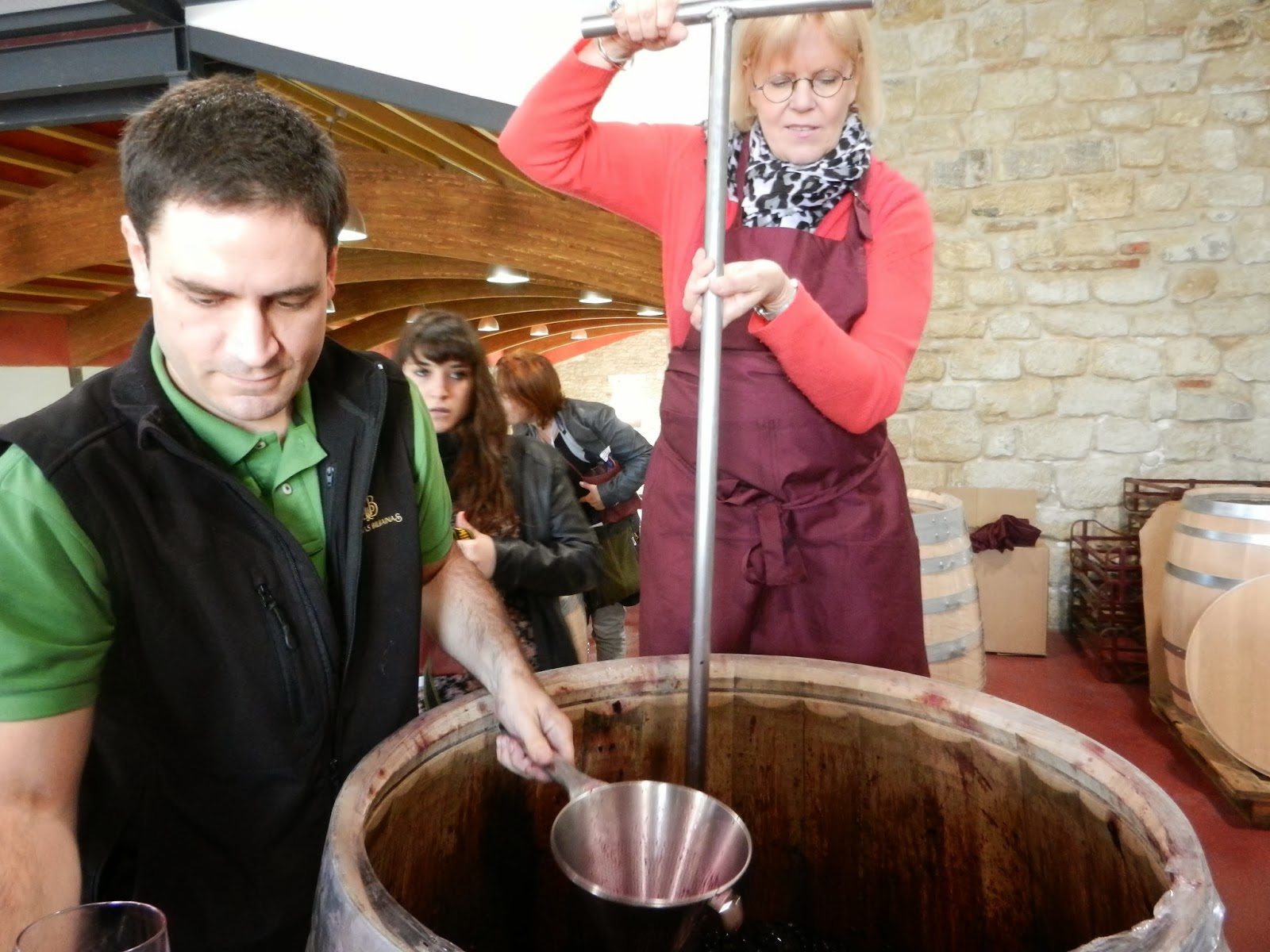
The first day ended with a winery visit and dinner at the winery. We were put randomly on 6 buses and each bus went to a different winery. I belonged to the lucky ones that were put on the bus to Bodegas Baigorri.

(Continue reading here)

Thursday, December 5, 2013

A Winery, a Foundation and a Museum: Dinastía Vivanco – Tasting, Tapas and a Tour with Santiago and Rafael Vivanco, Rioja, Spain

Pictures:  Christian G.E. Schiller with Santiago and Rafael Vivanco at Bodegas Dinastía Vivanco in Briones, La Rioja, Spain.

I participated in the 2013 Digital Wine Communications Conference (DWCC) in La Rioja in 2013. Formerly called European Wine Bloggers Conference (EWBC), it was the sixth such annual event. Previous conferences took place in Spain, Portugal, Austria, Italy and Turkey. In fact, the first conference took place in La Rioja … at Dinastía Vivanco. So, it did not come as a surprise, when the participants of the 2013 DWCC got an invitation for a get-together at Dinastía Vivanco on the day before the 2013 Digital Wine Communications Conference.

See:
The 2013 Digital Wine Communications Conference (DWCC) in Logroño, Rioja, Spain  
Rioja, Portugal, Austria, Italy, Turkey …. Rioja – EWBC 2013 Back in Spain
 
Dinastía Vivanco

Bodegas Dinastía Vivanco is a winery in Briones, La Rioja, established by the Vivanco family. It also includes the Museum of the Culture of Wine and the Dinastía Vivanco Foundation. This triumvirate was built by Pedro Vivanco, one of Spain’s first enologists and the third generation of Vivancos in the wine business. It is now run by Pedro Vivanco’s sons, Santiago and Rafael Vivanco.

Dinastía Vivanco Foundation

The Dinastía Vivanco Foundation is a foundation set up with the objective of researching and sharing the culture of wine around the world. One of the foundation’s most recent acquisitions, for example, is a book in Latin, which was printed in 1491 in Venice; the book refers to wine as beneficial to the body if consumed in moderation.

Dinastía Vivanco Museum

The Dinastía Vivanco Museum is a fascinating wine museum, showcasing the Vivanco family's impressive personal collection. It is one of the best in the world, if not the best. Pedro Vivanco started the collection and his sons are continuing it. Part of it is Baccus Garden, where the Vivanco family has gathered together over 200 varieties of grapes to form one of the most important private ampelographic collections in the world.

Bodegas Dinastía Vivanco

The focal point of course is the Bodegas Dinastía Vivanco. It is in in Briones, in the foothills of the Cantabrian mountain range and on the banks of the River Ebro. The majority of the 300 hectares of vineyards that the Vivanco family own are in, or around, the municipalities of Briones and Haro in Rioja Alta.

Pictures: The Baccus Garden

The winery - surrounded by vineyards - is impressive, boasting an underground, naturally cooled aging cellar that houses 3500 barrels. The majority of the vineyards are planted with Tempranillo, the main grape of Rioja. Other red grapes include Garnacha, Mazuelo and Graciano. The majority of the white grapes that are grown are Viura and Malvasia.

Family History

The origins of the winemaking tradition of the Vivanco family date back to 1915, to the village of Alberite, La Rioja, where Pedro Vivanco started to make wine for family use from his vineyards. In 1940 he bought a small bodega in Alberite.

Pedro Vivanco’s son, Santiago, started another bodega in the heart of the old quarter of Logroño, where they bottled and sold wine produced in the village. In 1946, Pedro Vivanco was born. He is the pivotal figure in the transformation of the Vivanco family business to what it is today.

As a teenager in the early 1960s, Pedro Vivanco started delivering his family's wine by bicycle, then rose to become a major but anonymous producer for well-known Rioja brands. He received his studies at the Requena School of Enology. In 1985, he bought land in Briones. It was there, in 1990, that he started his most ambitious project to date: Bodegas Dinastía Vivanco, with the Dinastía Vivanco Museum.

Pedro Vivanco has two children: Santiago and Rafael. They represent the fourth generation of this winemaking family. Santiago Vivanco was born in Logroño in 1973. He has a Degree in Law and a Master’s in Business Management. Santiago manages the Dinastía Vivanco Foundation and the Dinastía Vivanco Museum. Rafael Vivanco was born in Logroño in 1975. An agronomy engineer and with a Master’s degree in business studies, he later also graduated from the Enology Faculty in Bordeaux. Rafael heads the viticulture and winemaking.

Tasting Tapas

The afternoon started with a fabulous Tapas tasting reception. We were introduced to an amazing selection of tapas.

Pictures: Tasting Tapas prepared by Chef Isidro Arribas

Smoked Scallop Slices with Malvasia Jelly


Pink/Rose Octopus


Foie marinated in the Tannins of 4 Varietals and Wine Caviar


The Potato and La Rioja


Peppers Stuffed with Cod and Mushrooms


Courgette Stuffed with Iberian Pork Shoulder


Puff pastry horn filled with Black Pudding and Cameros Cheese


Caramelised Bread Pudding and Cameros Cheese


Wines: Vivanco Viura-Malvasia-Tempranillo blanco 2012 and Dinastia Vivanco Crianza 2009


Baccus Garden Tour

We then split into 2 groups. My group started with a Baccus Garden tour.

Pictures: With Rafael Vivanco in the Bacchus Garden

Bodegas Dinastia Vivanco

We then toured the amazing winery. “The painstaking choice of grapes from each vineyard, controlling the individual fermentation and long maceration, applying the most up-to-date winemaking technology, means having the knowledge of an art passed down through generations and which is reflected in a special love of the wine” said Rafael Vivanco on the tour.

Pictures: Bodegas Dinastía Vivanco

Museum Tour and Wine Tasting

Finally, we toured the Museum. In each of the sections, Santiago Vivanco had put a table, were we could taste wines. We had the opportunity to go through the whole Dinastía Vivanco portfolio, with the 3 groups, Vivanco, Dinastía Vivanco and Colección Vivanco

Vivanco

Vivanco Viura-Malvasia-Tempranillo blanco 2012

60% Viura, 20% Malvasia and 20% Tempranillo blanco. Tempranillo blanco is a minority white grape variety from a natural mutation of the red Tempranillo tinto. Bodegas Dinastía Vivanco is the pioneer in using this grape.

A clear and bright wine with a pale lemon color with slight green hints indicating its youthfulness. Intense and elegant aromas of green apple, citrus fruits, pineapple and some floral hints that round out the varietal expression. The palate has the same bright fruit flavors as the nose, balanced with the acidity resulting in a very pleasant, fresh finish.


Vivanco Tempranillo-Garnacha rosé 2012

80% Tempranillo and 20% Garnacha

This wine is clear and bright, with a lively strawberry pink with hints of redcurrant. On the nose this offers strawberry, raspberry and cherry fruit notes, rose petals and a very slight hint of liquorice. On the palate this wine is fresh and rewarding, with a balance of fruit, acidity, alcohol and a generous, fruity finish.

Dinastía Vivanco

Dinastía Vivanco Crianza 2009

100% Tempranillo

Intense cherry red, with a narrow bright violet rim, this wine has lots of mature red fruit aromas of cherry and strawberry with red fruits and a well-integrated, light "toastiness" and medium body. Long and elegant finish.


Dinastía Vivanco Reserva 2007

90% Tempranillo and 10% Graciano

Dark cherry red color with touches of brick red reminding us of its time spent ageing in barrel. Aromas of mature black and red fruit, as well as sweet creamy, balsamic and toffee notes. Good balance between the ageing nuances lent by extended maturation, and the ubiquitous fruit aromas. Good intensity and balance, soft, round tannins, and a long finish with hints of toast and liquorice.


Colección Vivanco

We were offered 6 wines from Colección Vivanco:

Parcelas de Maturana Tinta 2010

Parcelas de Garnacha 2010

Deep red cherry color, with a bright violet rim. Good varietal aromas of raspberry and other red fruit as well as toasted, jammy, minty and herbal notes. There is good acidity which gives it great freshness despite the depth of fruit favors, and a long finish.


Parcelas de Graciano 2008

Deep, almost opaque violet-purple color, with a bright garnet rim that clings to the glass. Intense and complex aromas of mulberry and other black fruits, with a sweet depth of cocoa and chocolate from the wood and some herbal, minty notes as well as violet, floral aromas. Well balanced in the mouth with lots of fruit, soft tannins and a long, persistent finish.

Parcelas de Mazuelo 2010


4 Varietales: Tempranillo, Graciano, Garnacha, Mazuelo 2010

Complex aromas of ripe red and black fruit, foral notes, graphite, toffee, chocolate, and a well-integrated oak infuence. The taste is fresh, intense and expressive, with soft tannins and a long finish with lots of smooth, ripe fruit.

Dolce de Inview 4 Varietales: Tempranillo, Graciano, Garnacha, Mazuelo 2011


schiller-wine: Related Posting (DWCC)

The 2013 Digital Wine Communications Conference (DWCC) in Logroño, Rioja

Rioja, Portugal, Austria, Italy, Turkey …. Rioja – EWBC 2013 Back in Spain

Visiting a Stunning Winery: Bodegas Baigorri in Rioja, Spain

schiller-wine: Related Posting (Spain)

Bodegas Marqués de Murrieta Winemaker Dinner at Taberna del Alabardero in Washington DC, USA/Spain

Alejandro Luna Beberide from Bodegas y Vinedos Luna Beberide in Spain at the Taberna del Alabardero in Washington DC

The Wines of Bodegas Epifanio Rivera in Spain

Welcoming Winemaker Ruben Saenz Lopez and his Bodegas San Prudencio Wines from Rioja in Spain to Washington DC

Meeting Didier Soto and Tasting His Biodynamic Mas Estela Wines from Catalonia

Meeting Up-and-coming Winemaker Rita Ferreira Marques from the Duoro Area in Portugal at Screwtop Winebar in Clarendon, Virginia

Meeting Winemaker Yolanda Viadero from Valduero Vineyards in Ribera del Duero and in Toro, Spain, and Tasting Her Excellent Wines

Dinner with Spanish Winemaker Antonio Jose Bleda Jimenez, Bodegas Bleda, at Taberna del Alabardero in Washington DC, USA