Monday, May 6, 2013

Riesling, Pinot Noir and Indian Cuisine: A tête-à-tête Dinner with Winemaker Ernst Loosen, Weingut Dr. Loosen, at Rasika in Washington DC, USA

Picture: Christian G.E. Schiller and Ernst Loosen at Rasika in Washington DC

Ernst Loosen was in town (Washington DC) and I had a chance to meet him and taste his wines several times. A highlight was a tête-à-tête dinner at the trendy Indian fusion restaurant Rasika. Ernst Loosen is a charismatic figure and has done loads for promoting German Riesling around the world.

This is the second posting in a series of 3 postings: (1) Ernst Loosen and Dr. L. Riesling - His Hugely Popular Entry-level Wine Sold Throughout the World, (2) Riesling, Pinot Noir and Indian Cuisine: A tête-à-tête Dinner with Winemaker Ernst Loosen, Weingut Dr. Loosen, at Rasika in Washington DC and (3)Riesling from Germany and Pinot Noir from Oregon: A Winemaker Dinner with Ernst Loosen, Weingut Dr. Loosen and J.Christopher Wines, at Black Salt in Washington DC.

See:
Ernst Loosen and Dr. L. Riesling - His Hugely Popular Entry-level Wine Sold Throughout the World

Ernst Loosen in the World

Ernst Loosen is a winemaker based in Germany, who now makes 4 different wines in Germany and the USA: First, Mosel Valley Rieslings, mostly fruity-sweet that made him so famous in the world; second, Pinot Noirs and other wines from the Pfalz, all dry, where he owns Weingut J.L. Wolf; third, the J. Christopher Wines, a collaboration of Ernst Loosen and Jay Somers, mainly Pinot Noir, from Oregon and fourth, the Eroica wines, a collaboration between Dr. Loosen and Chateau Ste. Michelle, the giant wine producer, in Washington State. At the dinner at Rasika, we tasted and focused on Rieslings from the Mosel Valley and Pinot Noirs from Oregon.

Pictures: Ernst Loosen at Rasika

Ernst Loosen in the Mosel Valley

The wines of Weingut Dr. Loosen are known all around the world as prime examples of Germany’s famous delicious low alcohol, fruity-sweet Rieslings from the Mosel. These are exceptional wines, skillfully made by first-class winemakers like Ernst Loosen, essentially made by not letting the fermentation going its full course so that natural sugar remains in the wine. Alternatively, German winemakers are allowed to add sweet-reserve (sterilized grape juice) to increase the sweetness level in the wine, but today, this is mostly done, if at all, for fine tuning the residual sweetness. These fruity-sweet wines are the wines that are so popular among the fans of German wine in the world.

Pictures: Ernst Loosen at Rasika

But today, wine loving Germans drink dry. There is no doubt about it. The large majority of the premium wines produced in Germany is dry. And the German (dry) grand cru Rieslings can compete with the best wines in the world. The word is getting around - slowly but surely - and more and more dry German Rieslings appear on the international market. So, it was not a surprise that during his stay in Washington DC, Ernst Loosen presented also is dry Red Slate wine as well as Grosses Gewaechs wines – the ultra-premium dry wines from Germany. “But  while in Germany the demand for my fruity sweet wines is low, the Grosses Gewaechs wines are very high in demand. Here in the US, it is the other way around” said Ernst.

Weingut Dr. Loosen is located just outside Bernkastel in the Mosel wine region. The vineyard area totals 22 hectares. Production amounts to 15.000 cases. Ernst Loosen won the "Riesling of the Year" of the German wine magazine Der Feinschmecker in 1989. In 2001, the Gault Millau Weinguide named Ernst Loosen as the German Winemaker of the Year.

The American Wine Portfolio of Weingut Dr. Loosen

Ernst explained to us that his wines can be grouped into 3 quality categories.

Single Vineyard Wines

These are wines from the premium vineyards of Weingut Dr. Ernst Loosen. In fact, all of Weingut Dr. Loosen’s six major vineyards were designated as Grosse Lage (grand cru) in the 1868 Prussian classification of Mosel vineyards, which was undertaken for tax assessment purposes. This classification predates the grand cru system in Burgundy, and was updated by Stuart Pigott and Hugh Johnson in the Wine Atlas of Germany (1995).

Pictures: Ernst Loosen at Rasika

“We use this historically proven classification at Dr. Loosen. Only wines from the six top-rated sites (indicated on the map to the right) are bottled with a single-vineyard designation. All others are labeled simply as estate wines” Ernst said.

Berkasteler Lay, Wehlener Sonnenuhr, Graacher Himmelreich, Ürziger Würzgarten, Erdener Prälat, Erdener Treppchen - A full range of Prädikat wines is made from the six grand cru single-vineyard sites. In addition, Weingut Loosen makes Grosses Gewaechs wines from a number of his grand cru vineyards, including Ürziger Würzgarten, Erdener Prälat and Erdener Treppchen.

Pictures: The tête-à-tête dinner at Rasika was with Washington Post Wine Columnist Dave McIntyre and me. We were later joined by Rasika Somelier Paul Ruttiman and Annette Schiller, wine tours by ombiasy. Indeed, the forthcoming Germany trip of Annette Schiller includes a wine tasting at Weingut Dr. Loosen in the Mosel Valley.

See:
Germany Wine and Culture Tour August 2013
Bordeaux Wine Tour September 2013

Ernst explained that the vineyards of Weingut Dr. Loosen owe their excellent quality to three major factors: the exceptional regional climate of the Middle Mosel area, the mineral-rich slate and volcanic soils, and the incredible age of the estate’s ungrafted Riesling vines. These elements are the building blocks of each vineyard’s terroir and have long been recognized for their importance in producing outstanding wines.

Estate Wines

Ernst said that all the grapes that do not go into single vineyard wines, are used for the 2 Estate Wines, Blue Slate and Red Slate. In the USA, Ernst offers a dry Red Slate wine and a fruity sweet (Kabinett) Blue Slate wine.

The Red Slate Riesling is sourced from parcels in Uerzig and Erden, while the Blue Slate Riesling is sourced from vineyards in Bernkastel, Graach and Wehlen, where the soil is pure blue slate.

Dr. L

Dr. L is Ernst Loosen’s hugely popular entry-level wine. It is made by Ernst and Thomas Loosen (Loosen Bros.). Ernst explained: “Dr. L comes exclusively from traditional vineyards with steep slopes and slate soil. This introductory, non-estate wine embodies the elegant and racy style of classic Mosel Riesling. By working closely with growers on long-term contract, we are able to assure excellent quality in every vintage.”

See more:
Ernst Loosen and Dr. L. Riesling - His Hugely Popular Entry-level Wine Sold Throughout the World

Ernst Loosen in Oregon

Ernst Loosen’s most recent project is a joint venture with Jay Somers in Oregon. Located in Oregon’s Northern Willamette Valley, J. Christopher Wines is a small winery that specializes in Pinot Noir made in the traditional style of Burgundy. The winery also produces Sauvignon Blanc modeled after the great wines of Sancerre. The philosophy at J. Christopher is to produce wines in an Old World style that emphasizes focus, length and balance. Jay Somers is not only a gifted winemaker, but also a killer guitarist.

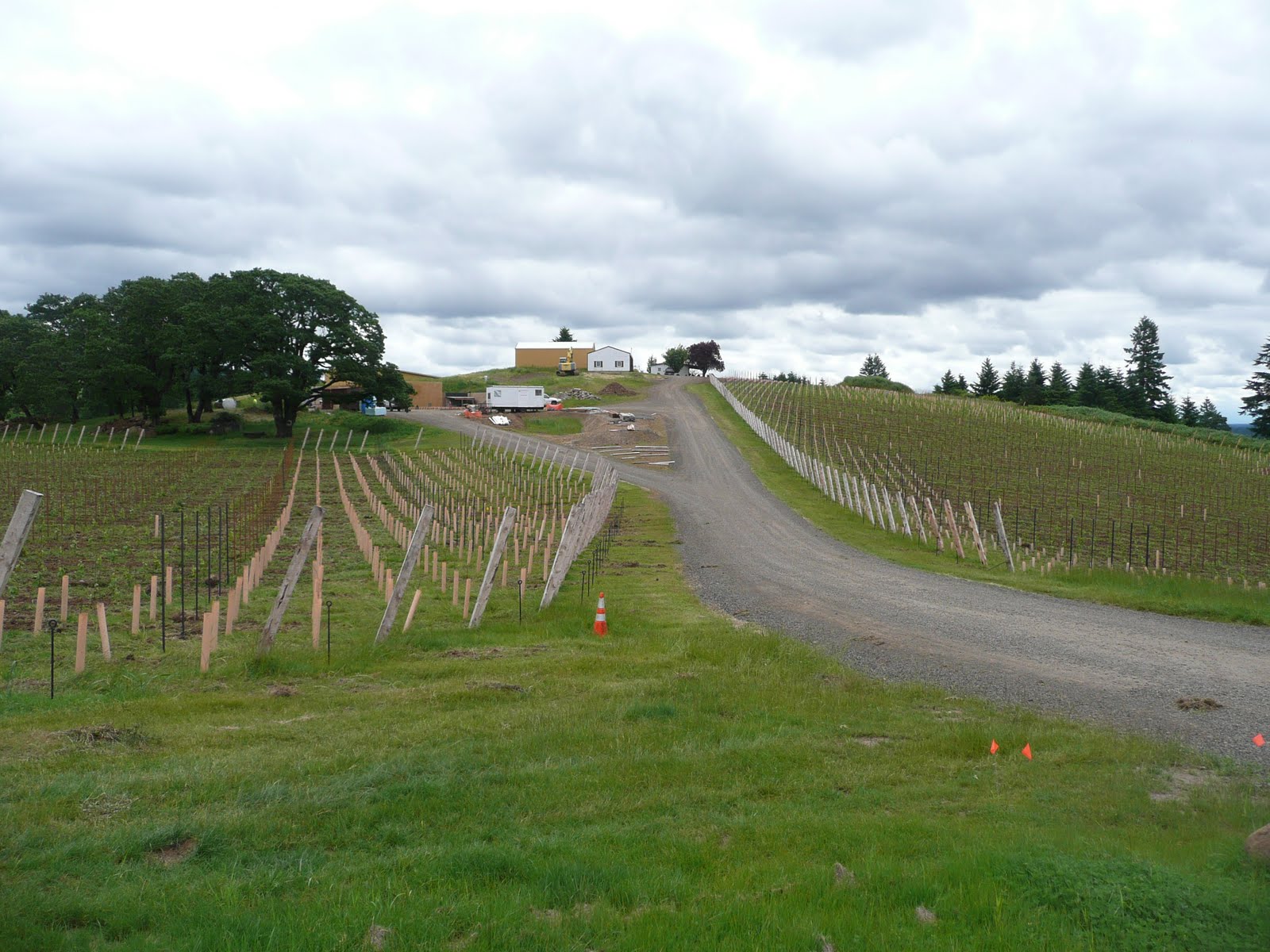
Picture: Christian G.E. Schiller at the J. Christopher Winery

Jay Somers and Ernst Loosen met years ago, and quickly realized that they shared a similar taste and passion for Pinot Noir. Their friendship led to a partnership, and in 2010, they began building a winery and vineyard in Newberg, Oregon. As winemaker for the joint venture, Jay is in charge of all winery operations. Ernst sees his role as that of an investor who both supports the growth of the brand and broadens the winery’s exposure to Old World ideas and techniques.

Pictures: Christian G.E.Schiller and Jay Somer's Poncho Luxurio at Portland's White Eagle Saloon

Loosen Christopher Wines LLC produces wines under the J. Christopher brand. The venture purchased a 40-acre property for a new vineyard and J. Christopher Winery on Hillside Drive in Newberg, Oregon. Planting of the first block of Pinot Noir began last year. The first phase of the winery construction, the barrel cellar construction, occurred before the 2010 harvest. When I visited the winery with Tim Malone, the Phase II construction had just begun. At full build-out, the winery will have a production capacity of 8000 cases of Pinot Noir and 2000 cases of Sauvignon Blanc and other white wines.

See:
A Riesling Guru and a Killer Guitarist cum Cult Winemaker: Ernst Loosen and Jay Somers and their J. Christopher Winery in Newberg, Oregon

Ernst Loosen in the Pfalz

In 1996, Ernst Loosen took over the J.L. Wolf estate so that he could make traditionally crafted Pfalz wines to complement the light and elegant Dr. Loosen Rieslings he produces in the Mosel. In the classic style of the Pfalz, these wines are more full-bodied than Mosel wines, with higher alcohol and rich flavors of ripe fruit and stone.

The Pfalz region lies between the Haardt Mountains and the Rhine River, directly north of France’s Alsace region. As in Alsace, the mountains protect the area from harsh Atlantic weather, making it one of the warmer and drier areas of Germany. In this climate, achieving full ripeness is possible in nearly every vintage. Mature, fully ripened fruit is the key to making concentrated dry-style wines that have enough body to balance the naturally high acidity.

Ernst Loosen in Washington State

Promoting the worldwide ascendancy of Riesling was a big reason why Ernst Loosen began a joint venture with Chateau Ste. Michelle in Washington State a bit more than 10 years ago. He was convinced that it would take a seriously good New World Riesling to help bring the variety back to the forefront. Eroica was launched in 1999. Named for Beethoven’s Third Symphony, Eroica is supposed to reflect not only its variety and site, but also its heritage: bold and forward from its Washington roots, elegant and refined from German inspiration.

The wine is made at Chateau Ste. Michelle from grapes grown in the Columbia Valley. They make three kinds of the Eroica. The regular Eroica, an icewine and a single berry selection. The latter is made in the traditional German Trockenbeerenauslese (TBA) style and is one of the few TBAs in North America.

Loosen Bros. Imports in the USA

Ernst Loosen is not only a producer of wines, but also runs – with his brother Thomas Loosen - an import company, with a remarkable portfolio.

Dr. Loosen (Mosel, Germany),
Villa Wolf (Pfalz, Germany)
Weingut Robert Weil (Rheingau, Germany),
C. von Schubert - Maximin Grünhaus (Ruwer, Germany),
Domaine de Bellene and Maison Roche de Bellene (Burgundy, France),
Gantenbein (Graubünden, Switzerland) and
J. Christopher Wines (Willamette Valley, Oregon).

What Ernst Poured

2011 Dr. L

This introductory, non-estate wine embodies the racy style of classic Mosel Riesling.


2011 Riesling Dry Red Slate

The 2011 Red Slate Dry has a pronounced, enveloping aroma of slate minerality. There is good impact on the palate, with a nicely lifted mid-palate and a rounded, harmonious structure.


2011 Blue Slate Riesling Kabinett

This wine comes from parcels owned by Weingut Dr. Loosen in the blue slate villages of Bernkastel, Graach and Wehlen. It is bright and pure with the classic white peach fruit and floral, flinty minerality that is so typical from blue slate. A plush attack on the mid-palate leads to a deliciously firm, delicate finish. This wine makes an elegant aperitif and is an excellent match for seafood, spicy Asian cuisine and lighter dishes.


2011 Erdener Treppchen Riesling Kabinett

Wine and Spirits (93 points): Firm and delicate, this gives the sense of looking from the top of the rocky Treppchen hill, with the scent of herps and wildflowers growing between sun-warmed stones.


2010 Willamete Valley, Pinot Noir, J. Christopher Wines

From a very small crop in a cool vintage, the 2010 Willamette Valley Pinot has great fruit purity and a fine, clean structure. The signature of this vintage is superb balance, with bright, juicy fruit, moderate alcohol and supple tannins all working together in elegant harmony.


2007 Appassionata, J. Christopher Wines

The Wine Advocate: J. Christopher 2007 Pinot Noir Appassionata represents the first, 150-case lot of what proprietors Jay Somers and Ernst Loosen intend will always be released only when they feel it is drinking especially expressively. This year – a challenging one in which to inaugurate a flagship bottling – it came from Bella Vide and Abbey Ridge vineyards. The mingling of game and resinous herbs with lightly-cooked red fruits puts me a bit in mind of the South of France, even if there is certainly admirable buoyancy on exhibit. Low-toned fungal and forest floor suggestions offer more Pinot-typical themes, and faintly grainy tannins add a faint and attractive sense of chew to a finish still possessed of ample primary juiciness. I could well imagine this being worth following for several more years, though there is a faintly nutty, smoky whiff of oxidative development about it, and I expect that its tannins will easily outlast the rest of its features.


2011 Uerziger Wuerzgarten Riesling Spaetlese

Light yellow in the glass, attack of lychee, ripe pear, and honeysuckle flowers notes on the nose, good structure, silky texture with honeysuckle fruit flavors on the palate, combined with a crackling mineral undertone, long finish. 

Gosses Gewaechs (Grand Cru) Wines

At Rasika, Ernst did not pour Grosses Gewaechs wines, but a day before I had a chance to taste two of his Grosses Gewaechs wines.

2010 Uerziger Wuerzgarten Riesling Grosses Gewaechs

Würzgarten means ‘spice garden’ and this wine shows exactly that. White pepper, curry, cumin and other spices dominate the nose. Exotic fruits sweeten it up. Rose and peach petals, exotic spices and acidity showing in the long finish. The acidity is mellow and more integrated.


2010 Erdener Treppchen Riesling Grosses Gewaechs

From avery steep parcel of the original Erdener Treppchen  vineyard, this penetrating dry wine reflects the muscular minerality that is characteristic of the iron-rich red slate of this site. 92 Points Wine and Spirits


Rasika

Washington Post’s food critic Tom Sietsema says: “When visiting food critics solicit suggestions for where to eat, no matter what hot spot has just ignited in Washington, Rasika tops my list. “There's nothing like this in" New York/Chicago/San Francisco/Houston, my fellow mouths-for-hire all say after tasting the handiwork of chef Vikram Sunderam.”


The Food

We shared a selection of starters and a selection of main dishes.

Starters

My favorite starter was the palak chaat--fried leaves of spinach zigzagged with yogurt and tamarind.


Main Dishes

My favorite main dish was the black cod marinated in honey, dill, star anise, and vinegar.


schiller-wine: Related Postings

Germany’s 2011 VDP Grosses Gewaechs – Grand Cru - Wines Released. Notes from the Pre-release Tasting in Wiesbaden, Germany

Ernst Loosen and Dr. L. Riesling - His Hugely Popular Entry-level Wine Sold Throughout the World 

German Spaetlese Wines Can Come in Different Versions. I Have Counted Five.

Approaches to Classifying German Wine: The Standard Approach (the Law of 1971), the VDP Approach and the Zero Classification Approach

The VDP - the Powerful Group of German Elite Winemakers - Refines its Classification System, Germany

Tasting with Wilhelm Weil the 2010 Weingut Weil Wines in Kiedrich, Germany

Visiting Weingut Josef Leitz in Ruedesheim – Johannes Leitz is Germany’s Winemaker of the Year, Gault Millau WeinGuide 2011

Hanging out with Rheingau Winemakers: Dirk Wuertz, Desiree Eser, Alexander Jakob Jung, Hansi Bausch and Christian Ress in Hattenheim, Rheingau, Germany

A Pinot Noir Star: Visiting August Kesseler and his Weingut August Kesseler in Assmannshausen, Germany

The Doctor Made a House Call - A Tasting with Ernst Loosen, Weingut Dr. Loosen, at MacArthur Beverages in Washington DC, USA

A Riesling Guru and a Killer Guitarist cum Cult Winemaker: Ernst Loosen and Jay Somers and their J. Christopher Winery in Newberg, Oregon

Wine ratings: Two American/German wines - Eroica and Poet's Leap - on Top 100 Wines from Washington State list for 2009

German American Wines: (1) Pacific Rim Riesling (2) Eroica and (3) Woelffer's Schillerwein 

Germany Wine and Culture Tour August 2013

Bordeaux Wine Tour September 2013 

Friday, May 3, 2013

Best German Wines and Winemakers – Stuart Pigott’s Favorites (2012)

Picture: Christian G.E. Schiller with Stuart Pigott in Frankfurt, Germany: Stuart Pigott at the Weinhalle in Frankfurt am Main, Germany 

In the Frankfurter Allgemeine Sonntagszeitung of December 9, 2012, German wine journalist Stuart Pigott published his favorite German wines and favorite German wine makers of the year – in German. This posting provides a summary in English.

For last year's list, see:
Best German Wine and Winemakers – Stuart Pigott’s Favorites (2011)

Stuart Pigott

Stuart Pigott was born in the UK and has lived in Berlin since 1993. Stuart mostly writes in German, and focuses on German wine. Notably, he writes for the specialist magazines Feinschmecker and Weingourmet as well as the Sunday edition of the Frankfurter Allgemeine Zeitung. He currently spends a lot of time in New York City. If you wan to follow him: Stuart Pigott Riesling Global

Stuart Pigott’s Favorites of 2012

Sommelier of the Year

Ivan Jakir, Restaurant "Essigbrätlein" in Nürnberg

Dry White Wine of the Year

2011er Altenberg Riesling "Großes Gewächs" 
27 Euro, Weingut von Othegraven, Weinstraße 1, 54441Kanzem

Sweet Wine of the Year

2011er Bacharacher Riesling Auslese
18 Euro, Weingut Toni Jost; Oberstraße 14, 55422 Bacharach/Mittelrhein

Red Wine of the Year

2009er Pinot Noir "Marion's Vineyard"

Sparkling Wine of the Year

2004er Vintage Brut, Billecart-Salmon

Rising Star of the Year

Stefan Winter, Weingut Winter, Nahe

Winemaker of the Year

Martin Tesch, Weingut Tesch.
Weingut Tesch, Naheweinstraße 99, 55450 Langenlonsheim/Nahe weingut-tesch.de

Picture: Christian G.E. Schiller and Martin Tesch in New York City

See:
Martin Tesch, Weingut Tesch, Winemaker of the Year (Germany, 2012) - Stuart Pigott/FAZ

Schiller Wine - Related Postings

In the Glass: Unplugged - Eric Clapton and Martin Tesch

Impressions from the Riesling + Co World Tour 2010 in New York

In the Glass: 2009 Weisses Rauschen – A Joint Venture of Winemaker Martin Tesch and Punk-Rock Band Die Toten Hosen

The Avantgarde Wine World of Dr. Martin Tesch

Tesch Riesling Unplugged 2010 and Duo Favo FAVOriten

Wine Maker Martin Tesch: Riesling People Vol. 2, Germany

Best German Wine and Winemakers – Stuart Pigott’s Favorites (2011)

Stuart Pigott at the Weinhalle in Frankfurt am Main, Germany

Martin Tesch, Weingut Tesch, Winemaker of the Year (Germany, 2012) - Stuart Pigott/FAZ 

Thursday, May 2, 2013

Visiting Jas Hennessy and Co. - or more simply: Hennessy - in Cognac, France

Pictures: Christian G.E. Schiller at Hennessey in Cognac

Cognac is a brandy named after the town of Cognac. For a brandy to bear the name Cognac - an AOC - it must meet a number of requirements, as is the case for all AOCs.

The Cognac area extends along the banks of the Charente all the way to the Atlantic coast. The entire Cognac vineyard covers around 80.000 hectares.

Jas Hennessy and Co. - or more simply Hennessy - sells about 50 million bottles of Cognac a year worldwide or more than 40 percent of the world’s Cognac, making it the world's largest Cognac producer. While there are close to 200 cognac producers, a large percentage of Cognac—90% according to one 2008 estimate —is produced by only 4 companies:  Courvoisier, Hennessy, Martell, and Rémy Martin.

I had the opportunity recently to tour the Hennessy facilities at the banks of the Charente in Cognac.

See:
Ombiasy Wine Tours: Bordeaux Trip Coming up in September 2013
Bordeaux Trip September 2012, France

History of Cognac

The history of Cognac is related to trade. The town of Cognac has always been linked to important international trade routes through the river Charente, which gave the small town easy access to the Atlantic Ocean. During the 16th century, the Dutch merchants used to ship salt and wine from the Southwestern parts of France to northern European countries. However, they often encountered a problem: the wine would often spoil during the long voyage. To protect the wine, the merchants began to distill it, and they named it Brandewijn or ‘burnt wine.’ This became the forerunner of Brandy.

See:
Cognac – An Introduction, France

History of Hennessy

The Hennessy cognac distillery was founded by Irishman Richard Hennessy in 1765. During the 1970s, Kilian Hennessy, a fifth generation direct descendent of Hennessy, spearheaded the company's 1971 merger with Moët et Chandon, which created Moët Hennessy. Moët Hennessy became part of Louis Vuitton in 1987, creating one of the world's largest luxury brand conglomerates, Moët-Hennessy • Louis Vuitton or LVMH.

Moët et Chandon produces champagne, while Hennessy is into cognac. The two companies became partners in 1971 to form Moët Hennessy. In 1987, Moët Hennessy joined the Louis Vuitton group of Bernard Arnault  to become part of LVMH, the world’s biggest grouping of luxury brands.

Hennessy on the Banks of the Charente River

Like most Cognac houses, Hennessy sits on the bank of the Charente River, which before trains and trucks was both a source of water for distillation and a means of transporting bottles of Cognac to the market.

Pictures: Hennessey

The Base Wine

The first step in the production of Hennessy – and of any Cognac – is to make still wine. Charente wines typically have from 7 to 8% alcohol. This wine is quite thin and acid, but good for distillation. Chaptalization is forbidden.

Cognac may be made only from a strict list of grape varieties. If it is to carry the name of one of the crus (see below) then it must be at least 90% Ugni Blanc (known in Italy as Trebbiano), Folle Blanche and Colombard. For other Cognacs, the rules are less restrictive.

There are 6 crus: (1) Grande Champagne - The most prestigious of the crus. (2) Petite Champagne - Cognacs made from a mixture of Grande and Petite Champagne (with at least 50% Grande Champagne) may be marketed as Fine Champagne. (3) Borderies - The smallest cru. Cordon Bleu by Martell is from Borderies. (4) Fins Bois. (5) Bons Bois. (6) Bois Ordinaires - Further out from the four central growth areas are the Bons Bois and the Bois Ordinaires grown regions. Generally used for high-volume production.

Hennessy produces its cognacs from the top four sub-regions of the Cognac district: Grande Champagne, Petite Champagne, Borderies, and Fins Bois.

Distillation

Once the base wine is made, the wine is distilled. Distillation in Cognac takes place in traditionally shaped Charentais copper stills. Two distillations must be carried out; the resulting eau-de-vie is a colorless spirit of about 70% alcohol.

In the first stage, the first distillate is obtained, known as the “brouillis”. During the second stage, known as the “la bonne chauffe” the spirit is finally extracted from the liquid. Here, the distiller performs a delicate process called “cutting” by separating the “heart” from the “heads” (alcohol content is too high) and the “tails” (alcohol content is too low).

Picture: Traditionally Shaped Charentais Copper Still

Apart from its three distillers, Hennessy has 19 contracted distillers that own and operate similar equipment. A good number of the 1,400 growers distill their own production.

Aging

That task achieved, the aging process begins and continues somewhat endlessly. I say that because, although each eau de vie batch will be used, a bit at a time, for creating the various final cognac blends destined for the market, the remainder continues to age and evolve until it is all used up.

Some of the oldest batches we got to see at the cellar dated as far back as the mid 1800′s, and all have been used to some extent in the production of Hennessy’s line of cognacs.

Cognac must be aged in oak for at least two years before it can be sold to the public. As the Cognac interacts with the oak barrel and the air, it evaporates at the rate of about three percent each year, slowly losing both alcohol and water. Because the alcohol dissipates faster than the water, Cognac reaches the target 40% alcohol by volume in about four or five years.

Pictures: Aging

It takes nine liters of wine to obtain only one liter of eau de vie after 24 hours of double distillation. What’s more, because of evaporation, only 2/3 of that liter of eau de vie is left after 25 years of maturation time. After 50 years, only one-half is left.

Blending

The last step in the process is blending. Cognac is not really the product of a single distillation and aging, but a skillful blend of many carefully selected eau de vie batches of various vintages.

Down through the years since 1765, behind its closely guarded doors, the Hennessy Comité de Dégustation (tasting committee), unparalleled in the world of cognac, has been creating most unique and elegant blends, thanks to its priceless heritage: the largest and most diverse reserve of eaux-de-vie in the world. Also very special, for 7 generations now, the Comité de Dégustation has been run by the Fillioux family.

Grades

The official quality grades of Cognac are the following. The names of the grades are in English because the British market was long the primary market for cognac.

VS ("very special"), Very Special, or ✯✯✯ (three stars) designates a blend in which the youngest brandy has been stored for at least two years in cask.

VSOP ("very superior old pale") designates a blend in which the youngest brandy is stored for at least four years in a cask.

XO ("extra old") designates a blend in which the youngest brandy is stored for at least six years but on average for upwards of 20 years.

In addition the following can be mentioned:

Napoleon is a grade equal to XO in terms of minimum age, but it is generally marketed in-between VSOP and XO.

Extra designates a minimum of 6 years of age; this grade is usually older than a Napoleon or an XO.

Vieux is another grade between the official grades of VSOP and XO.

Vieille Réserve is, like the Hors d´Âge, a grade beyond XO.

Hors d'âge ("beyond age") is a designation equal to XO, but in practice the term is used by producers to market a high quality product beyond the official age scale.

Portfolio

From the more affordable VS, XO and VSOP, to the top of the line Paradis and Paradis Imperial, Hennessy has a very broad portfolio.

Picture: In the Hennessey Tasting Room

Hennessy V.S

A benchmark in the art of blending, Hennessy V.S is quintessentially Hennessy. It is the world’s most popular cognac of globally recognized quality. V.S is a blend of more than 40 eaux-de-vie.

Hennessy Black

Distinctively smooth.

Hennessy Privilege

The complex and delicate blend of around sixty eaux-de-vie is made distinctive through the subtle presence of several from Grande Champagne and Petite Champagne. Aged in barrels, which are free from powerful tannins, these eaux-de-vies provide Hennessy Privilege V.S.O.P with its delicate sophistication.

Hennessy X.O

X.O was created in 1870 for the personal consumption of Monsieur Maurice Hennessy, his family and friends.

At Hennessy, X.O is composed of over a hundred old eaux-de-vie, comprised of aged cognacs - some of which are over 30 years old. A long ageing in young Limousin oak barrels helps create a rich and powerful cognac thanks to the tannins in the wood.

Hennessy Paradis

In 1979, Maurice Fillioux created an outstanding blend composed of eaux-de-vie laid down by his grandfather, bringing Hennessy Paradis to life.

Grande Champagne and Petite Champagne form the basis of the Paradis blend. Some of these eaux-de-vie are preserved in the Founder's Cellar. The oldest cognacs date back to the 19th century.

Richard Hennessy

Richard Hennessy represents the soul of the company, a combined work by time and Hennessy expertise. Richard Hennessy was created by Yann Fillioux in 1996 for enlightened connoisseurs.

Richard Hennessy cognac is a blend of over a hundred eaux-de-vie, some drawn from the Founder's Cellar, created in 1774.

Its rarity and quality find full expression through the eaux-de-vie from the 1st part of the 19th century which mainly originate from Folle Blanche, a grape variety replaced by Ugni Blanc following the phylloxera crisis.

schiller-wine: Related Postings

Ombiasy Wine Tours: Bordeaux Trip Coming up in September 2013

Bordeaux Trip September 2012, France

Cognac – An Introduction, France

The “Rhums Arranges” - Arranged Rums - and the Tropical Fruits of Madagascar

In the Glass: A Banyuls - a Deliciously Sweet and Fortified Red Wine from Languedoc-Roussillon

Martini, Noilly Prat and Picpoul de Pinet

Champagne – An Introduction, France

German Wine Basics: Sekt

Italy's Prosecco

Wednesday, May 1, 2013

Winemaker/Owner Shane Finley from Shane Wine Cellars in California was in Town – the Washington DC area - to Presented his Wines, USA

Picture: Christian G.E. Schiller and Shane Finley from Shane Wine Cellars in California

Winemaker Shane Finley from Sonoma County was in town – the Washington DC area – to present his new wines.

Picture: Christian G.E. Schiller and Shane Finley in 2011 in Virginia

See:
The Wine House Presented Winemaker Shane Finley from Russian River Valley in California at a Shane Wine Cellars Winemaker Dinner

Shane Finley and Shane Wine Cellars

Shane’s main job is Winemaker at Lynmar in the Russian River Valley. From 2006 through 2012, he made wine at Kosta Browne (winner of Wine Spectator’s Wine of the Year award in 2011) while running his own small operation on the side. The quantities are small, but what we tasted was great. This is a very promising winemaker.

Pictures: Shane Finley from Shane Wine Cellars in California

Shane is also a great communicator. Well, he studied English and received a B.A. in English from the Virginia Military Institute. With that, he headed to New York City to take a corporate insurance position. It was in New York where he was bitten by the wine bag. He changed course, and worked as intern for a number of years wineries around the world. Without any formal training in wine, he started at the bottom and began to work his way up.

Pictures: Shane Finley, Annette Schiller, wine tours by ombiasy, Christian G.E. Schiller and Al McCosh, Nice Legs (Distributor of Shane Wine Cellars Wines)

He started out as a harvest intern with Copain Wines in 2001. Then, he traveled to Australia to work the 2002 harvest with Torbreck Vintners in the Barossa Valley. From there, he continued his globe-trotting and spent one year in France's Northern Rhone working for Pierre Gaillard in his Cote Rotie, Condrieu and Saint Joseph vineyards. Shane returned to California in the summer of 2003 and resumed working for Copain Wines. 2 years later, he accepted the Assistant Winemaker post at Paul Hobbs winery and in spring of 2006, Shane became Associate Winemaker at Kosta Browne Wines. At the same time, in his spare time, Shane started his own wine production - Shane Wine Cellars.

Pictures: Shane Finley, Shane Wine Cellars

The Wines Shane Poured

Grenache Blanc, CAMP 4 VINEYARD, Santa Ynez Valley, 2012 $29

Sourced from the Santa Barbara County. No new oak, no malolactic fermentation.

The immediate expression of pineapple, Meyer lemon, papaya, and floral notes leap from the glass. A translucent pale color is surrounded by vibrant acidity and focused with nectarine, peach, and stone fruit accents. The mineral finish lingers with hints of grapefruit, Asian pear, and seashells. A very fresh wine.


Rose Ma Fille Sonoma County, 2012 $22

90% Syrah and 10% Grenache. “This was barrel-fermented, had minimal skin contact and did not go through malolactic fermentation.” said Shane. Was 3 months in used oak – no new oak. Shane told us he was aiming for a Tavel style with this wine, and he's done a nice job.


A Rose which reminded me very much of the South of France, fresh, fruity, vibrant acidity with hints of citrus and strawberries on the nose, great summer wine.

Pictures: Shane Finley, Shane Wine Cellars

Pinot Noir "The Charm" Russian River 2011 $47

40% new oak; whole cluster fermentation of 15% of the grapes.

The Charm harnesses dark cherry, rose petal, raspberry, and baking spice notes. Well structured tannins mix seamlessly with supple acidity. In the mid-palate, cranberry, blueberry, plum and dark chocolate tones unfurl. The wine finishes with sandalwood, graphite, and wild berry accents.


Syrah The Villain North Coast 2011 $39

100% Syrah. Whole cluster fermentation.

An immediate attack of infused berry flavors. Ripe elements of boysenberry, blueberry, and kirsch explode from the glass. Pretty floral elements of orange blossom and white rose intermingle with lasting impressions of huckleberry and blackberries. Hints of slate and wet stone accent the potpourri of flavors. The dense and structured palate is accentuated with dark chocolate, white pepper, and lavender.


Syrah Jemrose Vineyard Bennett Valley 2009 $39

A mélange of fruit and spice flows from the glass. Heady white pepper mingles with boysenberry, plum, blueberries, and dark chocolate. Accents of tobacco leaf, violets, and bacon fat mesh with cassis, mint, and green peppercorns. The wine imbues the site. There is freshness and brightness in the glass. This is a California Syrah with a Northern Rhône bent. Asian spices, chewy tannins, and subtle brown sugar hints finish the wine.


schiller-wine: Related Postings

Bumping into Randall Grahm in San Francisco, Owner of famed Bonny Doon Vineyard in Santa Cruz in California, USA

In the Glass: Pinot Noir from France, Germany and California

The Wines of Duckhorn Vineyards, Napa Valley

The Natural Wines of Donkey and Goat Winery in Berkeley, California

The California Central Coast Wines of Talley Vineyards

The Excellent Wines of Alexander Valley Vineyards in California

One of Oregon's Pioneering Winemakers - Myron Redford - with his Amity Vineyard Wines in Washington DC

Wine Tasting: The Pinot Noirs of Patricia Green, Oregon, US

The Excellent Wines of Ken Wright Cellars, Oregon

Morton’s Steakhouse Presented Peter Mondavi Jr. at a Charles Krug Winemaker Dinner

Dinner at Plum in Oakland, California - Sister Restaurant of Coi, #58 on the 2012 San Pellegrino World’s Best Restaurants List

Hotel Biron – A Hotel? No! A Cosy Wine Bar in San Francisco, USA

Steak Frites and a Ballon de Blanc at Thomas Keller’s 1 Star Michelin Restaurant Bouchon in Yountville, California

Visiting Dade and Petra Thieriot and their Dee Vine Wines - Purveyors of Fine and Rare German Wines - in San Francisco, USA

August Kesseler’s Pinot Noir and Richard Wagner’s Ring der Nibelungen in San Francisco, USA

The Natural Wines of Terroir in San Francisco

Dining and Wining at a 1 Star Michelin Restaurant in San Francisco - Range in the Mission District, USA

Christian G.E. Schiller Interviewed by James the Wine Guy

Visiting Anne Moller-Racke and her Donum Estate in California: Old World, Terroir-driven Winemaking in the New World

Schiller’s Favorite Wine Bars in San Francisco, USA

Schiller's Favorite Wine Spots in Healdsburg, California

Lunch with Pinot Noir Giant Walter Schug in Sonoma, California